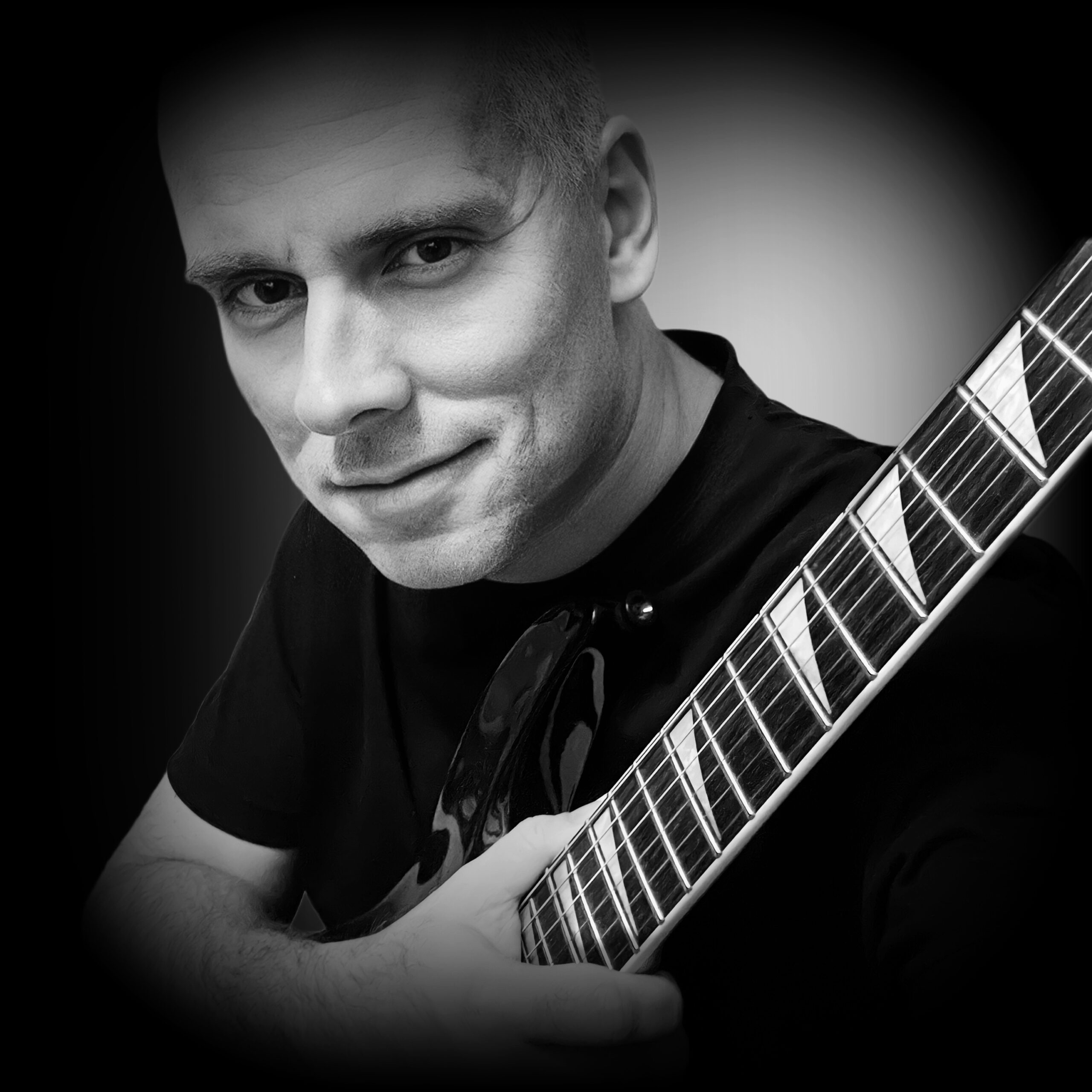
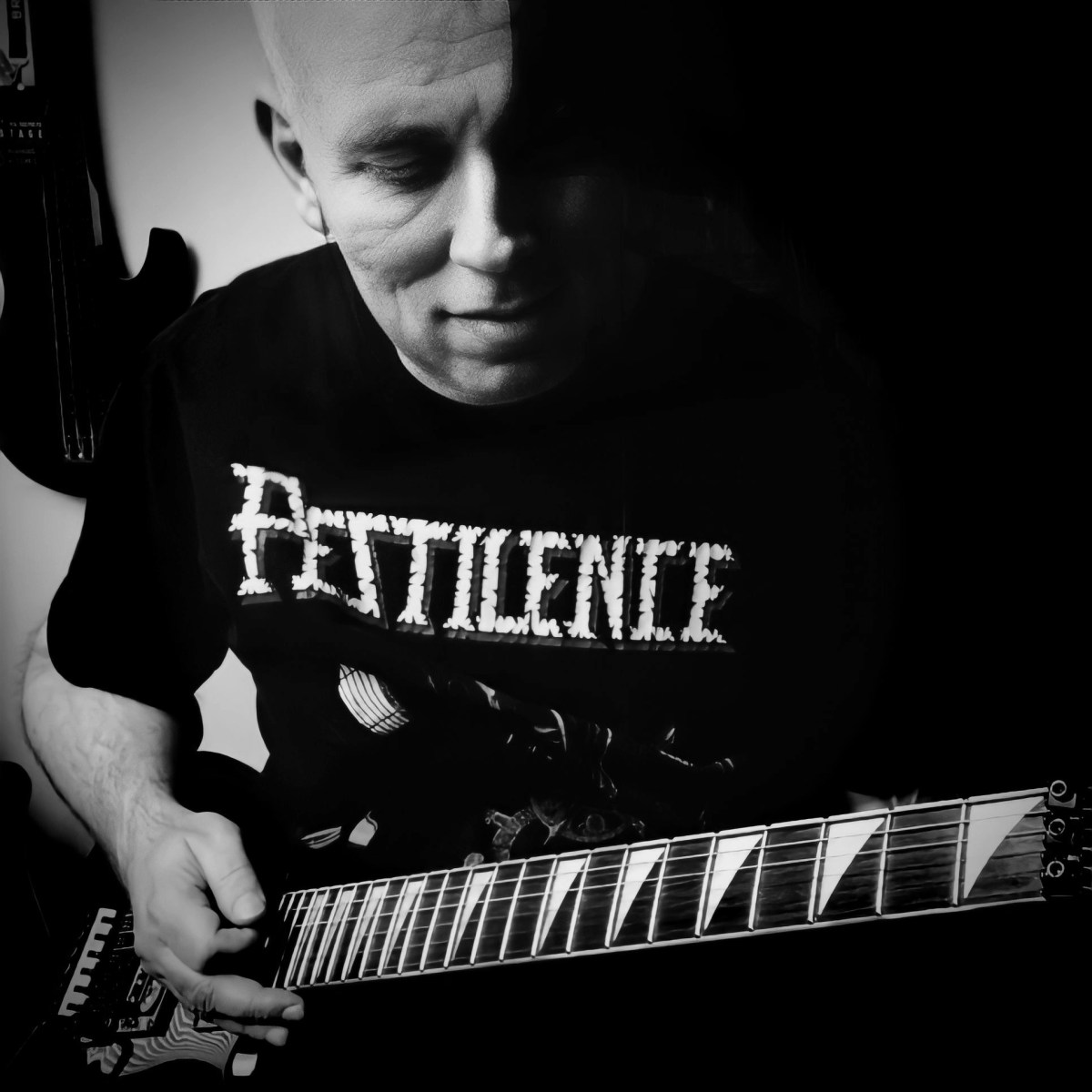
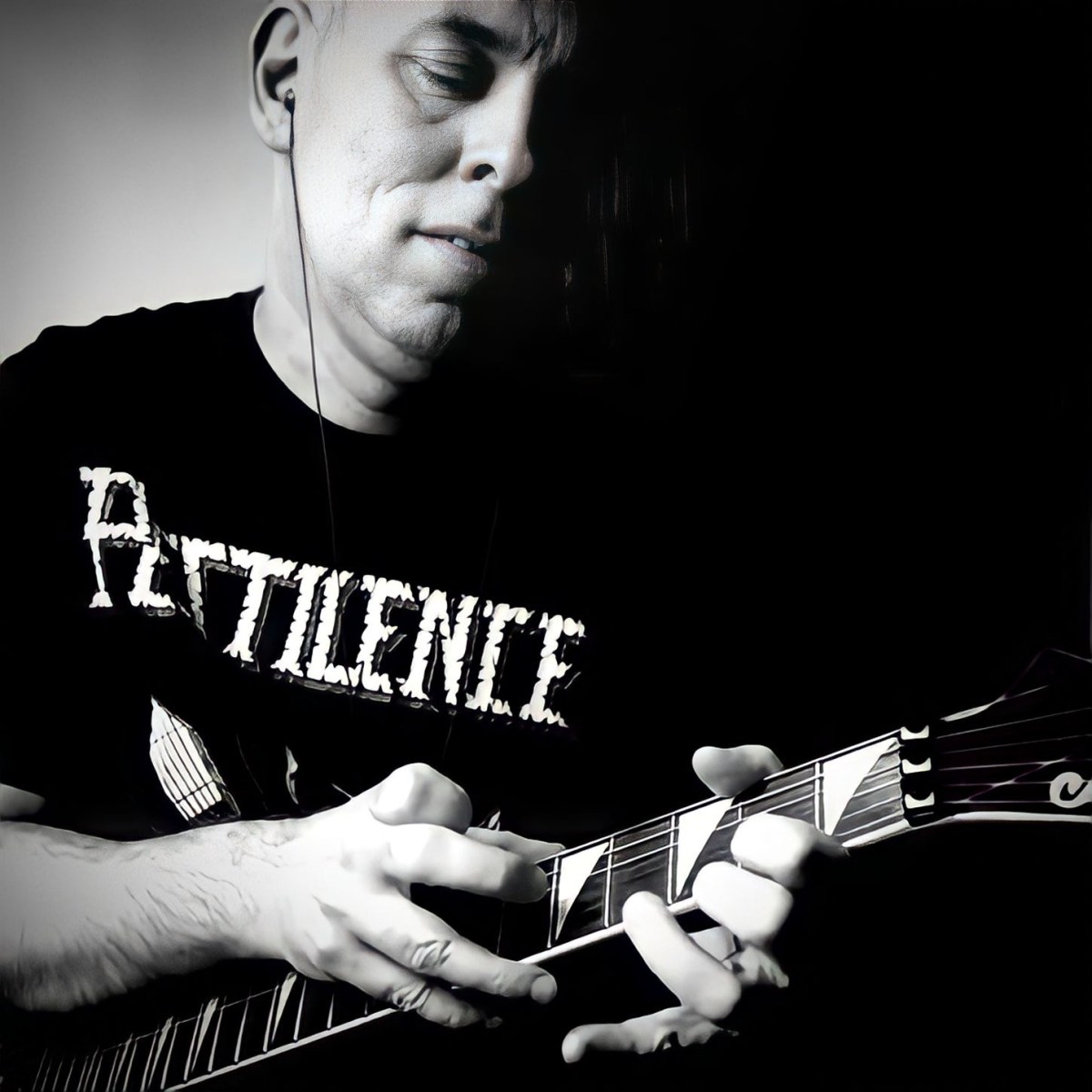
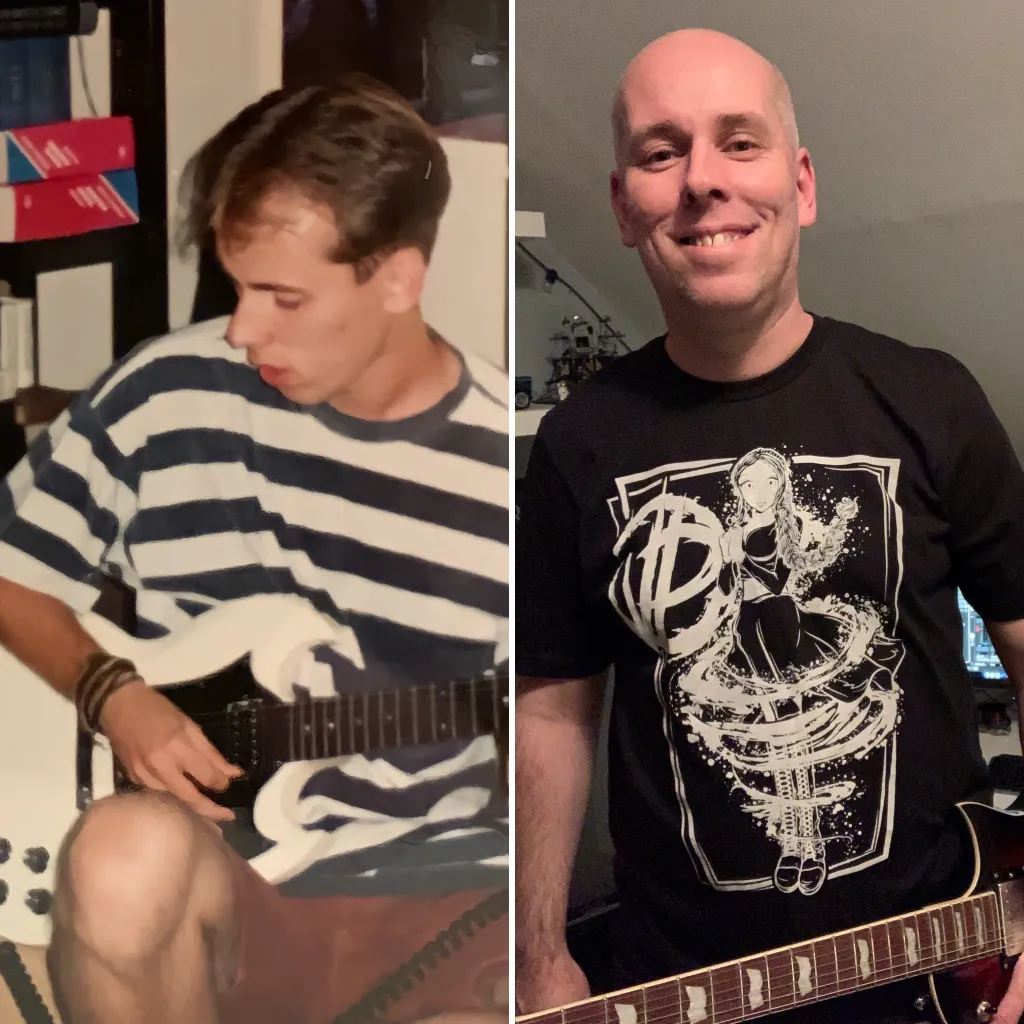
In the beginning, Darkwave was a one-person musical journey – one where every step, from songwriting and recording to mixing, mastering, and promotion, rested on a single set of shoulders: mine. The dream of composing and creating music has been with me for decades, long before the rapid evolution and democratization of recording technology made it more accessible. Yet, I always knew that if I pursued this dream, I wanted to walk the path alone, on my own terms. This self-imposed challenge delayed the realization of Darkwave, but in hindsight, it was inevitable – a culmination of my lifelong desire to create, play, and record music. The arrival of advanced digital audio workstations (DAWs), a solid home studio setup, and the strange solitude of the Covid-19 lockdown all converged into a turning point. It was then that I finally started bringing to life the musical ideas that had been taking shape in my imagination for decades.
The first demos of Hexapla, my debut full-length album, took form in the latter half of 2020, recorded in a modest but well-equipped home studio. It was an exhilarating time, yet paradoxically, I found myself questioning my own capabilities at every turn. The sheer complexity of handling every aspect of the creative process – composing, performing, recording, mixing, mastering, and promoting – felt overwhelming. I even considered shelving the project altogether. But music, to me, is one of the most intimate and powerful forms of communication, and the idea of sharing it with others proved too compelling to ignore. I wanted to know if my music resonated, if it could evoke emotions in others as deeply as it did in me. And so, on August 3, 2021, Hexapla was officially released.
An instrumental album – like all my works before 2025 -, Hexapla was a bold step towards merging the intricate legacy of thrash metal with influences from a diverse range of musical styles. Even beyond the compositions themselves, every aspect of the album was carefully considered. The song titles were chosen to reflect unity in diversity, while the album’s hauntingly beautiful cover art – photographed by my longtime friend and talented visual artist, Dávid Ujhelyi – further reinforced this concept.
As an independent musician with limited promotional resources, I had no grand expectations, yet Hexapla reached a surprising number of listeners and even landed on SoundCloud’s RepostExchange Pop/Rock Top 40. But artistic evolution is relentless. The more I experimented, the more I felt the need to refine and expand on the album’s original sonic landscape. This led to Hexapla – The Remasters, released on March 31, 2022 (and subsequently taken out of the discography, due to the release of the remixed/remastered Hexapla) – a reimagined version with a richer, more mature sound. The response was even more enthusiastic than before, earning a feature in Bandcamp’s New and Notable section just days after its release.
Even as I was finalizing the remaster, my mind was already consumed by my next project. By the time the updated Hexapla was released, I was deep into the recording process of my second full-length album, Missa Innominata. The songwriting had begun right after Hexapla‘s initial release, and despite juggling mixing, mastering, and daily life, it remained my top priority. This album saw me pushing boundaries even further – I even considered adding vocals but ultimately abandoned the idea, as my demo recordings didn’t meet my own standards. After months of fine-tuning, Missa Innominata was finally released on June 1, 2022. It was both a continuation and an expansion of my musical vision, blending the monumental traditions of classical liturgical music with the expressive power of instrumental metal. The album was met with even greater enthusiasm than my previous works, with one track breaking into both the Pop/Rock Top 40 and the overall RepostExchange Top 40 – a cumulative chart spanning multiple genres on SoundCloud.
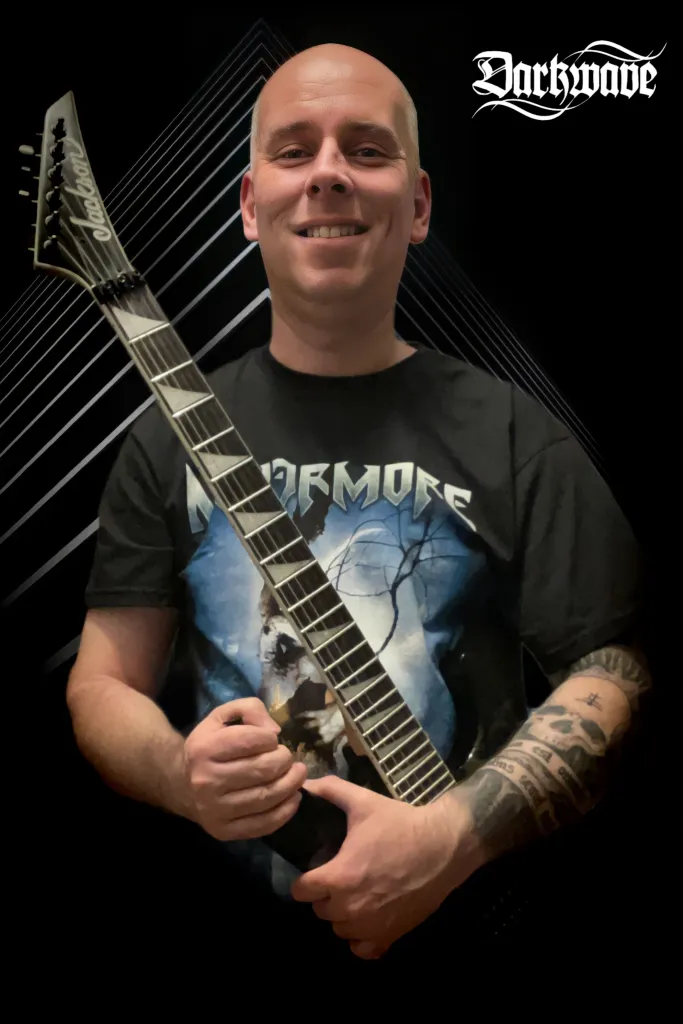
As the years passed, Darkwave became more than just a creative outlet – it became an obsession, in the best possible sense. What had started as a personal project grew into my primary mode of self-expression, a reflection of my thoughts, emotions, and evolving artistic vision. I documented some of these changes in December 2022, when I began gearing up for my next major release. Over time, I upgraded my instruments, acquired a new bass and a Floyd Rose-equipped Jackson guitar, refined my production skills, and took my sound engineering knowledge to the next level. All of this culminated in my third album, Thanatology, released on August 3, 2023—exactly two years after Hexapla.
A deeply personal work, Thanatology serves as a sonic meditation on mortality, a soundtrack to my own spiritual and philosophical journey. It was my most well-received release to date, drawing attention from not only the SoundCloud community but also independent reviewers (please check the Links and Contact section of this website for details!). Metal Has No Borders, an influential site showcasing metal from around the world, even included Thanatology in their Album of the Month honorable mentions, and the album later earned the Bronze Tier in Readers’ Metal Album of the Year from the same webzine. Thanatology has, furthermore, been released in physical format, too, with only 100 CD copies available.
The journey never stops. In 2024, I embarked on a massive sonic overhaul, remixing, remastering – and in some cases, completely reworking – all three of my early releases. Along the way, I collaborated with incredible artists, explored new creative avenues, and built lasting friendships across the globe.
But something unexpected happened. As I was recording demos for my next album, I had a revelation: it was time to bring vocals into the mix. This decision marks a bold new chapter – one that stays true to my roots yet pushes my music into uncharted territory. After two years of writing, reflection, and relentless work, the new Darkwave album Horror Sacri is set to arrive on August 21, 2025. The album is a dark, introspective journey through spiritual collapse, personal reckoning, and the fragile search for meaning. Drawing from sacred texts, progressive metal, and orchestral elements, each track confronts the silence that follows prayer — and the quiet defiance of those who still choose to hope.