As some of you were interested in, I decided to start a small blog here, just to give you updates on my daily life.
The first message on the blog
31.08.2025

As some of you were interested in, I decided to start a small blog here, just to give you updates on my daily life.
Introduction to the lyrics of Horror Sacri – Beyond the Words
For me, Horror Sacri is more than music – it is a journey along the borderlands of darkness and light. Contrary to my previous albums, these songs are not only built from sound; through their lyrics they open a window into an inner world where the shadows of faith, the abyss of doubt, and the longing for transcendence intertwine.
Each lyric is a mirror, reflecting a different face of the same question: what happens when we confront our own limits, when familiar answers turn hollow, and all that remains is silence, absence, and a thirst for something beyond?
This collection is not meant as an “explanation” of the music, but rather as a companion: an unveiling of the thoughts and images woven into the songs. A second layer, which doesn’t need to be separated from the music – but for those who wish to dwell in the words, new doors may open.
Here, then, are the lyrics of Horror Sacri – as they were written, and as they now take on a life of their own.text
1. Dies Irae
A dark reimagining of the medieval Dies irae hymn, this track strips the original down to its most haunting fragments. With church organ framing the piece, it questions the fear-driven image of divine judgment and hints at something more compassionate beneath the ashes.
Dies irae, dies illa
Solvet saeclum in favilla.
Quantus tremor est futurus
Quando iudex est venturus.
Liber scriptus proferetur,
in quo totum continetur.
Iudex ergo cum sedebit,
quidquid latet apparebit.
The day of wrath, that day,
will dissolve the world in ashes.
How great will be the quaking,
when the Judge is about to come!
The written book will be brought forth,
in which all is contained.
When therefore the Judge will sit,
whatever lies hidden, will appear.
2. Impressions… The Black Virgin
A somber reflection on suffering, endurance, and fractured faith — this track reimagines the beatitudes through brokenness yet clings to a fragile hope beyond death. Gothic melancholy meets spiritual defiance.
I wept last night, a child in dream’s embrace,
I mourned where ancient halls had lost their grace.
Stone-bodied trees fought winds in solemn dance,
while you, wild dogs, just laughed and took your chance.
“Blest is the soul that breaks beneath the load,”
the Lord declared, and gently grace bestowed.
“Though pain may blaze with glory’s final breath,
all else is lost, save hope beyond all death.”
So, lift me from the winter drawing near,
shed just one tear before I disappear.
For Lord, no more I am the dead or living –
a symptom now, a shadow barely breathing.
Progressive chaos meets old-school death metal in this wrathful outcry of broken faith. Featuring Fredrik Keith Croona, the track lashes out with despair — but still clings to a final, flickering hope.
One final blink until life gets complete,
until God’s grace destroys my melting meat.
Fermenting in the cesspool of the saints,
I pass away through firmamental drains.
Until my wine starts clotting in my mouth
drowning I dive this quietude throughout.
Candles are lit along my road to death,
out of my mouth I inhale my own breath.
Domine,
Clamavi ad te,
Et sanasti me,
Domine!
O Lord,
I have cried to thee,
and thou hast healed me.
O Lord!
Until I leave my assets far behind
peeling my lifeblood off this mortal mind.
Let loose this fire, enkindle my distress,
let my soul sink in this subversive hex.
One final blink until life gets complete,
laying face-up over the altar sheet.
My facial features under gleaming stars
this fake subsistence one by one disbarks.
4. Messiah of Shrinking Shores
A sorrowful, progressive elegy of abandonment and inner collapse, featuring the haunting vocals of Fati Urbán. Gothic textures meet staccato riffs in this hymn to the forgotten.
He clung with nails of wood so tight,
scratching the fresco-black of night.
Obscured he wrote a gospel’s rhyme,
ashtray of God, clandestine grime.
All that he saw, all fails did stay,
no skyey dew would fall his way,
breathing desert dust-eating life,
rotten finger-flesh, he played a strife.
If he was saved, he tore his crown,
blood-stained tears fall, like storm pour down,
showing his fake gloriole,
he will baptize you, he will bury.
And as he climbed the western sky,
the stars within themselves did die,
“Embrace me now, and take my blood”
said “Let me sink into the flood.”
The album’s only instrumental, Miserere merges classical influence with blastbeat-driven intensity — a bridge between past and present, reverence and unrest.
6. Secreta
A prayer for enemies wrapped in eerie orchestration and fractured rhythms. Secreta captures the spiritual dissonance of forgiving when the soul is still bleeding.
Oblatis, quaesumus, Domine,
placare muneribus:
et nos ab inimicis nostris clementer eripe.
We beg You, O Lord, be appeased
by these sacrificial offerings:
and mercifully snatch us away from our enemies.
7. Soul Hunt
A fierce, apocalyptic track where thrash metal meets liturgical despair. Soul Hunt casts humanity as prey in a cosmic war — a cry for deliverance in a world with no peace.
A star fell blazing, torn from the sky,
ghostfire flickers, years burn dry.
Lunatic echoes are tearing the spheres,
behind steel gates, the enemy appears.
He winks at me with a hollow stare –
a pupil-less gaze, a frozen glare.
“Come with me,” he speaks to me, “behold!
We’ll walk in the void like the gods of the old!”
Bell tolls crash on the lead-gray land,
the last fires go out, lost in the sand.
It’s all over – we fade in the tide,
abandoned island, fortress denied.
Life’s breath is stolen, I drink from the still,
degusting the wine that the ages spill.
Spare me, O Lord, from the hunter’s chase,
grant me, O Father, a night of grace!
Libera me Domine de morte eterna!
Deliver me, O Lord, from eternal death
The forest echoes from the hunting cries,
dark shadows creep where the lost souls lie.
A soul hunt is raging deep down below,
bloodstained icons weep in woe.
A solemn, apocalyptic finale where peace arrives through death. Pacem Meam Do Vobis ends the album with sacred words, orchestral weight, and the haunting echo of a final heartbeat — where all is lost but hope.
Justorum animae in manu Dei sunt,
et non tanget illos tormentum malitiae:
Visi sunt oculis insipientium mori:
illi autem sunt in pace. Alleluia!
The souls of the righteous are in the hands of God,
and the torment of malice shall not touch them:
They seem in the eyes of the foolish to be dead,
but they are at peace. Alleluia!
Many people have asked me what inspired the lyrics of Horror Sacri. Why did I choose this subject? What is my personal story behind the album? It’s not easy to answer briefly, because every line of this record is the trace of deeply personal experiences and a long inner journey. But I will try to explain why this album was born, and why it turned out the way it did.
The traces of a childhood
I grew up in a very strict, deeply religious Catholic family, at a time when Hungary was still under communist rule. Religion was not looked upon favorably in those years; people of faith were often met with suspicion, sometimes even subjected to smaller or greater forms of discrimination. This created a strange duality: on the one hand, it was a closed and sheltered world where there seemed to be ready-made answers for everything; on the other hand, it was a narrow and limiting system, where freedom and questions born of doubt had little or no room to breathe.
As a child, I absorbed this atmosphere completely. Every aspect of daily life was woven through with religious rules: how to behave, what to think, whom to befriend, what to read or listen to. This was the world I grew into, and its patterns left deep marks on me—for better and for worse.
Religion and its distortion
It is important to clarify: I never had a problem with religion itself. Authentic faith—rooted in selfless love, forgiveness, and turning toward the other—remains a value to me even today. What became oppressive was a distorted, simplified, everyday version of religion: something that many live not as faith, but rather as custom and superstition.
The Judeo-Christian tradition speaks of God as pure love, yet it is often infused with a certain “fiscal” logic: God as judge, weighing every deed, holding us accountable in meticulous detail. In everyday life this easily becomes the image of an all-seeing inquisitor: not a loving Heavenly Father, but a merciless examiner who records every small misstep. In this way, faith ceases to be a liberating force for many, and instead turns into a burden heavy with fear and compulsion.
It is not religion itself that breeds this anxiety, but its vulgar, simplified, fear-soaked version, where the place of transcendent reality is too often taken over by superstition, prohibitions, and guilt-inducing messages. This is the kind of everyday religiosity that does not open up the world, but narrows it.
The inner inquisitor
As a child, I lived through all the consequences of this environment. The constant feeling that there was always a rule I hadn’t kept perfectly, or a thought for which I should feel guilty, slowly seeped into me. No matter how hard I tried to comply, I always felt inadequate. And so I became my own inquisitor: a voice within, always whispering self-criticism, always saying, “You are never good enough.”
This experience had a double edge. On the one hand, it gave a certain sense of security—I always knew what I should be doing. On the other, my doubts grew stronger: does anyone—whether a person or an institution—really have the right to regulate every detail of my life with such authority? Do we truly have such certainty about the world that we can lay down unquestionable rules and build entire lives upon them? Or are we all simply groping in the dark, afraid to admit our own uncertainty?
The two faces of Horror Sacri
This duality led me to the medieval concept of Horror Sacri. For me, the term has two faces.
The first is the encounter with the transcendent, when one is confronted with their own weakness before something infinitely greater. This can be a moving, even uplifting experience—a mirror showing us our limits and urging us to rise beyond them.
But the second face is much more personal, and one that unfortunately struck me more deeply: the fear and anxiety instilled in us from early childhood. The learned guilt. The endless compulsion to measure up. The feeling of being watched by a judging gaze that records every misstep—and the realization that I had, in fact, become that gaze myself. And finally, the rebellious defiance: “By what right does anyone do this to me?”
Together, these two faces form the essence of Horror Sacri.
What did I want to say with this album?
I did not want to write theology, nor propaganda. My intention was never to attack faith or religion. What I wanted to offer was a confession: a testimony to the experiences and inner struggles that gave birth to these songs. A reflection on how the decades of my life, the fears instilled in me, and the philosophical and theological doubts that grew ever stronger shaped me into who I am.
For me, art is not about proclaiming grand truths, nor about serving ideologies. In my world, art demands only one thing: honesty. The courage to show, without disguise, what we live through and how we see the world.This is why Horror Sacri was born. This album is my personal confession—about fear, guilt, rebellion, and the search for a path. If even one person who listens to it recognizes themselves in it, and feels a little less alone with these emotions, then it was worth creating.
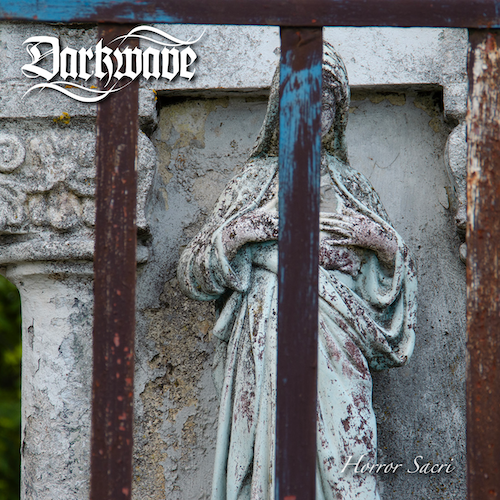
The fourth Darkwave album marks a clear departure from its predecessors — and not just musically. For the first time in the project’s history, vocals appear alongside the instrumental compositions. This new element adds an essential dimension of expression, allowing the music’s message to be communicated more directly and fully. No longer confined to titles, cover art, and sonic atmosphere alone, the narrative now unfolds through the human voice as well — direct, unfiltered, and unmistakably personal.
The title, Horror Sacri, is a Latin phrase meaning “sacred dread” or “fear of the sacred” — a complex emotional state blending awe, reverence, and fear in the face of the divine or transcendent. Rather than taking a theological or dogmatic stance, the album approaches this theme from a deeply personal and introspective perspective. While honoring the mystery of the sacred, it also acknowledges the fear, struggle, and rebellion that often accompany the human experience of transcendence — culminating in death, which brings this internal conflict to an end. In this sense, Horror Sacri serves as a natural continuation of Darkwave’s previous instrumental works: Hexapla, Missa Innominata, and Thanatology.
The album also represents a milestone in the Darkwave catalogue by featuring guest artists for the first time. Fredrik Keith Croona, the intense and versatile vocalist of the blackened death metal band Against I, and Fati Urbán, whose ethereal voice adds an otherworldly dimension, both contribute to the record’s emotional and sonic depth.
Blending the familiar with the unfamiliar, the instrumental with the vocal, Horror Sacri opens a new chapter in the evolution of Darkwave — one that invites the listener to confront the unknown with open ears and a receptive mind.
Track listing
The links below will lead you to the respective tracks on my Bandcamp page, where you can stream or download the songs. Alternatively, you can explore Hexapla on various streaming platforms, including Spotify, AppleMusic, SoundCloud, and YouTube.
Total playing time: 44:36
The closing track of Horror Sacri now has its own visual form. Pacem Meam Do Vobis unfolds as both prayer and dirge — a meditation on peace, fear, and finality. The video mirrors the music’s tension between sacred promise and mortal silence, offering a glimpse into the album’s darkest and most haunting farewell.
Check out my YouTube channel for the video: https://www.youtube.com/watch?v=yPv28fNnWkE
“Pacem Meam Do Vobis” closes the album with a paradox: a promise of peace wrapped in the shadow of death. Borrowing its title from the words of Christ in John 14:27 — “Peace I leave with you; my peace I give unto you” — the song meditates on the tension between divine assurance and mortal finality. It’s a farewell not just in scripture, but in sound.
The track begins with apocalyptic brass — evoking the trumpet blasts of Revelation, heralds of both judgment and transcendence. From this dramatic opening, the song unfolds slowly, building with orchestral weight and sacred texts. But just when peace seems within reach, it arrives in the form of a flatline. A heartbeat stops. The listener is left with the chilling realization: in this world, the only peace we can be certain of may come with death.
Yet even here, a deeper meaning flickers beneath the surface. The text drawn from the Secreta for All Saints’ Day reminds us: “The souls of the righteous… seem in the eyes of the foolish to be dead, but they are at peace.” The concluding “Alleluia” — “Praise the Lord” — is not naïve joy, but a stubborn, defiant hope. It echoes the album’s recurring theme, first spoken by Virgin Black: “All is lost but hope.”
“Pacem Meam Do Vobis” is the sound of finality — and what might lie beyond.
You can already pre-order the album by clicking here: https://darkwave-metal.bandcamp.com/album/horror-sacri. By pre-ordering, you get one track now (streaming via the free Bandcamp app and also available as a high-quality download in MP3, FLAC and more), plus the complete album the moment it’s released on the 21th of August.
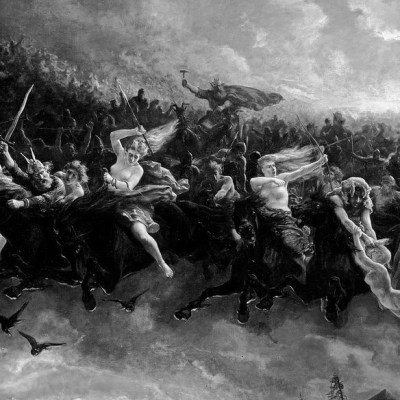
“Soul Hunt” is one of the most direct and visceral tracks on the album — a relentless vision of unseen warfare, where human souls are the prize in an eternal struggle between forces far greater than ourselves. Based on one of my oldest lyrics ever written, the song captures a world drenched in fear and metaphysical violence. Peace is yearned for but never found.
The verses paint a bleak picture: “It’s all over” declares one line; “Bloodstained icons weep in woe” ends another. These aren’t just poetic images — they’re cries from a world where fragile human lives are tossed into a cosmic battleground beyond comprehension. The music echoes this turmoil with razor-sharp, old-school thrash metal riffing, driving the message home with unrelenting force.
At its heart, “Soul Hunt” forms the eschatological core of the album — a dark framework where the sacred collides with the violent. The Latin chorus, “Libera me, Domine, de morte aeterna” (“Deliver me, O Lord, from eternal death”), taken from the Roman Catholic Office of the Dead, becomes more than a liturgical chant. It’s a desperate plea for endurance, for grace, for something to hold onto in the face of annihilation.
You can already pre-order the album by clicking here: https://darkwave-metal.bandcamp.com/album/horror-sacri. By pre-ordering, you get one track now (streaming via the free Bandcamp app and also available as a high-quality download in MP3, FLAC and more), plus the complete album the moment it’s released on the 21th of August.
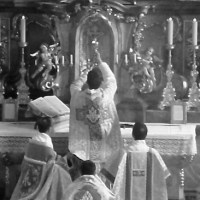
“Secreta” — Latin for “secret” or “secrets” — takes its name and text from a lesser-known part of the traditional Roman Catholic Mass: a quiet prayer, spoken in a low voice by the priest at the end of the Offertory. On this album, the prayer becomes something more personal and disquieting — a whispered plea for one’s enemies, delivered from a soul suspended between forgiveness and fragmentation.
Set to a short liturgical text drawn from the Roman Missal, the piece explores the spiritual paradox of wishing well upon those who have wounded us. That fragile state — where faith confronts betrayal — is captured in the song’s shifting musical language. An eerie orchestral introduction sets the tone, enveloping the listener in unease, before giving way to rhythms that echo the rhythmical asymmetry of Balkan dances. The unconventional time signature distorts any sense of calm, as if the soul itself is reeling.
“Secreta“ is both prayer and disorientation — a sacred ritual filtered through the lens of human vulnerability.
You can already pre-order the album by clicking here: https://darkwave-metal.bandcamp.com/album/horror-sacri. By pre-ordering, you get one track now (streaming via the free Bandcamp app and also available as a high-quality download in MP3, FLAC and more), plus the complete album the moment it’s released on the 21th of August.
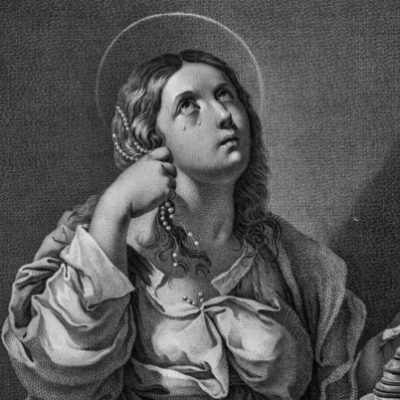
“Miserere” is the sole instrumental piece on the album — a moment of wordless expression that forms a bridge between this release and Darkwave’s earlier, fully instrumental works. Deeply rooted in classical influences, it recalls the spirit of Postcommunio (from the Missa Innominata album), yet pushes beyond it with a more turbulent energy.
At the heart of the track lies a neoclassical guitar theme long waiting for its place — a melodic idea that lingered in creative limbo until now. With this album’s emotional landscape in mind, the timing felt right. “Miserere” became its home, transforming the motif into something darker, heavier, and more unrelenting.
While its structure and tone still reflect a sense of reverence, the inclusion of blastbeats breaks away from the restraint of earlier compositions. The result is a piece that’s simultaneously devotional and defiant — a liturgy not of peace, but of inner unrest.
You can already pre-order the album by clicking here: https://darkwave-metal.bandcamp.com/album/horror-sacri. By pre-ordering, you get one track now (streaming via the free Bandcamp app and also available as a high-quality download in MP3, FLAC and more), plus the complete album the moment it’s released on the 21th of August.
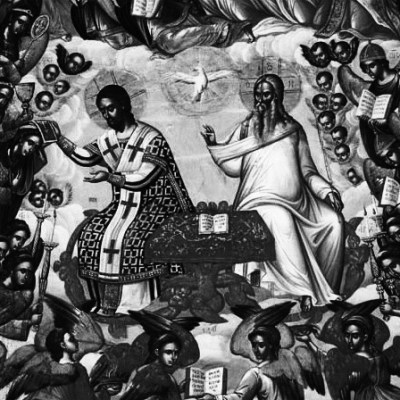
“Messiah of Shrinking Shores” unfolds like a sorrowful parable — the story of a soul who gave everything, only to be abandoned by both Heaven and Earth. Written in poetic form years ago, the lyrics speak in third person, echoing the voice of someone who once carried the burdens of others, now discarded, worn down, and left with nothing but silence. “The ashtray of God” — a chilling metaphor for spiritual obsolescence — captures the depth of his disillusionment, culminating in the heartbreaking surrender: “Let me sink into the flood.”
This song gives voice to that universal moment when we feel used up, overlooked, and forgotten — when the world no longer sees us as valuable, only convenient. Hungarian vocalist Fati Urbán lends her angelic, haunting tone to these emotions, adding an ethereal fragility that elevates the pain into something strangely beautiful.
Though the song carries the atmosphere of gothic and doom influences, it never settles into one mood. Progressive metal elements weave through its structure — the intro and outro riffs pulse with complex time signatures, and the chorus rides on staccato rhythms that resist collapse. It’s both a lament and a protest; a farewell and a final cry for meaning.
You can already pre-order the album by clicking here: https://darkwave-metal.bandcamp.com/album/horror-sacri. By pre-ordering, you get one track now (streaming via the free Bandcamp app and also available as a high-quality download in MP3, FLAC and more), plus the complete album the moment it’s released on the 21th of August.