Sometimes music opens a door you didn’t even know existed.
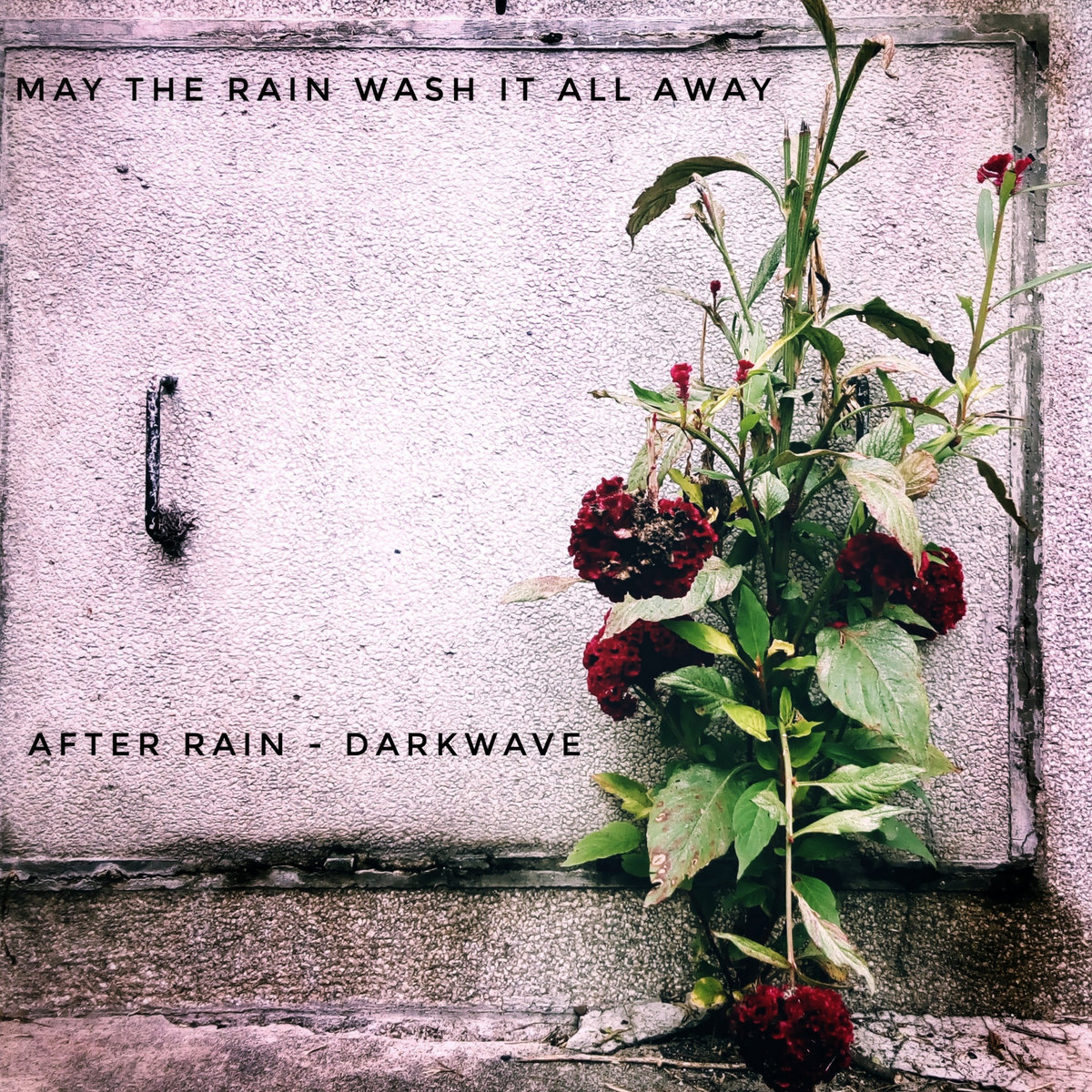
Recently I had the chance to collaborate with After Rain, an exceptionally talented classical composer from Guatemala, and the experience led me somewhere entirely new: bringing my metal guitars into a piece that was originally conceived as classical music.
The idea of merging metal with classical music has always been close to my heart. For years I’ve been fascinated by the possibility of creating a true synthesis between these worlds, following the footsteps of my greatest musical inspiration, Jon Lord. But until now, my approach had always been the same: I would write a metal piece first, and then enrich it with classical elements.
This time the process unfolded in the opposite direction.
The composition already existed as a fully realized classical work: its structure, harmonies, chord progressions, and rhythmic flow carefully woven into a deeply expressive piece of music. My task was not to reshape it, but to step inside it, to listen closely, and to find the places where the language of metal could naturally grow from its emotional core.
So I tried to set aside my usual ideas about how such a fusion should work and instead follow the inner logic of the music itself. Tight rhythms, massive guitars, and soaring solos gradually found their place within the composition.
As After Rain describes it on Bandcamp: “A powerful collaboration with Darkwave, blending my melancholic and heavy harmonies with his intense metal sound. A song born from despair, anger, and pain.”
While our musical backgrounds may seem strikingly different, I felt deeply connected to the original vision. My goal was never to overpower it, but to complement it: to let my own voice emerge through the guitars while remaining faithful to the spirit of the piece.
As 2025 is slowly drawing to a close, I find myself returning to a familiar ritual: writing a long, reflective summary of the year behind me. This is never meant to be a simple chronological recap. Instead, I try to focus on the moments that truly mattered — the turning points, the struggles, the breakthroughs — and on how they shaped me, both as a musician and as a person.
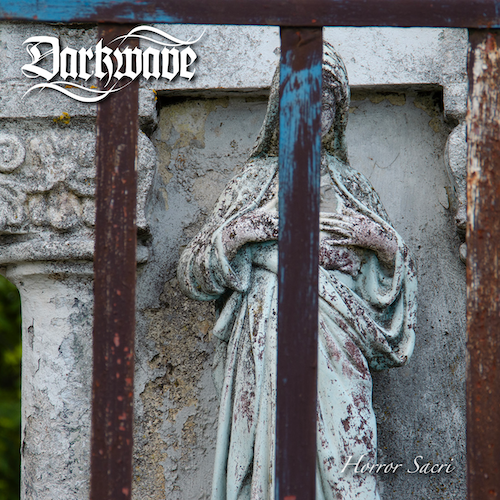
Without question, the defining event of this year was the release of my new album Horror Sacri on August 21st, exactly two years after Thanatology. In many ways, this record became a watershed moment for Darkwave.
For the first time, I approached songwriting with a noticeably different mindset. I invested far more time and conscious thought into composition than ever before. Rather than thinking in terms of individual “songs,” I aimed to create full-fledged musical compositions — closer in spirit to how classical music treats form, development, and emotional architecture. Each track was meant to encapsulate complex emotional states and layered ideas, even if that complexity sometimes pushed the music further than my earlier recordings ever did.
Sound has always been a deeply sensitive matter for me, and Horror Sacri was no exception — quite the opposite. I devoted an enormous amount of effort to mixing and mastering the album. Although my technical knowledge in these areas has grown significantly over the years, I wanted this record to surpass everything I had done before. This perfectionism inevitably delayed the release, but I have no regrets. Horror Sacri sounds exactly the way it needed to sound, and to my ears, it stands clearly above my previous albums in terms of sonic depth and clarity.
Yet the most important step forward on Horror Sacri had nothing to do with production at all. This was the first Darkwave album to feature vocals. After three purely instrumental releases, I began to feel the boundaries of that format closing in on me. There were emotions and thoughts I could no longer fully articulate without the human voice and without lyrics. I felt constrained — even caged — and instead of accepting those limits, I chose to step beyond them. It was, quite honestly, a leap of faith. I have spent decades developing my skills as a guitarist, reaching a point where I can finally feel confident in that role. Vocal performance, however, was entirely different territory for me. I had no comparable training, no safety net — yet I went for it anyway. And I believe it was worth the risk. At this point, I must also express my deep gratitude to my friends Freddie and Fati, who contributed guest vocals to two tracks on the album. Their presence added dimensions I could not have achieved alone, making the record richer and far more multifaceted.
Because of this, I felt it was essential to dedicate several posts not only to the music itself, but also to the lyrics — their meanings, origins, and personal significance. For me, the lyrical layer of Horror Sacri stands on equal footing with the music. I also shared broader reflections on the album as a whole, as well as track-by-track insights, allowing listeners a deeper glimpse into the inner world behind the record.
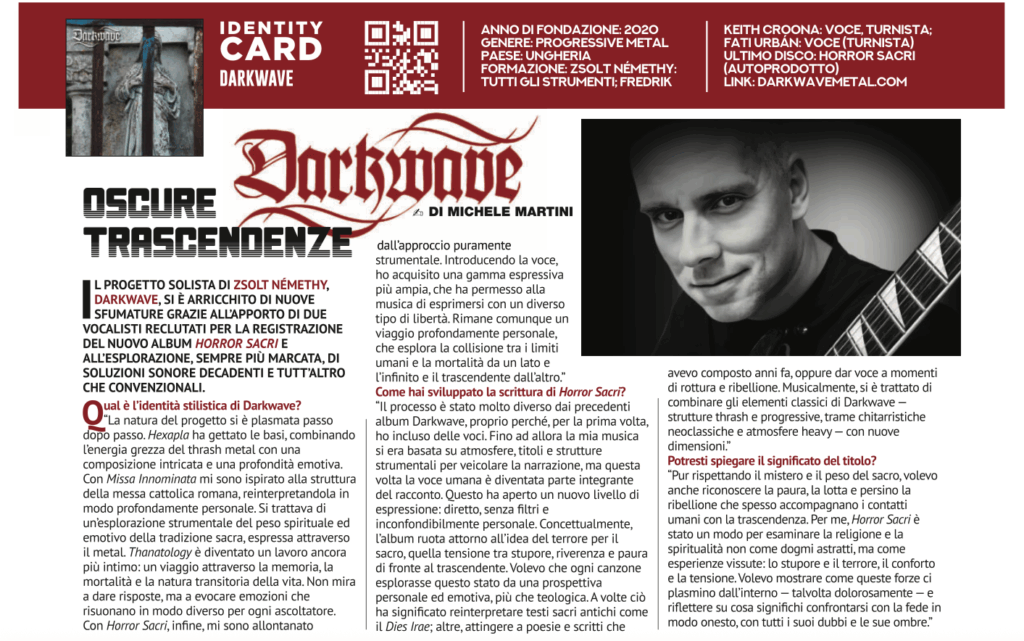
The international reception of Horror Sacri exceeded anything I had anticipated. The album was reviewed and featured by several blogs and music platforms, most notably by Rock Hard Italy, where it appeared in the printed magazine alongside an interview. Seeing Darkwave discussed in such a respected and long-standing publication was both surreal and deeply humbling. The album also performed strongly on SoundCloud, reaching prominent positions — and in some cases the number one spot — on RepostExchange charts.
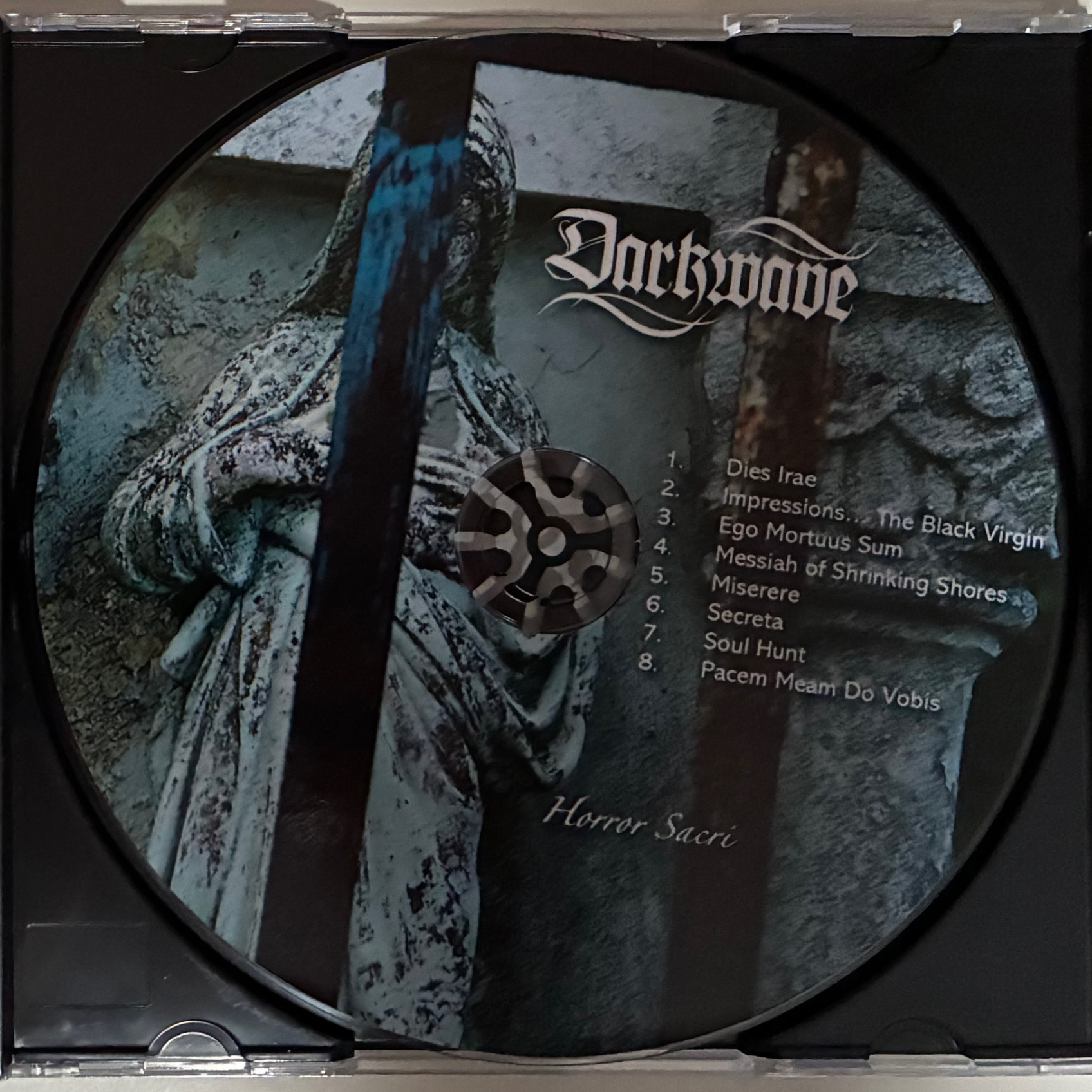
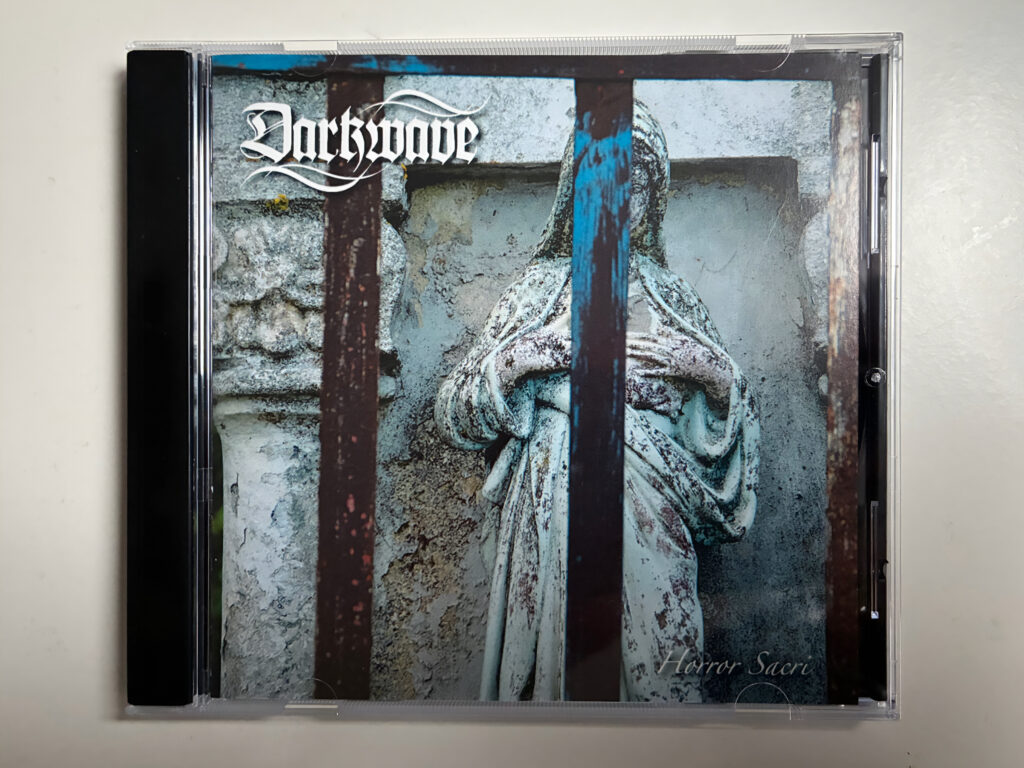
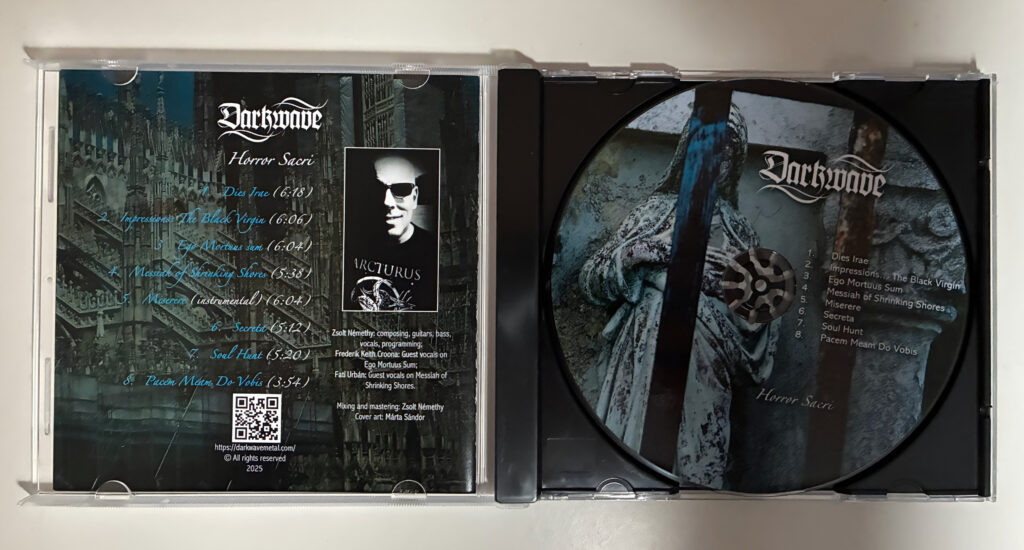
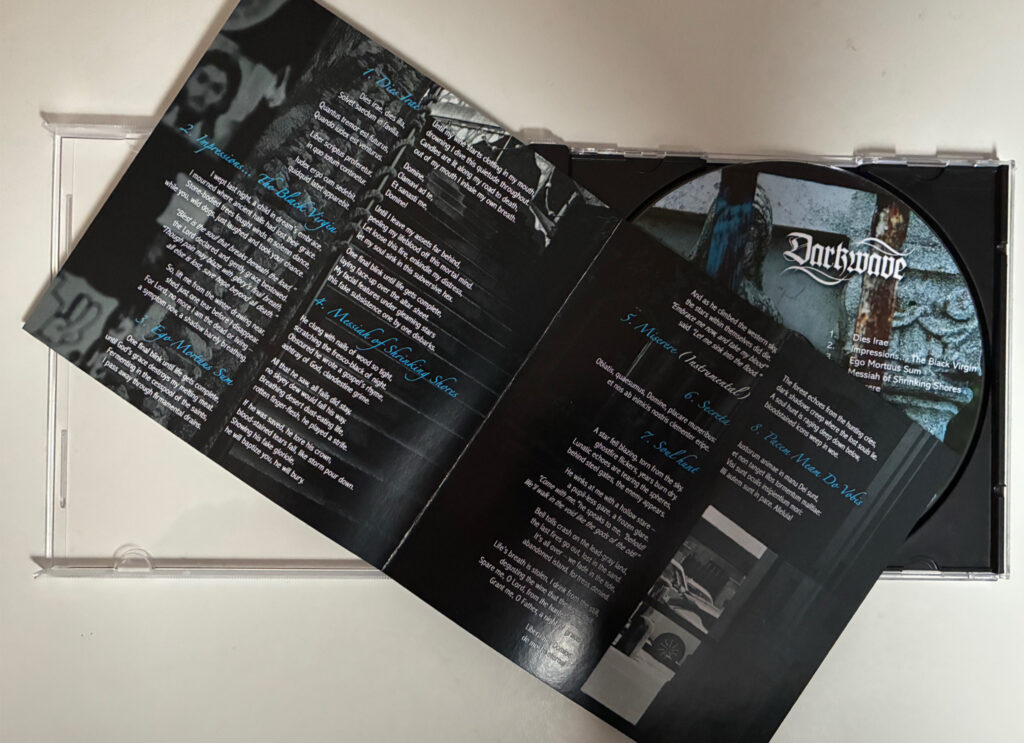
Just like Thanatology, Horror Sacri was also released in a limited physical CD edition. In an age of endless digital content, I still strongly believe in the value of something tangible — something you can hold, keep, and return to years later.
However, 2025 was far from being only about Horror Sacri.
Throughout the year, I was fortunate to participate in several collaborations across different genres. Stepping outside the boundaries of metal has always been important to me, and these projects allowed me to explore new musical languages. I contributed guitars to one of Eth Eonel’s Sonnets, a beautifully intricate piece blending metal, alternative music, jazz elements, and sophisticated harmonic structures. I also collaborated with French singer Ana Lyr on a cover of The Sorrowed Man by one of my all-time favorite bands, Nevermore. Additionally, my Swedish friend Freddie invited me to take part in several tracks by his synthwave project Terrorbit, where I happily added my guitar work to an already striking sonic universe. Beyond recording and releasing music, I was also invited to appear on a podcast, where I had the chance to talk not only about my long-standing admiration for Lacuna Coil, but also about Darkwave itself and the artistic path behind it.
As for the future — it is already taking shape.
Work on the next Darkwave album has begun, this time following a deliberately different creative process. I started the whole process by finalizing the lyrics before composing the music. I am currently recording an extensive set of demos, allowing the musical foundations to evolve organically over time. I revisit and refine these ideas again and again until they reach their final form. Only then will I move on to the definitive recordings, including the vocals.
Another major change is that I will not be handling mixing and mastering myself this time. Instead, I plan to collaborate with a professional mixing and mastering engineer, freeing up more time and mental space for songwriting and recording. I see this upcoming album as a kind of compendium — a distillation of everything I am and everything I have learned in music so far. Because of that, I refuse to rush the process. This record deserves patience, care, and absolute focus.
What can be expected from it? Dark, meditative, and deeply introspective lyrics, with a subtle but persistent flicker of hope beneath the surface. Musically, monumental and multilayered arrangements built upon progressive structures and thrash/death metal foundations.
To close this long annual summary of 2025, I want to express my heartfelt gratitude to all my friends, listeners, followers, and supporters. This may sound like a familiar closing line, but it is anything but empty. Your presence, your messages, and your support are a real and tangible driving force that keeps this project alive and moving forward.
I’m happy to finally share that my latest album, Horror Sacri, will be available in physical CD format starting January 5, 2026, exclusively via my Bandcamp page.
Holding this album in my hands feels like closing an important chapter — and opening a new one at the same time. For those of you who still appreciate physical formats, this release is for you.
The price of the CD is €8.50 + shipping.
Please note that, unfortunately, shipping to the United States is currently not possible. Due to unclear and constantly changing customs regulations, the Hungarian Postal Service is still unable to ship packages heavier than a standard letter to the US. However, the CD can be shipped to all other countries worldwide without any issues.
Thank you for listening, supporting, and being part of this journey — whether digitally or through physical copies. It truly means more than I can put into words.
As an independent artist, every small step forward is something you have to fight for — which makes it all the more meaningful when a prestigious, long-standing rock/metal magazine like Rock Hard Italy not only notices your work, but gives it space in print. The album review that appeared in their October issue was already an incredible gift; and now, another honor has followed, with a full interview published as well.
For a completely self-taught, underground solo project, this is more than a professional achievement: it’s a powerful affirmation that the music is capable of crossing boundaries and reaching people who might never have encountered it otherwise. The creation of Horror Sacri was a deeply personal journey for me — and seeing that story find its place in print, in a magazine regarded for decades as an authority within the metal community, is profoundly uplifting.
This article is not just about where I am right now. It’s about where this path leads — and how beautifully the music echoes back when it finally finds its way into the wider world.
Here is the English translation of the original Italian text:
Obscure Transcendences
Zsolt Némethy’s solo project, Darkwave, has gained new shades and depth thanks to the contribution of two vocalists recruited for the recording of the new album Horror Sacri, as well as through an increasingly focused exploration of decadent and decidedly unconventional sound solutions.
What is the stylistic identity of Darkwave?
“The nature of the project has taken shape step by step. Hexapla laid the foundation by combining the raw energy of thrash metal with intricate composition and emotional depth. With Missa Innominata, I drew inspiration from the structure of the Roman Catholic mass, reinterpreting it in a profoundly personal way. It was an instrumental exploration of the spiritual and emotional weight of sacred tradition, expressed through metal. Thanatology became an even more intimate work: a journey through memory, mortality, and the transient nature of life. It does not seek to provide answers, but to evoke emotions that resonate differently for each listener. With Horror Sacri, I ultimately moved away from a purely instrumental approach. By introducing vocals, I gained a broader expressive range that allowed the music to articulate itself with a different kind of freedom. Yet it remains a deeply personal journey, one that explores the collision between human limitations and mortality on one side, and the infinite and the transcendent on the other.”
How did you develop the writing of Horror Sacri?
“The process was very different from the previous Darkwave albums, precisely because, for the first time, I included vocals. Until then, my music relied on atmospheres, titles, and instrumental structures to carry the narrative — but this time, the human voice became an integral part of the story. This opened a new level of expression: direct, unfiltered, and unmistakably personal. Conceptually, the album revolves around the notion of fear before the sacred — that tension between awe, reverence, and terror when confronted with the transcendent. I wanted each song to explore this state from a personal and emotional standpoint rather than a theological one. Sometimes this meant reinterpreting ancient sacred texts like the Dies Irae; other times, drawing from poems and writings I had composed years earlier, or giving voice to moments of rupture and rebellion. Musically, it was about combining Darkwave’s classic elements — thrash and progressive structures, neoclassical guitar textures, and heavy atmospheres — with new dimensions.”
Could you explain the meaning of the title?
“While respecting the mystery and weight of the sacred, I also wanted to acknowledge the fear, struggle, and even rebellion that often accompany human encounters with transcendence. For me, Horror Sacri was a way to examine religion and spirituality not as abstract dogmas but as lived experiences: wonder and terror, comfort and tension. I wanted to show how these forces shape us from within — at times painfully — and to reflect on what it means to confront faith honestly, with all its doubts and its shadows.”
And this is the transcript of the original Italian text:
Oscure trascendenze
Il progretto solista di Zsolt Némethy, Darkwave, si è arricchito di nuove sfumature grazie all’apporto di due vocalisti reclutati per la registrazione del nuovo album Horror Sacri e all’esplorazione, sempre più marcata, di soluzioni sonore decadenti e tutt’altro che convenzionali.
Qual è l’identità stilistica di Darkwave?
“La natura del progretto si è plasmata passo dopo passo. Hexapla ha gettato le basi, combinando l’energia grezza del thrash metal con una composizione intricata e una profondità emotiva. Con Missa Innominata mi sono inspirato alla struttura della messa cattolica romana, reinterpretandola in modo profondamente personale. Si trattava di un’esplorazione strumentale del peso spiritale ed emotivo della tradizione sacra, espressa attraverso il metal. Thanatology è diventato un lavoro ancora più intimo: un viaggio attraverso la memoria, la mortalità e la natura transitoria della vita. Non mira a dare risposte, ma a evocare emozioni che risuonano in modo diverso per ogni ascoltatore. Con Horror Sacri, infine, mi sono allontanato dall’approccio puramente strumentale. Introducendo la voce, ho acquisito una gamma espressiva più ampia, che ha permesso alla musica di esprimersi con un diverso tipo di libertà. Rimane comunque un viaggio profondamente personale, che esplora la collisione tra i limiti umani e la mortalità da un lato e l’infinito e il trascendente dall’altro.”
Come hai sviluppato la scrittura di Horror Sacri?
“Il processo è stato molto diverso dai precedenti album Darkwave, proprio perché, per la prima volta ho incluso delle voci. Fino ad allora la mia musica si era basata su atmosfere, titoli e strutture strumentali per veicolare la narrazione, ma questa volta la voce umana è diventata parte integrante del racconto. Questo ha aperto un nuovo livello di espressione: diretto, senza filtri e inconfondibilmente personale. Concettualmente, l’album ruota attorno all’idea del terrore per il sacro, quella tensione tra stupore, riverenza e paura di fronte al trascendente. Volevo che ogni canzone esplorasse questo stato da una prospettiva personale ed emotiva, più che teologica. A volte ciò ha significato reinterpretare testi sacri antichi come il Dies Irae; altre, attingere e poesie e scritti che avevo composto anni fa, oppure dar voce a momenti di rottura e ribellione. Musicalmente, si è trattato di combinare gli elementi classici di Darkwave – strutture thrash e progressive, trame chitarristiche neoclassiche e atmosfere heavy – con nuove dimensioni.”
Potresti spiegare il significato del titolo?
“Pur rispettando il mistero e il peso del sacro, volevo ache riconoscere la paura, la lotta e persino la ribellione che spesso accompagnano i contatti umani con la trascendenza. Per me, Horror Sacri è stato un modo per esaminare la religione e la spiritualità non come dogmi astratti, ma come esperienze vissute: lo stupore e il terrore, il conforto e la tensione. Volevo mostrare come queste forze ci plasmino dall’interno – talvolta dolorosamente – e riflettere su cosa significhi confrontarsi con la fede in modo onesto, con tutti i suoi dubbi e le sue ombre.”
Lately I’ve been feeling that I’m scattering myself across too many places — several social media platforms, a YouTube channel, Bandcamp, SoundCloud, and my own website. It’s exhausting, and it fragments something that should be whole. No matter how hard I try, I can’t really tell who sees my posts, or who still walks with me through this journey of sound and thought.
So I’ve made a decision. From now on, I want to breathe more life into my official website — to make it the heart of everything I do. That’s where I’ll share my updates first, where I’ll build something small but genuine — a quiet, steady space for those who truly resonate with my music and words.
I’m not disappearing from social media, but I want to rely less on these fleeting platforms, and more on a place that feels like home — free from algorithms, noise, and constant fragmentation.
If you’d like to stay connected, please subscribe (for free) on my website. The Subscribe button is in the lower right corner (both on desktop and mobile – see screenshots below).
It’s free, simple, and means more than you might think. Thank you for walking this path with me.
It’s always a special moment when your work finds its way into the hands of people who truly listen. I recently had the honour of seeing Horror Sacri reviewed in Rock Hard Italy — one of the most respected metal magazines in Europe — and it received 7.5 out of 10.
What moved me even more than the rating itself were the words they chose to describe the album. They called it “a paradigm of inner exploration”, a phrase that resonated deeply with me. That’s exactly what this record was meant to be — a reflection of the human condition, of those quiet, uneasy dialogues between faith and doubt, spirit and decay, transcendence and despair.
Horror Sacri was never about adhering to genres or trends. It was an attempt to build bridges between forms of expression that are often seen as opposites: the brutality of extreme metal and the fragility of classical harmony; the bleakness of doom and the improvisational breath of jazz. To me, these are not contradictions — they are different languages that, when spoken together, tell a more complete story about who we are.
What Rock Hard Italy captured so beautifully is that Horror Sacri is not just an album — it’s a journey inward. A search for meaning in the chaos, for light in the ruins. And reading that someone else perceived it in that same way is one of the most rewarding feelings an artist can have.
I’m deeply thankful to the editors and reviewers of Rock Hard Italy for their thoughtful words, and to everyone who has taken the time to listen, reflect, and share this music. Your attention keeps the dialogue alive.
The screenshot below is taken from the original print edition of Rock Hard Italy, October 2025 (page 110), where the review appeared. For easier reading, I’ve also transcribed the text version and included my English translation below.
“Horror Sacri è il quarto capitolo discografico a marchio Darkwave, progetto dietro il quale si cela il musicista e compositore ungherese Zsolt Némethy. Provare a contestualizzare la natura della proposta risulta un’impresa ardua, considerando la varietà delle influenze in gioco: per contro, l’ascolto diventa un’esperienza faconda e gratificante, una volta immersi nel complesso crogiulo di idee elaborate dall’artista. Complice la presenza di due vocalist (una novità assoluta, per quanto riguarda il percorso sin qui sviluppato), Darkwave ha assunto sfumature ancora più stratificate rispetto al recente passato, aggiungendo ulteriori tasselli alla sperimentazione di intrecci che contemplano in egual misura metal estremo, doom, jazz, progressive e musica classica, tanto per citare solo alcune delle influenze. Se poi a tutto ciò si aggiungono una marcata connotazione introspettiva e riflessioni filosofiche ed esistenziali, il quadro si arricchisce ulteriormente: l’album diventa di conseguenza il paradigma di una ricerca interiore che trova nella dimensione musicale il proprio riflesso, inaugurando una nova fase di un’esplorazione condotta senza pregiudizi.”
“Horror Sacri is the fourth album released under the name Darkwave, the project led by Hungarian musician and composer Zsolt Némethy. Defining the nature of this work proves to be a challenging task, given the wide range of influences at play; yet, listening to it becomes a rich and rewarding experience once one dives into the complex crucible of ideas shaped by the artist. With the inclusion of two vocalists – an absolute first in Darkwave’s evolution – the project has taken on even more layered nuances than in the recent past, adding new dimensions to an ongoing experiment that intertwines, in equal measure, extreme metal, doom, jazz, progressive, and classical music, to name just a few of the influences. On top of all this, the strong introspective tone, along with the philosophical and existential reflections, further enrich the overall picture. As a result, the album stands as a paradigm of inner exploration, one that finds its reflection in the musical dimension, inaugurating a new phase of a journey carried out without prejudice or boundaries.”
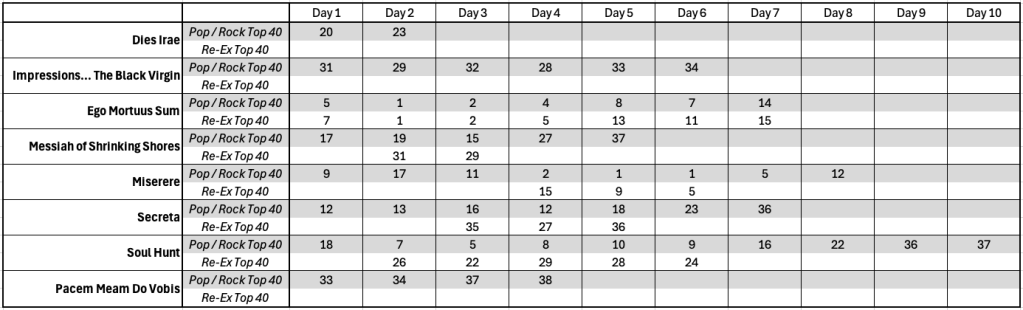
I recently took a look at how the tracks from my latest album Horror Sacri performed on RepostExchange — a platform where independent artists can share and promote each other’s music, and where listener engagement shapes the Pop/Rock and overall Top 40 charts.
Here’s how the songs did:
Ego Mortuus Sum reached #1 on both the Pop/Rock Top 40 and the Re-Ex Top 40 — the highest position any of my songs has ever achieved there.
Soul Hunt stayed on the charts for 10 days, making it the longest-lasting track from the album.
Messiah of Shrinking Shores, Secreta, Soul Hunt and, somewhat surprisingly for an instrumental, Miserere, also made it to the Re-Ex Top 40 — with Miserere climbing all the way up to #5.
I’m deeply grateful for all the support, plays, and feedback. These numbers aren’t just statistics — they’re echoes of connection, and I’m truly thankful to everyone who helped Horror Sacri find its audience.
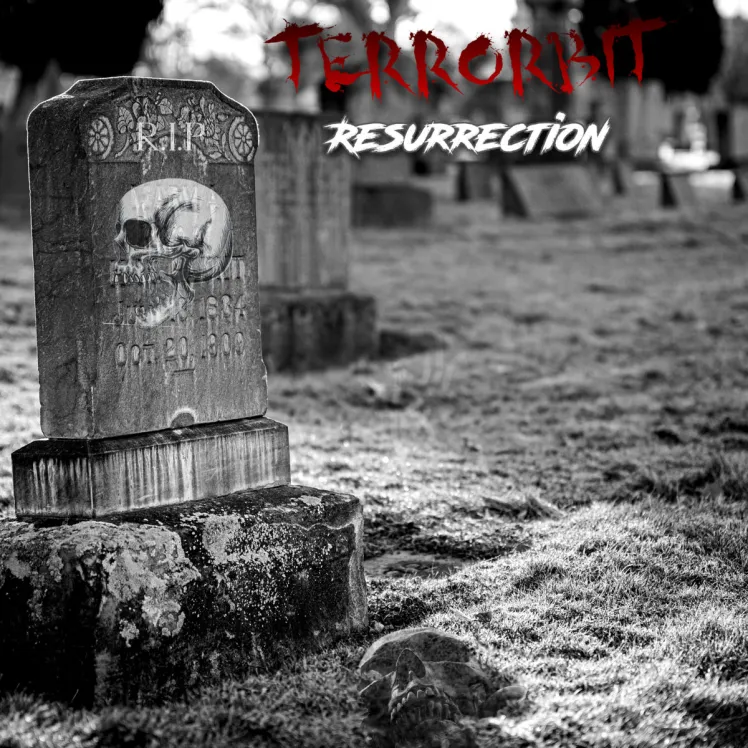
My Swedish friend Freddie (Fredrik Keith Croona) has resurrected his dark synthwave project Terrorbit — and I had the pleasure of playing guitar on two tracks from the new EP, fittingly titled Resurrection: “Shinjuku Vampire” and “Neon Blood.”
I was already part of Terrorbit’s first era (see posts here and here), and it felt great to be invited again. Synthwave is quite foreign territory for me — far from the world of metal riffs and textures I usually live in — but that’s exactly why I enjoy these collaborations so much. They open new perspectives, challenge the way I think about sound, and remind me that there’s always something to learn when you step outside your comfort zone.
Thanks for having me again, Freddie. This one truly bleeds neon. ⚡️
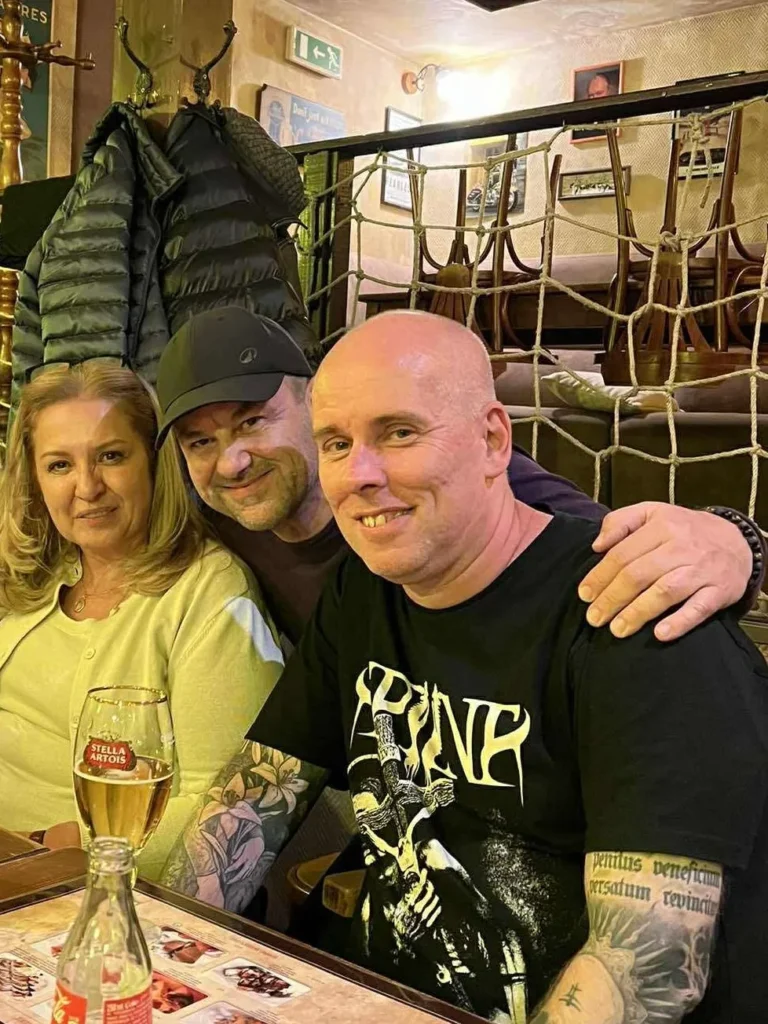
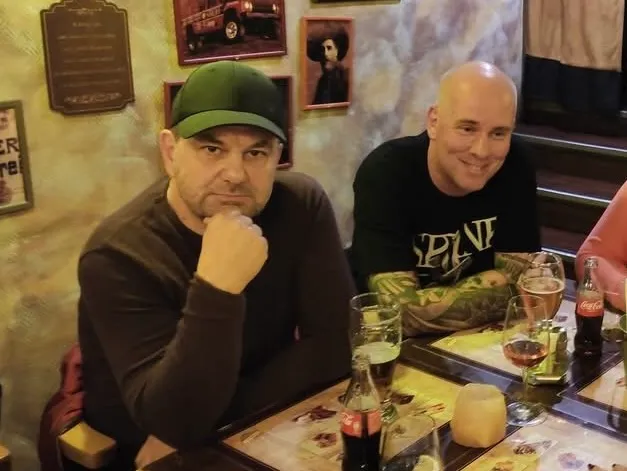
Last night I met up with some of my old classmates. Some of them I hadn’t seen in decades, others I’ve stayed in touch with here and there… and then there was my oldest friend — the one I started making music with when we were just kids.
I still remember those early days: we were maybe ten years old, learning to play guitar together, dreaming about forming our first band. We spent countless hours practicing, listening, planning. And even when life later took us to different places — me to Munich, him to London — the friendship never faded. The music kept us connected through it all.
We played in many projects together over the years, explored all kinds of genres, and it was actually him who first introduced me to music recording and production. We even joined a local talent show once — what memories! Our musical tastes still overlap a lot, and every now and then we bump into each other at concerts of the bands we both love.
Now, decades later, sitting together again over a fine Irish whiskey, that same old vibe was still there. I tried his freshly bought instruments, we talked for hours, and at some point we both realized: the dreams we once had as kids… we actually made them come true. He makes a living from music — teaching guitar, playing in bands — and my own life also revolves around music, in my own way. Different paths, same passion, and both of us happy with where we ended up.
And best of all: after all these years, we’re planning new things together again. Music, of course. Always music.
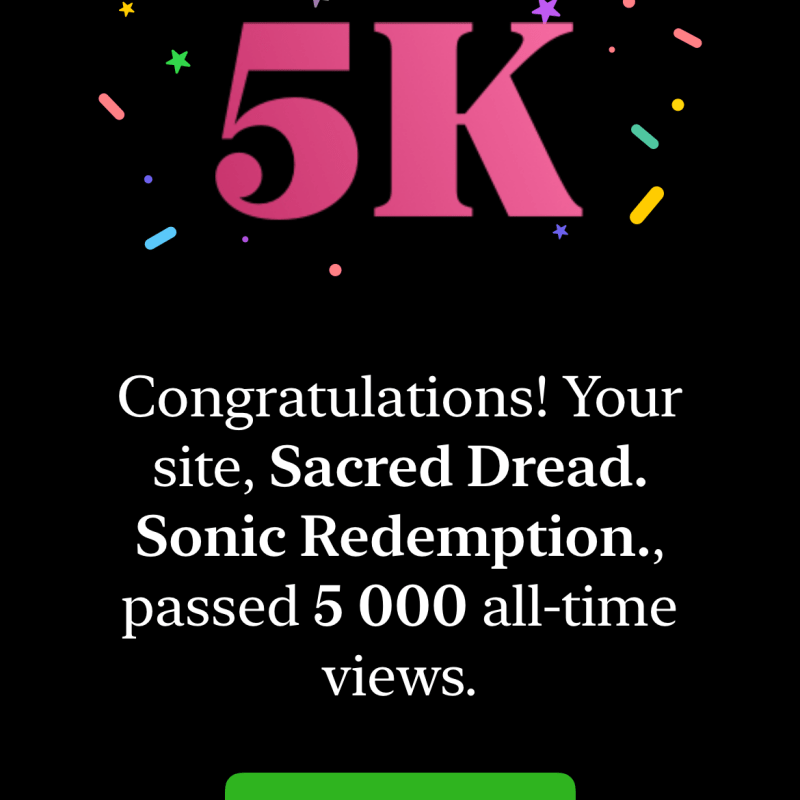
My website, “darkwavemetal.com – Sacred Dread. Sonic Redemption”, has recently crossed 5000 views. I know – in a world obsessed with numbers, algorithms, and endless scrolling, that might not sound like much. But to me, it means the world.
Every visit represents a person who, for a brief moment, stepped into this small universe I’ve been building piece by piece – through sound, thought, and emotion. Five thousand times, someone looked beyond the noise and chose to listen. And that, in itself, feels almost unreal.
When I started Darkwave, I didn’t aim for fame or numbers. I just wanted to create something honest – something that could speak when words fall short. To know that this music, these fragments of silence and distortion, have found their way to even a few hearts… that’s more than I could ever ask for.
So if you’ve ever visited, listened, or shared a moment within this world – thank you. You’ve made this solitude feel a little less silent.