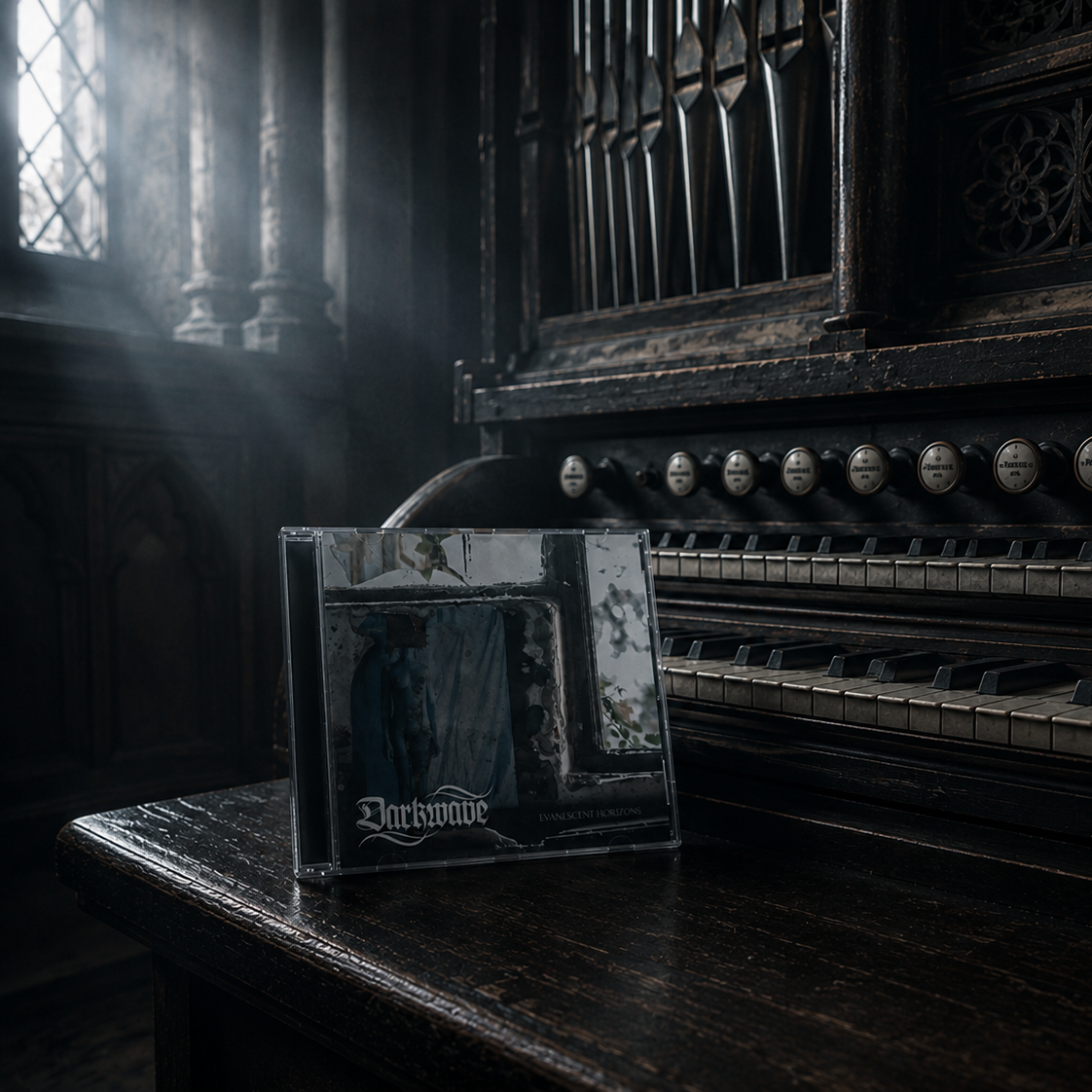
The Church Organ — Giving Voice to Space

Some instruments create melodies. Others create space. Not physical space, but the invisible space in which music can breathe, where emotions can expand beyond words.

For me, that space has always resembled the night sky. On some evenings, the stars feel comforting, almost protective. On others, the same sky becomes overwhelming, confronting us with a universe so immense that it quietly dissolves every illusion of our own importance. I have always searched for an instrument capable of giving that experience a voice.

For me, that instrument has always been the church organ. Its sound carries something I have never found anywhere else. It is monumental without becoming aggressive, intimate without becoming fragile. It can lift us toward something greater while quietly reminding us how small we truly are. Whenever I hear a great organ, I think of Gothic cathedrals. Not only because of their architecture, but because they evoke exactly the same emotional paradox: they are places of extraordinary beauty, yet they also carry an almost unbearable weight. One enters them feeling invited… and at the same time humbled.

That paradox lies at the heart of Evanescent Horizons.

The album is, in many ways, a story about losing everything that once seemed certain. Love, hope, identity, even the meaning of suffering itself are gradually stripped away. Yet through that loss, another perspective slowly begins to emerge: one that reaches beyond what can be measured or possessed.

The church organ became the musical thread connecting those ideas. It appears throughout the album not because I wanted to create a “church-like” atmosphere, but because no other instrument speaks so naturally about transcendence. It gives voice to a world that exists beyond the visible. A world that is beautiful and terrifying in equal measure. A world vast enough to make us feel insignificant, yet meaningful enough to make every act of love matter.

Perhaps that is why the organ has always felt at home in my music. Not because it sounds ancient. But because it reminds us that some questions have always been larger than ourselves.

Entering Evanescent Horizons

There was a time when listening to an album meant more than pressing play. Many of us remember sitting with a CD booklet in our hands, reading the lyrics while the music unfolded, discovering references, symbols, and hidden connections that revealed themselves only after repeated listens. An album was not simply consumed; it was explored.

This guide was born from that same spirit. It is not a booklet, nor is it an attempt to explain the songs. The lyrics of Evanescent Horizons were written to stand on their own. Their story is intentionally understated, and many of the ideas that connect the eleven songs remain beneath the surface. I wanted it that way. My goal was never simply to tell a story, but to use that story as a way of exploring questions that have accompanied me for years: questions about love, loss, meaning, hope, mortality, and what (if anything) endures when everything else seems to disappear.

Think of this guide as a companion to the album rather than a commentary on it. It offers the context in which the songs were written, the ideas that shaped them, and the musical choices that helped bring them to life. It is an invitation to look beneath the surface and discover another layer of the journey.

Ultimately, however, this guide is about something more personal. Every album inevitably becomes a portrait of the person who created it. Whether we intend it or not, our experiences, convictions, doubts, and hopes find their way into the music. Evanescent Horizons is no exception. Through a fictional narrative, I found a way to speak honestly about my own worldview, my own questions, and the things I have come to believe. In the end, I realized that this was the only thing I could truly offer. Because as musicians, we can imitate styles, admire influences, and learn techniques. But sooner or later, every meaningful work begins with the same decision: to give something of ourselves.

I hope this guide enriches your journey through Evanescent Horizons.Thank you for taking it. If you’d like to spend a little more time in the world of Evanescent Horizons, I’d be honored to have you read its Companion Book. You can download it below.

🔗 A Companion to Evanescent Horizons

The Day Has Come

The silence has ended.
Everything that followed was written for this moment.

Evanescent Horizons is out now.

This album is the result of years of writing, questioning, beginning again, and refusing to let go until every note and every word felt true. It tells the story of loss—but even more, of what remains after loss. It is my most personal work to date, and I gave it everything I had. If these songs accompany even one person through their own darkness, they have already fulfilled the purpose for which they were written.

Thank you for walking this journey with me.

Begin this new chapter of the journey here:

Spotify: https://open.spotify.com/album/7LujOfz96JfmxcSCBiipIi…

Bandcamp: https://darkwave-metal.bandcamp.com/…/evanescent-horizons

Evanescent Horizons (2026)

Released on 15 July, 2026, Evanescent Horizons is Darkwave’s fifth full-length album and its most ambitious artistic statement to date. Conceived as an eleven-chapter concept album, it follows the emotional journey of a soul confronted with unrequited love, loss, anger, acceptance and, ultimately, the fragile possibility of hope. Rather than telling a simple story, the album explores a universal question: can love retain its meaning even when it is never returned?

At its heart, Evanescent Horizons is not an album about heartbreak alone. It is about confronting the moments that redefine us—when certainty collapses, when grief reshapes our identity, and when we are forced to decide whether hope is still worth holding onto. It does not seek easy answers or comforting illusions. Instead, it invites the listener to walk through uncertainty and discover that even the deepest wounds can reveal unexpected beauty, compassion and meaning.

Musically, Evanescent Horizons expands Darkwave’s progressive symphonic death metal into its broadest and most cinematic form yet. Crushing riffs intertwine with sweeping orchestral arrangements, neoclassical passages and atmospheric soundscapes, allowing brutality and vulnerability to exist side by side. Every composition serves the emotional arc of the narrative, making the album a unified experience rather than a collection of individual songs. Recurring musical themes evolve alongside the protagonist, gradually transforming as the story unfolds and giving the album a strong sense of continuity from beginning to end.

As with every Darkwave release, the entire album was written, arranged, performed, produced, mixed and mastered by Zsolt Némethy. Every musical decision—from the orchestration to the smallest production detail—was guided by a single purpose: not to offer an escape from darkness, but to offer companionship while walking through it.

In an age increasingly defined by distraction, uncertainty and isolation, Evanescent Horizons is an invitation to slow down, to listen, and to reflect. It is a journey through darkness, but not one that surrenders to despair. Beneath its weight lies a quiet conviction: that love possesses an intrinsic value independent of whether it is returned, and that hope, however fragile, may still endure when everything else seems to fade.

Track listing

The links below will lead you to the respective tracks on my Bandcamp page, where you can stream or download the songs. Alternatively, you can explore Evanescent Horizons on various streaming platforms, including Spotify, AppleMusic, SoundCloud, and YouTube.

  1. Gaslight Elegy (5:50) – [song lyrics]
  2. Blood-Sealed Solitude (4:49) – [song lyrics]
  3. The Parchment Night (5:26) – [song lyrics]
  4. Transitio Mundi (6:11) – [song lyrics]
  5. The Godhook Silence (5:32) – [song lyrics]
  6. TrES-2b (1:49) – [instrumental]
  7. Farewell to the Angel of Sardis (7:19) – [song lyrics]
  8. The Good Friday Exsultet (5:46) – [song lyrics]
  9. On the Turning of the Years (5:53) – [song lyrics]
  10. The Last Dance of the Unchosen (6:09) – [song lyrics]
  11. Compline Over the World (3:10) – [song lyrics]

Total playing time: 57:48

The Search for What Endures – The Road to a Credo

The philosophical journey of Evanescent Horizons unfolds through a series of increasingly deeper questions.

  1. It begins with a personal one: “What does one do with love when there is nowhere left to direct it?”
  2. As the story progresses, this gives way to a broader question: “Does love retain its value when it is not reciprocated?”
  3. From there, the album expands beyond the realm of relationships altogether: “Are there things whose worth exists independently of recognition, usefulness, success, or reward?”
  4. And finally, it arrives at its deepest question: “Is there any value that is eternal?”

The album does not attempt to prove its answer philosophically. Instead, it tells the story of a man who gradually comes to live as though the answer is yes.

He loses what he loves. He loses the future he imagined. He never receives the fulfillment he hoped for. Yet he ultimately discovers that genuine love is not validated by acceptance, nor diminished by rejection. Its worth does not depend on what it achieves.

By the end of the album, this realization becomes a conviction. The protagonist chooses to believe that love possesses an intrinsic value that transcends success and failure, life and death. The final answer of Evanescent Horizons is therefore not a logical conclusion, but a credo:

“If there is anything eternal in human existence, it is love itself.”

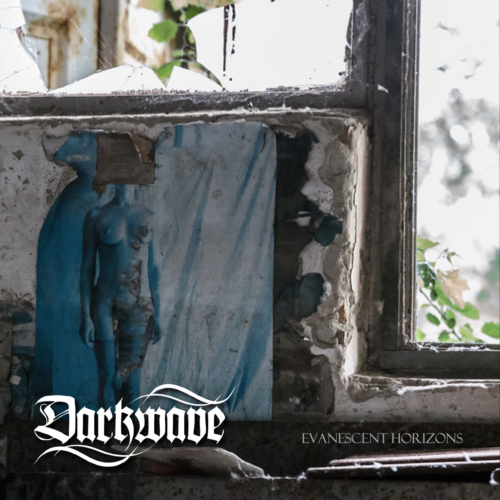
A Window Between Loss and Hope – The Cover Art of Evanescent Horizons

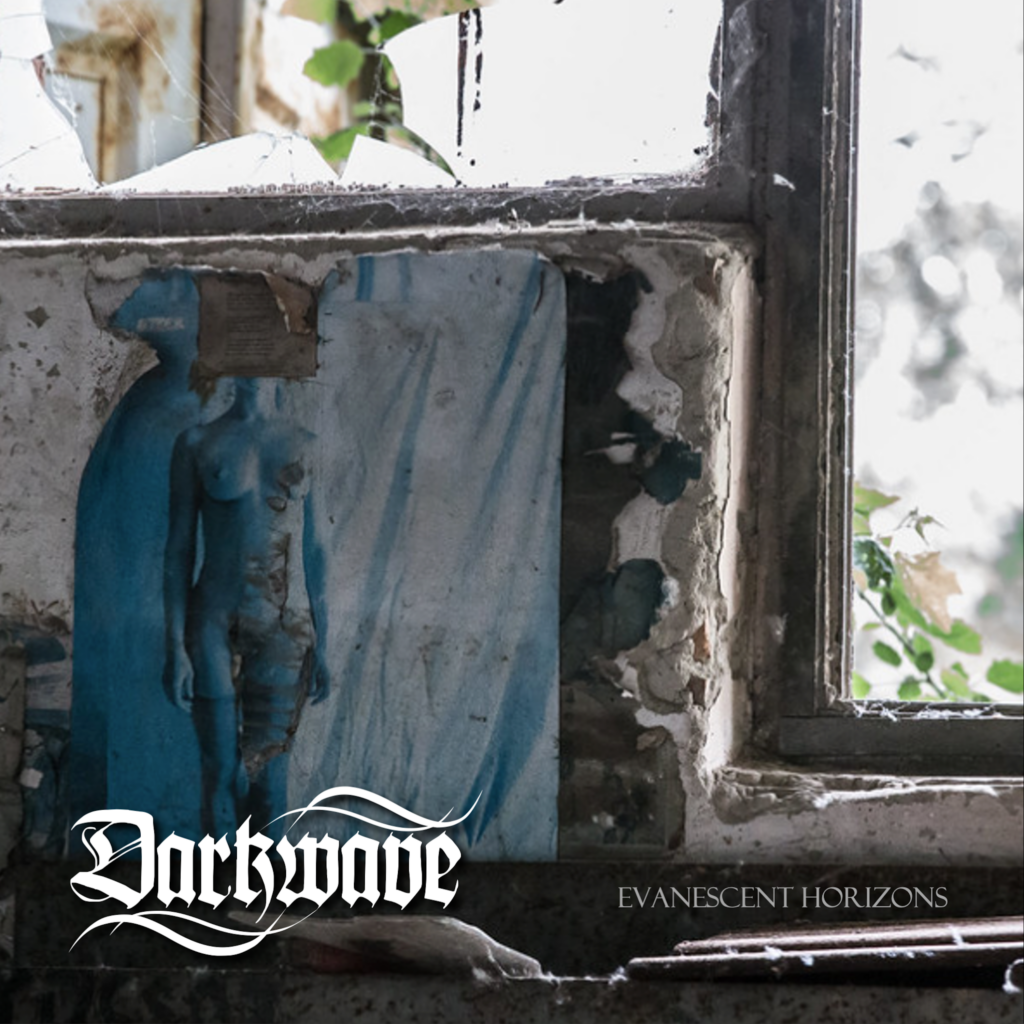
The cover artwork of Evanescent Horizons may seem somewhat unusual at first glance, but it reflects many of the album’s central themes. The photograph itself – as with all visuals accompanying Evanescent Horizons – was taken by my talented friend, photographer Dávid Ujhelyi. His remarkable eye for atmosphere and detail helped bring the album’s visual world to life.

The decaying industrial setting serves as a reminder of transience, deterioration, and the inevitable passing of all things. In many ways, it represents the point from which the album begins: the confrontation with loss, impermanence, and the realization that what we love cannot always be preserved.

At the center stands a blue female figure whose presence intentionally echoes the cover of Horror Sacri. There, a similarly colored figure represented the Virgin Mary and reflected that album’s focus on the sacred and the transcendent. Here, however, the figure is simply an ordinary human being. She is naked, vulnerable, and her face is deliberately concealed. By removing her individual identity, the image suggests that the story told on Evanescent Horizons is not about one specific person, but about something universal. The woman becomes a symbol rather than a portrait.

The title itself points in two directions. The horizons are behind us as much as they are ahead. The blue figure establishes a visual connection to the previous album, looking back toward themes and questions that have accompanied Darkwave for years. At the same time, the image opens a path toward something new. Perhaps the most important element of the cover is the window. It stands between the decaying interior and the bright world beyond. In many ways, it represents a threshold: the place where loss, memory, and mortality encounter hope. Beyond the rusted frame there is only light. We cannot see what lies within it, nor does the image attempt to provide certainty. The horizon remains hidden. Yet its presence is unmistakable. For me, that light symbolizes hope: not as a guarantee, but as a possibility. Not as an answer, but as a direction.

The album ultimately arrives at a similar place. It does not eliminate loss, nor does it deny decay. It does not claim to possess final answers. Instead, it asks whether something meaningful can endure despite them. The bright horizon beyond the broken window remains unseen, but it is there nonetheless. In that sense, the cover artwork mirrors the album’s final realization: we may never fully see what lies beyond the horizon, yet we can still choose to walk toward the light.

You can also listen to the album here: 🔗 https://darkwave-metal.bandcamp.com/album/evanescent-horizons

Evanescent Horizons is now available for pre-order on Bandcamp

I have spent months living with these songs. Writing them. Rewriting them. Recording them. Questioning them. Trying to make them say exactly what I wanted them to say.

On the surface, this album tells the story of loss. At a deeper level, it asks a question that refused to leave me alone: “Are there things whose value remains intact even when they seem to achieve nothing?” That question became the heart of Evanescent Horizons.

The album will be released on July 15th, but if you pre-order it now, one track will be instantly available.Thank you for listening and thank you for walking this road with me.

🔗 https://darkwave-metal.bandcamp.com/album/evanescent-horizons

What Remains When Nothing Remains? — A Journey That Became an Album

For the past months, I have lived with an album.

Not merely worked on it – lived with it. What began as a collection of songs gradually became something much more personal: a journey through hope, loss, grief, anger, acceptance, and the search for meaning beyond them all.

I am happy to finally announce that my new Darkwave album, Evanescent Horizons, will be released on July 15th.

Musically, it is a blend of progressive and symphonic metal, enriched by orchestral arrangements, church organ, neoclassical influences, thrash and death metal elements, and a few unexpected detours along the way. At its heart, however, the album asks a simple question: “Are there things whose value remains intact even when they seem to achieve nothing?” That question became the thread connecting all eleven songs.

Evanescent Horizons is, however, not ultimately about loss and grief. It is about refusing to believe that love, kindness, loyalty, and sacrifice are valuable only when they succeed. At its heart lies the conviction that some things possess an intrinsic worth independent of recognition, reward, or outcome. The protagonist loses everything he once believed he needed, yet discovers that love remains meaningful nonetheless. In the end, the album is less a tragedy than a credo: a testament to the belief that some truths—and above all, love itself—endure even when everything else fades away.

Whether many people hear it or only a few, I know that this album represents the most honest expression of what I wanted to say at this point in my life.

I look forward to sharing it with you on July 15th.

More Than an Album

For the past months, I have spent countless hours working on a new Darkwave album. Writing, arranging, recording, re-recording, mixing, doubting, rewriting, and starting over. As I am finally approaching the finish line, I find myself reflecting on what this album truly means to me.

The songs themselves are new, but their roots are much older. Most of the lyrics began their lives as poems, written long before the music existed. They were born from loss, grief, anger, love, memories, and the slow process of learning how to let go. Turning them into songs of a concept album was not simply a matter of fitting words to riffs and melodies. It meant reshaping deeply personal texts so they could live and breathe within the language of metal music without losing their original meaning.

Throughout this process, I gradually realized that this album had become something more than a collection of songs.

It became a personal statement.

A testament to what I believe about the ultimate meaning of love in its broadest sense, loss, memory, and the human capacity to endure and to create meaning that transcends our mortal reality. It tells the story of descending from joy and hope into darkness, confronting pain, rage, despair, and the overwhelming weight of absence. Yet at its core, it is not a story about defeat. It is a story about learning to live with what cannot be changed, carrying memories that never truly fade, and discovering that acceptance does not mean forgetting. Some wounds remain with us forever, but over time they cease to define us. We learn to carry them differently, and in doing so, we find a way forward without betraying what we have lost. Throughout this journey, we gradually discover a deeper meaning that extends beyond our finite lives.

Perhaps the deepest question running through the entire album is whether selfless love (and by “love” I mean the original, broader sense of the word that encompasses all forms of altruism, not merely romantic affection) possesses an intrinsic value independent of its usefulness, recognition, or reception. Whether devotion, loyalty, sacrifice, and compassion carry meaning beyond reward or even acknowledgment. I have come to believe that they do. That genuine love is not validated by acceptance, nor diminished by rejection. Its worth does not depend on whether it is reciprocated, understood, or even remembered.

The story reaches its conclusion not through triumph, but through transcendence. The protagonist ultimately accepts his own mortality, yet the love that shaped his journey does not disappear with him. It endures beyond loss, beyond failure, beyond death itself.

The path toward that conclusion is far from peaceful. There are moments of fury on this album. There are moments of sorrow. There are moments when everything seems broken beyond repair. Yet I never wanted the final message to be one of hopelessness and meaninglessness. If there is a final message hidden within these songs, it is the belief that love possesses an intrinsic value that exists independently of human judgment. It remains real even when unanswered, meaningful even when unseen, and lasting even when everything else fades away.

I do not know how this album will be received. I did not create it to chase trends, algorithms, or commercial success. I created it because I felt compelled to. Because some stories demand to be told, and some emotions refuse to stay silent. Whether many people hear it or only a few, I can honestly say that I gave it everything I had.

This album is not merely music.

It is my personal credo.

When Classical Music Meets Metal

Sometimes music opens a door you didn’t even know existed.

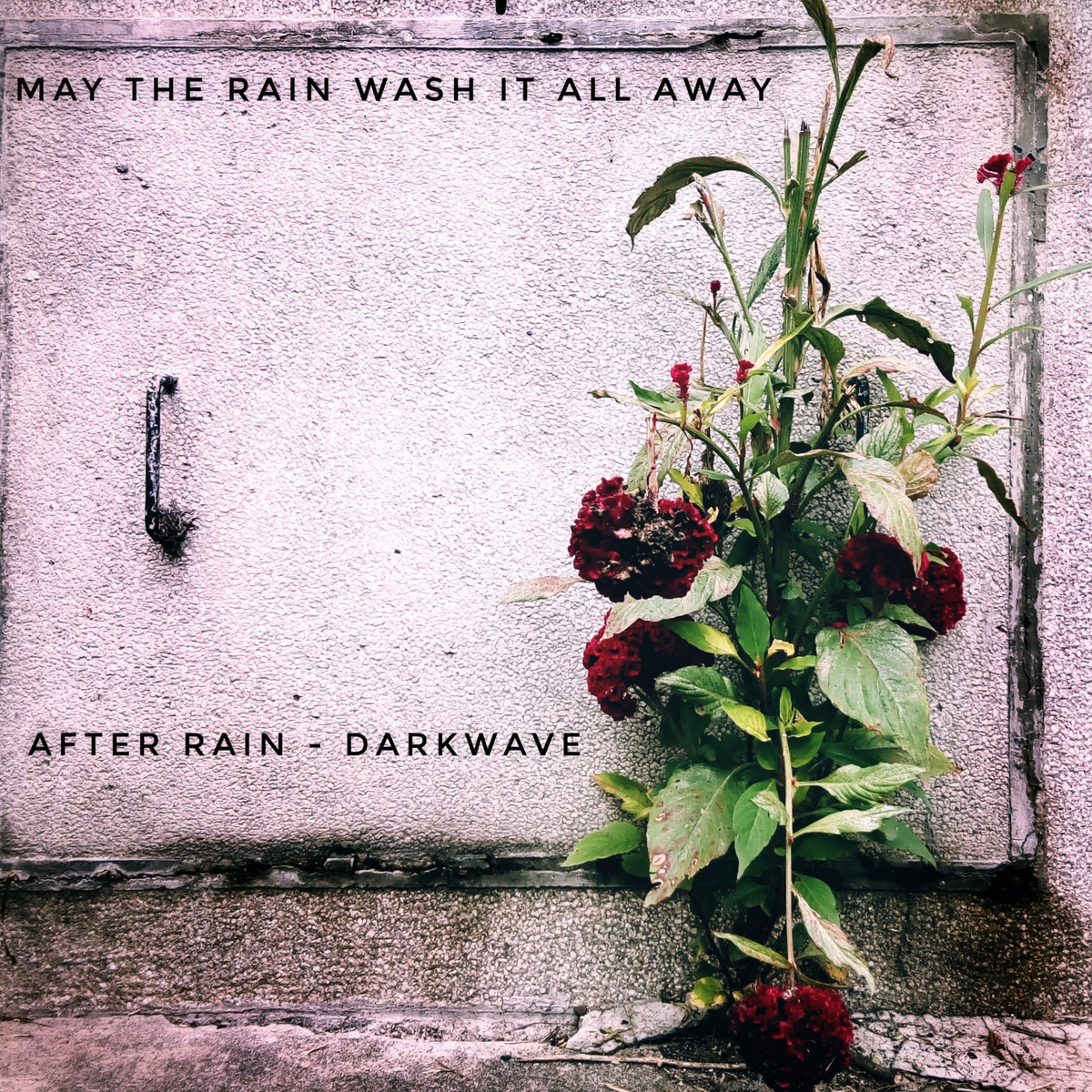
Recently I had the chance to collaborate with After Rain, an exceptionally talented classical composer from Guatemala, and the experience led me somewhere entirely new: bringing my metal guitars into a piece that was originally conceived as classical music.

The idea of merging metal with classical music has always been close to my heart. For years I’ve been fascinated by the possibility of creating a true synthesis between these worlds, following the footsteps of my greatest musical inspiration, Jon Lord. But until now, my approach had always been the same: I would write a metal piece first, and then enrich it with classical elements.

This time the process unfolded in the opposite direction.

The composition already existed as a fully realized classical work: its structure, harmonies, chord progressions, and rhythmic flow carefully woven into a deeply expressive piece of music. My task was not to reshape it, but to step inside it, to listen closely, and to find the places where the language of metal could naturally grow from its emotional core.

So I tried to set aside my usual ideas about how such a fusion should work and instead follow the inner logic of the music itself. Tight rhythms, massive guitars, and soaring solos gradually found their place within the composition.

As After Rain describes it on Bandcamp: “A powerful collaboration with Darkwave, blending my melancholic and heavy harmonies with his intense metal sound. A song born from despair, anger, and pain.”

While our musical backgrounds may seem strikingly different, I felt deeply connected to the original vision. My goal was never to overpower it, but to complement it: to let my own voice emerge through the guitars while remaining faithful to the spirit of the piece.

You can listen to the result here:
https://afterrain2.bandcamp.com/track/may-the-rain-wash-it-all-away-feat-darkwave

I hope you’ll enjoy listening to it as much as I enjoyed pouring my soul into this music.