Through the Curators’ Ears: The Journey of Ego Mortuus Sum

I recently submitted Ego Mortuus Sum to a few playlist curators on SubmitHub. The feedback was consistent: they appreciated the progressive feel, sharp riffs, and strong musicianship, but felt the song didn’t quite fit their audiences.

Some wanted more raw aggression, others preferred less atmospheric transitions.

So while the track was recognized as solid and innovative, it simply wasn’t the right match for those particular playlists. I take it as a reminder that my music speaks most to listeners who enjoy a balance of heaviness and atmosphere—rather than pure extremity. 

I feel like I’m on the right track.

A Milestone for Horror Sacri: #1 on the Charts

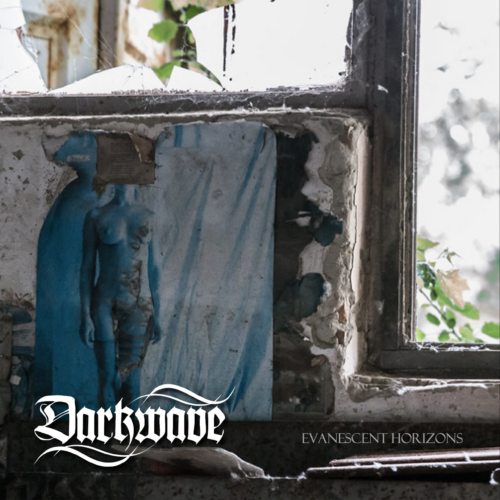
I have some wonderful news to share. One of the songs from Horror SacriEgo Mortuus Sum, has just reached the #1 spot on both the RepostExchange Pop-Rock chart and the overall cumulative Top 40 chart.

This is the first time that any of my songs has climbed this high on these lists, and I have to admit—I’m both surprised and deeply moved. Over the years, a few tracks from my earlier albums have appeared on the RepostExchange charts, but this is by far the greatest success I’ve ever had on the platform.

For context, RepostExchange describes itself as “more than just a reposting platform; it’s a collaborative music promotion network where artists empower each other to reach new heights.” And that’s exactly what makes this moment feel so special. It’s not just about numbers—it’s about connection, about artists supporting one another and helping each other be heard.

Seeing Ego Mortuus Sum resonate in this way reminds me why I do what I do: to share music that comes from the deepest places of the soul, and to find that it can reach others, even in unexpected ways.

To everyone who supported me on this journey—thank you. Your encouragement means more than I can say.

Lyrics of Loss, Music of Hope

Over the past weeks, I’ve spent countless hours writing, crossing out, rewriting, and listening inward. And now, something important has taken shape: the first full draft of the lyrics for my next album.

Of course, I know they’ll still change as the music takes form—songs have their own way of asking for rhythm, for refrains that stay with you, for silences where words no longer fit. But the foundation is here, and it already stretches across six and a half pages. Honestly, I can’t imagine how much music it will take to carry all of this. What I do know is that this record is going to be huge—not just in scope, but in emotional weight.

At its core, the album is about the deepest human struggle: acceptance and rejection, and how we live through them inside ourselves. Each song marks a step along that path. In a way, it’s like a love story turned inside out—moving from hope to struggle, through despair, anger, disappointment, and sorrow, until it finally arrives at resignation and maybe even reconciliation.

But there’s one thread that never disappears from this journey: love. The voice in these songs keeps on loving, right to the very end. Even when that love is rejected, even when it leads to heartbreak and death, it remains. And this raises the real question: does love hold a universal meaning that can outlast death itself? Is there something in our most human emotions and struggles that is stronger than mortality—something that ultimately justifies life and gives it meaning?

That’s the question I want this album to wrestle with. The story it tells may end in tragedy, but my hope is that the music itself will carry something beyond the darkness—that in the end, there is still light, still a glimpse of hope.

Thank you for walking with me on this journey. These words are only the beginning, and I’m grateful to have you by my side as the music slowly takes shape around them. I’ll be sharing more as the album comes to life—and I hope you’ll stay with me until the very last note.

Why My Music Uses Christian Symbolism

Not long ago someone asked me why my music is so heavily infused with Christian symbolism. It’s an interesting question—because while I don’t consider my work “Christian music” in the strict sense, these images and words appear again and again in my lyrics and concepts.

The truth is simple: like every human being, I’m deeply concerned with the fundamental questions of existence. What is the ultimate purpose of life? What happens when we die? Is there meaning to our fragile time here on Earth?

Every person seeks answers to these questions in their own way, shaped by their worldview, personality, and upbringing. For me, the Christian symbolic world has always felt natural and powerful. It speaks a language I understand instinctively, one that resonates with me both emotionally and intellectually.

I don’t use these symbols to preach, but to express. They are tools to explore the darkness, the light, and everything in between. Through them, I can translate inner struggles and spiritual dynamics into something universal—something that others might recognize in their own lives, even if they come from different backgrounds.

That is why my albums are full of crosses, prayers, angels, and tombs. Not as dogma, but as metaphors. They help me give shape to questions that otherwise would remain silent.

Listening to the Dead

Not long ago I came across a meme that said: “I listen to dead people.” It was meant to be darkly humorous—pointing out that many of the musicians we admire are no longer alive. But the more I thought about it, the less funny it seemed.

Because it’s true.

So many of the voices and hands that shaped my musical world are now silent: Jon Lord, Lemmy, Warrel Dane… and recently, Ozzy Osbourne too. Realizing this makes me painfully aware that I’ve already lived more than half of my life.

And yet, there’s another side to it. Their music is still here. What they created continues to resonate, to inspire, to move me. It has somehow survived them. That thought carries a strange comfort: if I try to fill my life with meaning, if I keep creating, giving, and shaping something of value, then maybe my work can also outlive me.

When I face the darkness and the silence, this becomes a fragile kind of hope—that my life was not meaningless, that I left something behind. It may not be much, but it is something.

And this thought ties directly into what I’m exploring with my next album: the question of whether there is an ultimate purpose to this fragile, fleeting human existence.

What’s Next After Horror Sacri? A Journey Through Love and Loss

It feels a little strange to already be talking about my next album when Horror Sacri has just been released. I know I should be focusing on promotion—sharing reels, videos, and giving this music the attention it deserves. I’ve done some of that (I just submitted Ego Mortuus Sum to SubmitHub), but right now, I find it hard to linger in the past. Horror Sacri has been part of my life for two long years, and though I’m proud of it, I feel the need to move forward.

So let me share a small teaser about what’s coming next.

The concept of the upcoming album is centered around one big question: does love have value in itself? Does it endure even when rejected, unreturned, or left unfulfilled? Can something so fragile still be eternal?

Through the lyrics, I want to explore whether there is any lasting meaning in our short human existence—whether life has an ultimate goal, or if its essence is found in the way we love, even in silence, even without reciprocation.

This won’t be a theatrical storyline, but a cohesive inner journey: the spiritual dynamics of a man facing rejection. His mind and heart shift from hope to denial, from rage to surrender, until he finally reaches acceptance and inner peace. And at the end, he dies—but the love he carried within him doesn’t die with him. It lingers on, as something eternal.

That’s all I can share for now. The rest would be premature—but I hope this glimpse gives you a sense of where my thoughts and music are heading.

Thank you for walking this path with me. It means more than I can ever express.

Back to the routine

How’s everyone doing?

It’s Monday morning and I’m sitting in my office again. During the last few weeks I’ve been on my summer holiday – and it was great! Besides having an amazing time with my wife either at home or trekking in the Bavarian Alps, I dedicated most of my free time to promote my new album. The first feedback is exceptionally good: people seem to like the album and say heartwarming things about the progress I made. This kind of positive feedback always surprises me in the best sense of the word – I spent too much time with writing, recording and polishing this album, and now I’m unable to objectively see its strengths and weaknesses anymore. I suppose the positive feedback is probably due to the maturation of the sound and the inclusion of vocals. It was interesting to see how many people can connect to a song with lyrics rather than to pure instrumental compositions! And to tell the truth, I also feel relieved that finally I could express myself better than before, when I still only used instruments to transmit my feelings and thoughts. While creating instrumentals, I always felt that something was missing – I had to rely exclusively on sounds – now with vocals it’s far easier, far more versatile.

Also, I started writing the new album. Yes, you’ve read it well: I started the preparatory work for a new release, even though the last one was published only a few days ago. This time I plan to utilize a different approach: first I create a concept for the whole album, finalize the lyrics and only then I’ll start writing the music. Next time I’ll tell you more about that.

One more important thing: in the future I’ll write more blog posts like this. Please subscribe to it, so you don’t miss these updates!

The first message on the blog

As some of you were interested in, I decided to start a small blog here, just to give you updates on my daily life.

The Sacred Horror in Words

Introduction to the lyrics of Horror Sacri – Beyond the Words

For me, Horror Sacri is more than music – it is a journey along the borderlands of darkness and light. Contrary to my previous albums, these songs are not only built from sound; through their lyrics they open a window into an inner world where the shadows of faith, the abyss of doubt, and the longing for transcendence intertwine.

Each lyric is a mirror, reflecting a different face of the same question: what happens when we confront our own limits, when familiar answers turn hollow, and all that remains is silence, absence, and a thirst for something beyond?

This collection is not meant as an “explanation” of the music, but rather as a companion: an unveiling of the thoughts and images woven into the songs. A second layer, which doesn’t need to be separated from the music – but for those who wish to dwell in the words, new doors may open.

Here, then, are the lyrics of Horror Sacri – as they were written, and as they now take on a life of their own.text

1. Dies Irae

A dark reimagining of the medieval Dies irae hymn, this track strips the original down to its most haunting fragments. With church organ framing the piece, it questions the fear-driven image of divine judgment and hints at something more compassionate beneath the ashes.

Dies irae, dies illa
Solvet saeclum in favilla.
Quantus tremor est futurus
Quando iudex est venturus.
Liber scriptus proferetur,
in quo totum continetur.
Iudex ergo cum sedebit,
quidquid latet apparebit.

The day of wrath, that day,
will dissolve the world in ashes.
How great will be the quaking,
when the Judge is about to come!
The written book will be brought forth,
in which all is contained.
When therefore the Judge will sit,
whatever lies hidden, will appear.

2. Impressions… The Black Virgin

A somber reflection on suffering, endurance, and fractured faith — this track reimagines the beatitudes through brokenness yet clings to a fragile hope beyond death. Gothic melancholy meets spiritual defiance.

I wept last night, a child in dream’s embrace,
I mourned where ancient halls had lost their grace.
Stone-bodied trees fought winds in solemn dance,
while you, wild dogs, just laughed and took your chance.

“Blest is the soul that breaks beneath the load,”
the Lord declared, and gently grace bestowed.
“Though pain may blaze with glory’s final breath,
all else is lost, save hope beyond all death.”

So, lift me from the winter drawing near,
shed just one tear before I disappear.
For Lord, no more I am the dead or living –
a symptom now, a shadow barely breathing.

3, Ego mortuus sum

Progressive chaos meets old-school death metal in this wrathful outcry of broken faith. Featuring Fredrik Keith Croona, the track lashes out with despair — but still clings to a final, flickering hope.

One final blink until life gets complete,
until God’s grace destroys my melting meat.
Fermenting in the cesspool of the saints,
I pass away through firmamental drains.

Until my wine starts clotting in my mouth
drowning I dive this quietude throughout.
Candles are lit along my road to death,
out of my mouth I inhale my own breath.

Domine,
Clamavi ad te,
Et sanasti me,
Domine!

O Lord,
I have cried to thee,
and thou hast healed me.
O Lord!

Until I leave my assets far behind
peeling my lifeblood off this mortal mind.
Let loose this fire, enkindle my distress,
let my soul sink in this subversive hex.

One final blink until life gets complete,
laying face-up over the altar sheet.
My facial features under gleaming stars
this fake subsistence one by one disbarks.

4. Messiah of Shrinking Shores

A sorrowful, progressive elegy of abandonment and inner collapse, featuring the haunting vocals of Fati Urbán. Gothic textures meet staccato riffs in this hymn to the forgotten.

He clung with nails of wood so tight,
scratching the fresco-black of night.
Obscured he wrote a gospel’s rhyme,
ashtray of God, clandestine grime.

All that he saw, all fails did stay,
no skyey dew would fall his way,
breathing desert dust-eating life,
rotten finger-flesh, he played a strife.

If he was saved, he tore his crown,
blood-stained tears fall, like storm pour down,
showing his fake gloriole,
he will baptize you, he will bury.

And as he climbed the western sky,
the stars within themselves did die,
“Embrace me now, and take my blood”
said “Let me sink into the flood.”

5. Miserere (Instrumental)

The album’s only instrumental, Miserere merges classical influence with blastbeat-driven intensity — a bridge between past and present, reverence and unrest.

6. Secreta

A prayer for enemies wrapped in eerie orchestration and fractured rhythms. Secreta captures the spiritual dissonance of forgiving when the soul is still bleeding.

Oblatis, quaesumus, Domine,
placare muneribus:
et nos ab inimicis nostris clementer eripe.

We beg You, O Lord, be appeased
by these sacrificial offerings:
and mercifully snatch us away from our enemies.

7. Soul Hunt

A fierce, apocalyptic track where thrash metal meets liturgical despair. Soul Hunt casts humanity as prey in a cosmic war — a cry for deliverance in a world with no peace.

A star fell blazing, torn from the sky,
ghostfire flickers, years burn dry.
Lunatic echoes are tearing the spheres,
behind steel gates, the enemy appears.

He winks at me with a hollow stare –
a pupil-less gaze, a frozen glare.
“Come with me,” he speaks to me, “behold!
We’ll walk in the void like the gods of the old!”

Bell tolls crash on the lead-gray land,
the last fires go out, lost in the sand.
It’s all over – we fade in the tide,
abandoned island, fortress denied.

Life’s breath is stolen, I drink from the still,
degusting the wine that the ages spill.
Spare me, O Lord, from the hunter’s chase,
grant me, O Father, a night of grace!

Libera me Domine de morte eterna!

Deliver me, O Lord, from eternal death

The forest echoes from the hunting cries,
dark shadows creep where the lost souls lie.
A soul hunt is raging deep down below,
bloodstained icons weep in woe.

8. Pacem Meam Do Vobis

A solemn, apocalyptic finale where peace arrives through death. Pacem Meam Do Vobis ends the album with sacred words, orchestral weight, and the haunting echo of a final heartbeat — where all is lost but hope.

Justorum animae in manu Dei sunt,
et non tanget illos tormentum malitiae:
Visi sunt oculis insipientium mori:
illi autem sunt in pace. Alleluia!

The souls of the righteous are in the hands of God,
and the torment of malice shall not touch them:
They seem in the eyes of the foolish to be dead,
but they are at peace. Alleluia!

Horror Sacri – an Inner Confession

Many people have asked me what inspired the lyrics of Horror Sacri. Why did I choose this subject? What is my personal story behind the album? It’s not easy to answer briefly, because every line of this record is the trace of deeply personal experiences and a long inner journey. But I will try to explain why this album was born, and why it turned out the way it did.

The traces of a childhood

I grew up in a very strict, deeply religious Catholic family, at a time when Hungary was still under communist rule. Religion was not looked upon favorably in those years; people of faith were often met with suspicion, sometimes even subjected to smaller or greater forms of discrimination. This created a strange duality: on the one hand, it was a closed and sheltered world where there seemed to be ready-made answers for everything; on the other hand, it was a narrow and limiting system, where freedom and questions born of doubt had little or no room to breathe.

As a child, I absorbed this atmosphere completely. Every aspect of daily life was woven through with religious rules: how to behave, what to think, whom to befriend, what to read or listen to. This was the world I grew into, and its patterns left deep marks on me—for better and for worse.

Religion and its distortion

It is important to clarify: I never had a problem with religion itself. Authentic faith—rooted in selfless love, forgiveness, and turning toward the other—remains a value to me even today. What became oppressive was a distorted, simplified, everyday version of religion: something that many live not as faith, but rather as custom and superstition.

The Judeo-Christian tradition speaks of God as pure love, yet it is often infused with a certain “fiscal” logic: God as judge, weighing every deed, holding us accountable in meticulous detail. In everyday life this easily becomes the image of an all-seeing inquisitor: not a loving Heavenly Father, but a merciless examiner who records every small misstep. In this way, faith ceases to be a liberating force for many, and instead turns into a burden heavy with fear and compulsion.

It is not religion itself that breeds this anxiety, but its vulgar, simplified, fear-soaked version, where the place of transcendent reality is too often taken over by superstition, prohibitions, and guilt-inducing messages. This is the kind of everyday religiosity that does not open up the world, but narrows it.

The inner inquisitor

As a child, I lived through all the consequences of this environment. The constant feeling that there was always a rule I hadn’t kept perfectly, or a thought for which I should feel guilty, slowly seeped into me. No matter how hard I tried to comply, I always felt inadequate. And so I became my own inquisitor: a voice within, always whispering self-criticism, always saying, “You are never good enough.”

This experience had a double edge. On the one hand, it gave a certain sense of security—I always knew what I should be doing. On the other, my doubts grew stronger: does anyone—whether a person or an institution—really have the right to regulate every detail of my life with such authority? Do we truly have such certainty about the world that we can lay down unquestionable rules and build entire lives upon them? Or are we all simply groping in the dark, afraid to admit our own uncertainty?

The two faces of Horror Sacri

This duality led me to the medieval concept of Horror Sacri. For me, the term has two faces.

The first is the encounter with the transcendent, when one is confronted with their own weakness before something infinitely greater. This can be a moving, even uplifting experience—a mirror showing us our limits and urging us to rise beyond them.

But the second face is much more personal, and one that unfortunately struck me more deeply: the fear and anxiety instilled in us from early childhood. The learned guilt. The endless compulsion to measure up. The feeling of being watched by a judging gaze that records every misstep—and the realization that I had, in fact, become that gaze myself. And finally, the rebellious defiance: “By what right does anyone do this to me?”

Together, these two faces form the essence of Horror Sacri.

What did I want to say with this album?

I did not want to write theology, nor propaganda. My intention was never to attack faith or religion. What I wanted to offer was a confession: a testimony to the experiences and inner struggles that gave birth to these songs. A reflection on how the decades of my life, the fears instilled in me, and the philosophical and theological doubts that grew ever stronger shaped me into who I am.

For me, art is not about proclaiming grand truths, nor about serving ideologies. In my world, art demands only one thing: honesty. The courage to show, without disguise, what we live through and how we see the world.This is why Horror Sacri was born. This album is my personal confession—about fear, guilt, rebellion, and the search for a path. If even one person who listens to it recognizes themselves in it, and feels a little less alone with these emotions, then it was worth creating.