If you missed my livestream, you can still listen to the recording on The Antidote website: http://www.theantidoteradio.com/episodes/episode-552-darkwave
Livestream link
28.10.2022

If you missed my livestream, you can still listen to the recording on The Antidote website: http://www.theantidoteradio.com/episodes/episode-552-darkwave
As I wrote in my previous post, the livestream (an interview with my music) will first air today, Wednesday Oct 26 at 21:00 (it’s 3:00 AM Central European Time) through Trent Radio in Peterborough, Ontario, Canada along with two other regional stations. Live stream link: http://www.trentradio.ca/
The recording of the feature will go to The Antidote website on Thursday morning of Oct 27. Link: http://www.theantidoteradio.com/ As some people want only the talk without the music, The Antidote will also put up a second post with the interview only.
This Friday and Saturday at 21:00 Eastern, the feature airs on Michigan’s Z Radio The Mix. Live streaming: https://www.zradiothemix.com/
Saturday Oct 29 at 22:00 Pacific, The Antidote repeats on the Effect Radio network in the USA. They have a total of 59 FM stations. Live stream link: https://effectradio.com/
Thank you so much again for being here and listening to my music!
I’m going to talk about my music tomorrow with Dave Hawkins of The Antidote! Live stream it Wed Oct 26, 9pm EDT through the facilities of Trent Radio (https://trentradio.ca/)!
I’m sorry if this post will be slightly longer than usual, but when I started this website, I decided to create something honest and genuine, without limitations and self-censure. Probably all of you guys are more than fed up with my favorite Oscar Wilde quote (“Be yourself. Everyone else is already taken”), but the truth still lies somewhere here: artists have a chance to create something meaningful only through genuineness and honesty – even if it results in long and exhausting blogposts, clearly kicking over the alleged “rules” of social media to write concise posts and bold statements.
To start with, let me tell you that recently I got extremely thought-provoking reviews on many of my songs. The feedback basically came from two major sources: (1) I showed a couple of tracks to curators of metal playlists and blogs for consideration to stream/publish on their respective platforms, and (2) being intended to represent the Roman Catholic mass in an expreimental way, my Missa Innominata was presented to a group of musicians involved in religious music. The outcome of these discussions were two-fold. First of all, while almost everyone affirmed that the songs are well-written, well-played and inventive (I was absolutely honored by this incredible feedback btw!), many of my reviewers and listeners claimed that they would perform better, if they contained lyrics and vocals. Besides, Missa Innominata triggered an interesting and inspiring discussion on the abilities of instrumental music to represent and express spirituality. Altogeter, both lines of feedback led in the same direction, raising questions about the legitimacy and viability of instrumental rock/metal music in our contemporary musical culture.
Interestingly, no such questions are posed to – for example – instrumental jazz, which is generally considered a legitime way to express feelings and thoughts. The answer may lay in the alleged (or rather hypothesized) nature of metal music, a genre that has long been marginalized due to its undoubtedly nonconformist character held by many as a rebellious and unpeaceful way of opposing traditional values and lifestyle. Metal, is usually considered to be able to express only negative feelings like rage, hatred or sadness – however, the truth is that it’s not even a single entity, but rather an umbrella term for a variety of different characteristically distinct subgenres. Without the urge to defend something that actually doesn’t need to be defended, let me emphasize that this diversity renders metal music capable to express feelings and emotions on an extremely wide spectrum. Although the “faces” of instrumental rock/metal – guitar virtuosos like Joe Satriani, Steve Vai, Buckethead or Tony Macalpine – put an enormous emphasis on technical perfection, many metal bands incorporating instrumental tracks in their albums concentrated on inventive songwriting and harmony progression rather than personal shredding abilities (two of my favorites are A Day at Guyana from Agent Steel and It’s a Secret from Metal Church). Instrumental metal, therefore – like every other musical genres – has unlimited (however, still unexploited) abilities in this regard.
This clearly constitutes an unmet need – a niche that must be filled sooner or later. While I’m well aware that most people can “get into a song” primarily through lyrics, I look at instrumental metal music as an endless possibility to be exploited and utilized. I am convinced that music in general may substantially profit from the textualization of thoughts and feelings: lyrics can create an added value that might lead the listener into the deepest layers of the composer’s soul. Still, certain types of music doesn’t need lyrics to transmit these feelings and emotions – it depends on the character of the music. The absence of lyrics may provide an enormous opportunity for the listener to interpret the harmonies and melodies in a completely free way. I must admit that I myself experimented quite a lot with lyrics – still, my current creative process is based on playing the guitar. I, therefore, found my own lyrics artificial and inappropriate.
So, what now? Nothing, I suppose. I will continue making instrumental music until I feel that the presence of words become crucial for me to express something specific in my songs. While I don’t exclude the possibility to write music with lyrics and vocals in the future, my present ideas for my two or three new tracks are centered around my comfort zone by playing the guitar and composing instrumental music. I’m well aware that there’s are faster guitarists, better songwriters and definitely more good-looking guys out there than I am or will ever be – still, those two albums in the Releases section of this website are me: and in this sense of the word they are faithful reflections of their creator’s character. I hope you’ll find the third one an organic continuation of the previous two.
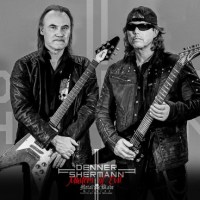
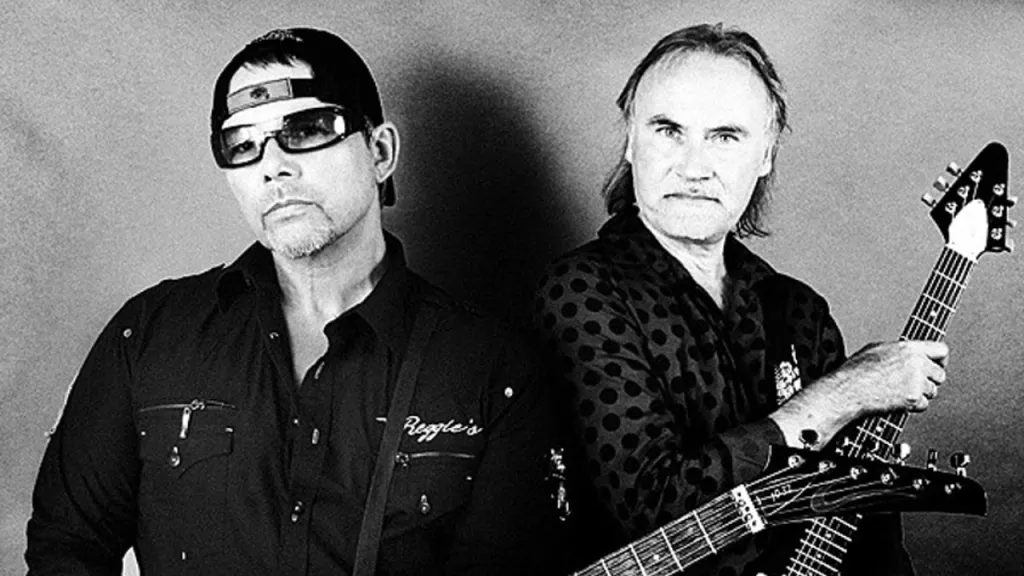
(3) The Sherman-Denner guitar duo
It was 1987 when I first encountered the music of King Diamond. Back then, heavy metal was far from welcome in my country – rock and metal weren’t exactly favored under the communist regime. But once a month, there was a rare treasure: a radio broadcast dedicated to full albums from legendary metal artists. One day, I tuned in and found myself immersed in Fatal Portrait (1986), King Diamond’s first solo release.
That moment rewired my entire perception of music. The album was dark, complex, and haunting – yet strangely beautiful and deeply moving. King’s eerie, otherworldly falsetto wove itself around the tight, imaginative guitar work of Andy LaRocque and Michael Denner, creating something truly unique. I was hooked. I recorded Fatal Portrait onto a cassette and played it obsessively, listening so many times that I must have driven everyone around me insane. Soon, I wasn’t just listening – I was learning the riffs, determined to decode the magic behind the music.
As my fascination with King Diamond deepened, I began researching his earlier work. In 1987, Metal Hammer was only available in its Austrian edition, since the Hungarian version wouldn’t launch until 1989. But even through limited sources, I discovered that before his solo career, King Diamond had fronted a band called Mercyful Fate, where Michael Denner had played alongside another guitar wizard: Hank Shermann.
Not long after, a friend handed me a copy of Melissa (1983), Mercyful Fate’s debut album. That was a turning point. Songs like Evil, Curse of the Pharaohs, Satan’s Fall, and Melissa weren’t just songs – they were intricate, multi-layered compositions that felt more like symphonic masterpieces than traditional rock tracks. Satan’s Fall, with its 11-minute runtime, was the pinnacle of their complexity, packed with unexpected tempo changes and shifting harmonies that kept me on edge.
Their second album, Don’t Break the Oath (1984), took a slightly different but equally captivating approach. Tracks like The Oath and Nightmare were just as intricate but had an even more hypnotic, almost supernatural quality. The chemistry between Shermann and Denner was unparalleled – the way they layered harmonies and structured their compositions felt like pure sorcery.
After Mercyful Fate’s original lineup dissolved in 1985, Fatal Portrait felt like the natural successor to Don’t Break the Oath. Although Hank Shermann was no longer involved, Andy LaRocque stepped in, continuing the tradition of mind-bending guitar work. Even now, I consider Fatal Portrait more of a spiritual sequel to Don’t Break the Oath than anything Mercyful Fate released in the ‘90s.
Looking back, I can say without hesitation that the Shermann-Denner duo shaped the way I approach songwriting. Their ability to weave unconventional song structures, sudden tempo shifts, and eerie harmonies into their music was revolutionary. I fell in love with that kind of progressivity in metal – the kind that keeps you guessing, that refuses to conform to predictability. Even today, I find myself in awe of the sinister groove in A Dangerous Meeting or the chilling harmonies of Black Funeral. These elements carried over into Fatal Portrait as well, in tracks like Lurking in the Dark, The Candle, and Haunted.
I never had the chance to witness Shermann and Denner performing live together – though Mercyful Fate is now touring with Hank Shermann and Mike Wead on guitars. But their legacy is etched into my musical DNA. Their influence goes beyond admiration – it has shaped my own vision of what “ideal music” should be.
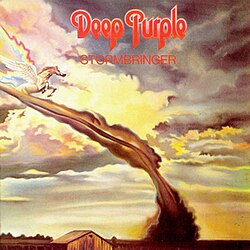
Recently I’ve been sick and had quite a lot of time to play with re-recording my oldest cover song, Gypsy from Deep Purple/Whitesnake. I replaced several (but not all) tracks in the original cover and slightly polished the mix: the previous sound seemed too thick and blurry to me. I didn’t put extensive efforts into the whole process, but it was fun to work again with one of my favorite songs after so many months (well, almost two years to be honest…).
I hope you guys will enjoy the result! You can listen to the final version either here, or directly on my SoundCloud page – let me hear your comments!
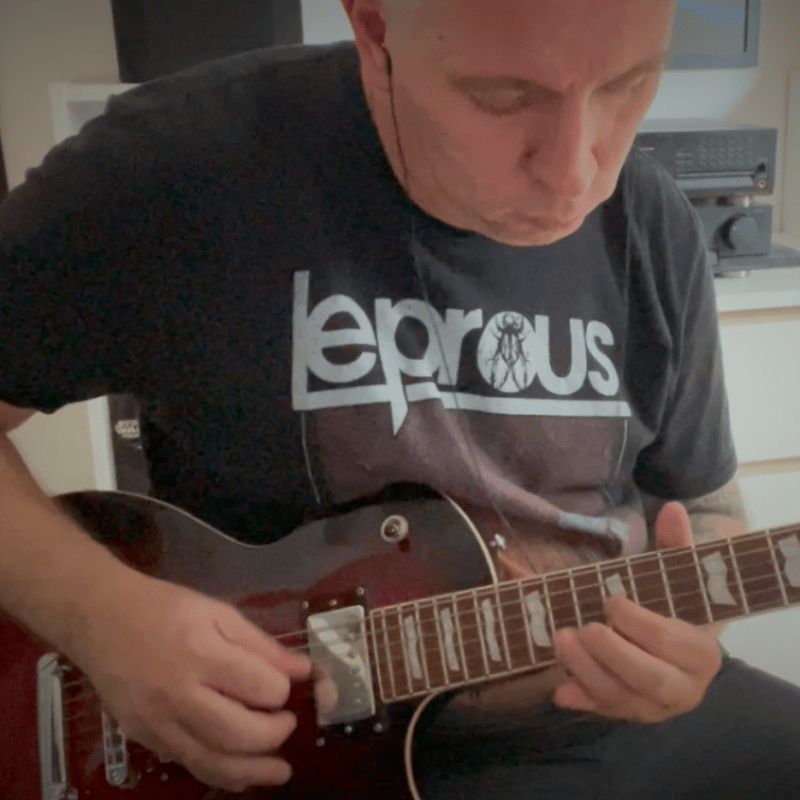
Just wanted to share this short video file just to let you guys know that besides working on new original music, I’m currently recording a new cover.
Can you guess the original?
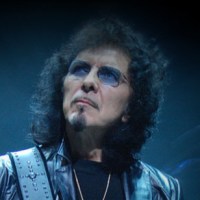
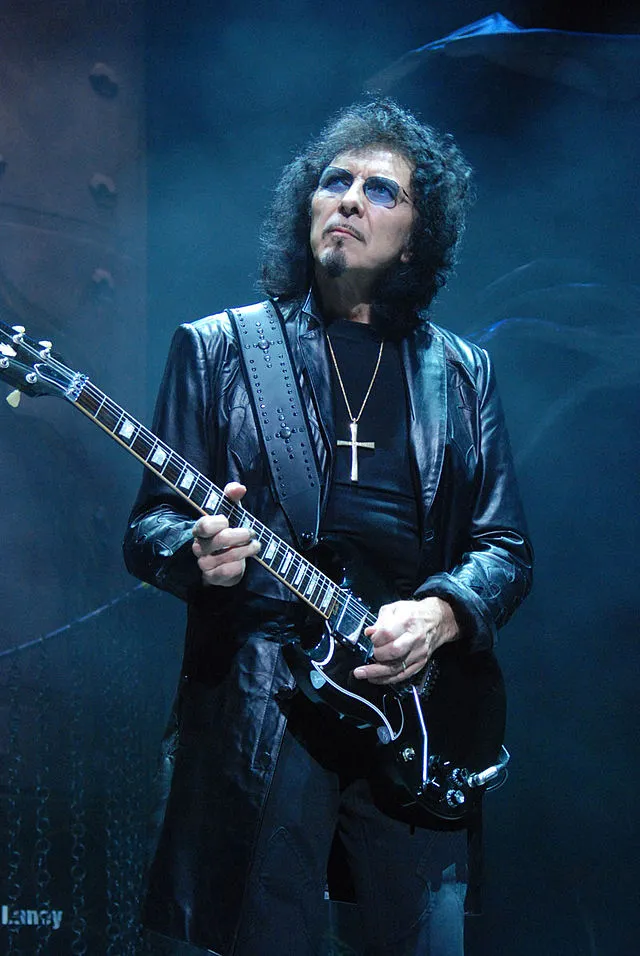
(2) The Architect of Metal: How Tony Iommi Shaped My Musical World
The story of Tony Iommi is nothing short of legendary – a young man who lost several fingertips in an accident, only to rise as one of the greatest guitarists of all time, inventing the heaviest riffs the world had ever heard. Alongside Django Reinhardt, he proved that talent knows no limits. But what’s always fascinated me isn’t just how he overcame his injury – it’s the sheer musical vision he brought to life.
I’ve never really engaged in the endless debate over whether Ozzy, Dio, or someone else was the “true” Black Sabbath singer. For me, Black Sabbath was Tony Iommi. Right up until the band’s final day in 2018, he was the heart and soul of their sound. Maybe he first down-tuned his guitar and crafted those slow, crushing riffs just to ease the pain in his damaged fingertips – but in doing so, he rewrote the history of rock music.
I was around ten years old when I first heard Black Sabbath on the radio. Back then, under the Communist regime, catching a rock or metal song on public broadcasting was like finding a hidden treasure. And when the opening riff of Electric Funeral came through the speakers, it was nothing short of a revelation. That sound – raw, doomy, and suffocating – hit me like nothing else before. It was dark and melancholic, yet brutally heavy. But more than anything, it made me think. That’s something I value in any form of art.
I wanted to hear that riff over and over again – until my increasingly irritated mother stormed into my room and shut off the tape recorder in frustration. But by then, it was too late: the seed had been planted. Soon after, I got my hands on Volume 4 (I don’t even remember who gave it to me, but I’ll be forever grateful), and a little later, sometime around ‘83 or ‘84, I recorded the first four songs from Born Again off the radio. That was it – I was completely lost in the world of Black Sabbath.
Now, I have to be honest: Iommi’s solos never fully resonated with me. They were always excellent, no doubt about it, but not exactly my taste. His riffs and songwriting, however, are a different story. The dark, monumental, almost cinematic atmosphere of his music is something I still can’t get enough of, even 40 years later. His riffs are like massive, ancient cathedrals of sound – colossal, intricate, and awe-inspiring. Take When Death Calls from Headless Cross (1989): it’s the perfect example of his ability to blend crushing heaviness with an almost orchestral grandeur. But there’s also incredible beauty hidden in the darkness of his music. Listen to Dying for Love from Cross Purposes (1994), and you’ll hear what I mean.
I only had the privilege of seeing Tony Iommi live twice – once in 1998 and then again in 2018, on Black Sabbath’s farewell tour. But his influence on me goes far beyond those concerts. His image – the ever-elegant English gentleman wielding his signature Gibson SG – left a lasting impression on how I listen to and write music. I even bought a Gibson SG at one point, almost certainly because of him. (Ironically, I never fully warmed up to the guitar and eventually sold it – but my admiration for Iommi has never wavered.)
Next time, I’ll dive into another legendary guitar duo: Shermann and Denner.
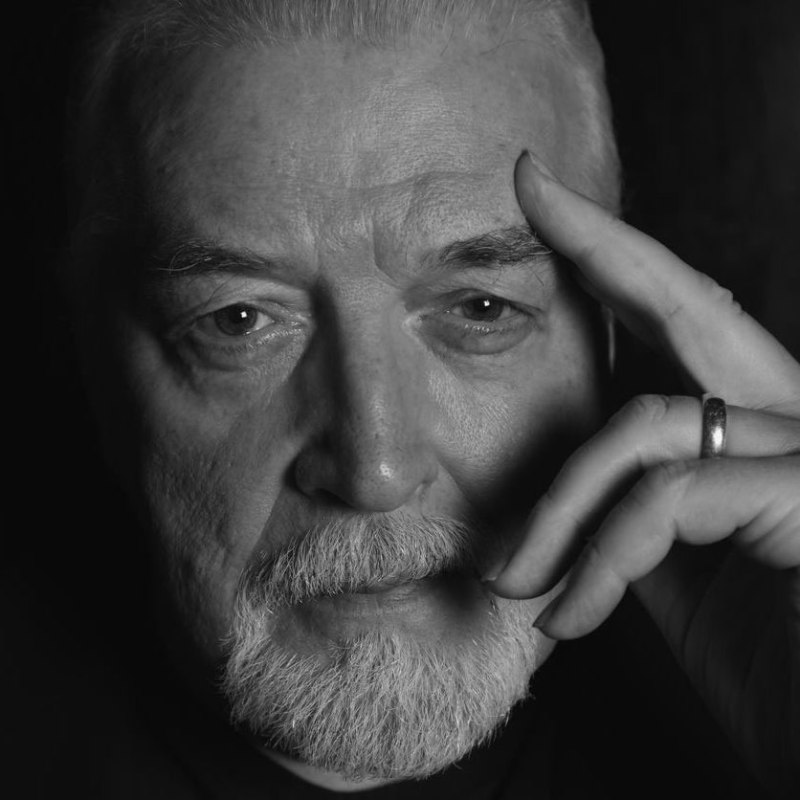
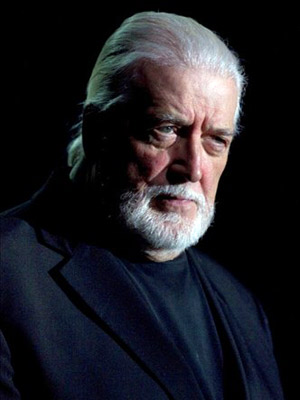
(1) From Hammond to Heaven: The Enduring Genius of Jon Lord
Whenever the topic of music comes up, Jon Lord is the first name that bursts out of me – probably with a slightly ridiculous but undeniably fiery enthusiasm. It might seem odd that a prog/thrash metal guitarist considers the keyboardist of a classic rock band his greatest musical inspiration, but let me share a few thoughts and stories that might shed some light on this (seemingly) unexpected connection.
First and foremost, the late Jon Douglas Lord (June 9, 1941 – July 16, 2012) – founder, keyboardist, composer, and mastermind behind Deep Purple – was far more than just a rock organist. I’ve always seen him as a true musical visionary, a bridge-builder between “old” and “new,” between tradition and modernity. If you listen to Anthem from The Book of Taliesyn (1968), you’ll catch an early glimpse of his genius – a genius that reached its full grandeur with Deep Purple’s groundbreaking collaboration with the Royal Philharmonic Orchestra in Concerto for Group and Orchestra (1969).
At the time, blending classical instrumentation with rock music was considered either artistic heresy or outright blasphemy. But Jon Lord was one of the fearless revolutionaries who pushed rock toward new heights of complexity and sophistication, proving that it could stand alongside the so-called “high arts.” His relentless pursuit of synthesis between guitar-driven rock and symphonic arrangements wasn’t just an experiment – it was a defining step in the genre’s evolution.
His creative spirit extended far beyond rock and orchestral fusions. After a sixteen-year break in his solo career – and following the loss of his parents – he returned with deeply introspective, beautifully melancholic albums. Pictured Within (1997) is perhaps the most breathtaking of these – a masterful blend of classical and modern influences, but with a different orchestral approach than what he had previously explored in Concerto, Gemini Suite, Sarabande, or Windows.
Like many others, my journey into rock music began with Deep Purple’s biggest hits. At first, I wasn’t fully aware of Jon Lord’s immense role in shaping the fusion of classical and modern music. I learned to play guitar by obsessively studying and replicating Deep Purple riffs, and the deeper I went, the more fascinated I became with the band’s musical legacy.
I was around 17 or 18 when I first saw the film of Concerto for Group and Orchestra in my hometown cinema – and it completely shattered my perception of music. That was the moment I realized that the rigid divide between classical and modern music is nothing but an illusion. For me, both are just different expressions of the same artistic truth. Jon Lord was the one who taught me never to draw sharp, artificial lines between these worlds – he showed that they could flow together seamlessly, creating something transcendent.
I was lucky enough to see him live four times. The first was in Budapest in 1998 with Deep Purple, and the second, in 2002, was something truly unforgettable. It was in London, on the tour where he officially stepped down from the band. For most of the night, Don Airey played keyboards – but then, the lights dimmed. A murmur spread through the Hammersmith Apollo as we realized what was happening. And then, there he was. Jon Lord himself stood behind his old Hammond organ, launching into the iconic intro of Perfect Strangers. The energy in that room was electric. It remains one of the most powerful concert experiences of my life.
Later, I was fortunate enough to see him perform his solo work twice in Budapest. I never got to witness Pictured Within live with Sam Brown, something I deeply regret, but I cherish the moments I did have before we lost him in 2012.
Jon Lord’s influence on my musical taste – and, by extension, on my entire outlook on music and life – is immeasurable. His fearless creativity, his ability to weave worlds together, and his sheer musical soul continue to inspire me every single day.
Next time, I’ll write about another titan of rock: Tony Iommi, the legendary master of heavy riffs.

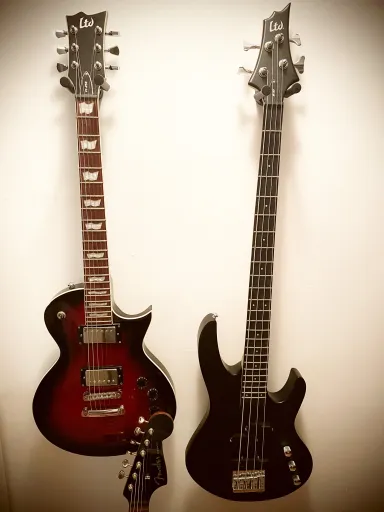
I already posted something about it on my Instagram page, but for the record, let me show you guys a photo of my new family member: an LTD B-10 bass guitar.
I must admit that during the years I seriously got fed up with the constant experimentation on how to mimic a decent bass sound by MIDI-programmed bass lines (what I did on the original Hexapla) or pitch shifting/filtering the sound of my guitar (this is what I experimented with on the remastered Hexapla and Missa Innominata). I, however, was never 100% happy with the result, so finally I decided to buy a bass guitar and quit experimenting. Still, as I’m primarily not a bass player, I didn’t want to buy a highly sophisticated and expensive instrument: what I needed was a simple, handy and comfortable bass guitar to play all the future bass lines with. It’s not a secret that I’ve been an ESP/LTD fan since I bought my main instrument, an LTD EC-256 electric guitar. My new LTD B-10 didn’t disappoint me either: it has a thin U-shaped neck, clearly-sounding ESP Designed pickups and an active Tone Boost Control: it’s precise and comfortable, easy to play, sounds great and looks killer.
I already recorded more than one hour raw material for a future album, and a huge part of it is finally supported by “normal”, traditionally recorded bass tracks. Naturally 90 percent of these riffs and solos will never get into the final songs, but right now I enjoy fooling around bass lines and optimizing a thick, heavy and brutal sound.