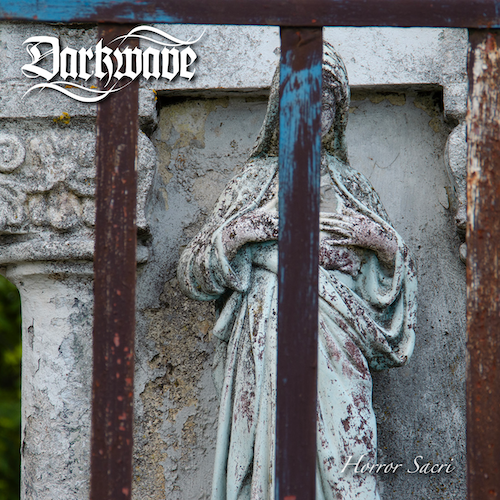
3. The Parchment Night

Like all the rest, you too will learn to forget,
when spring sets in with hail and thawing wet.
You’ll trickle from my face, from parchment night,
while all the world laughs green and bursts with light.

Vanitas vanitatum dixit Ecclesiastes,
Vanitas vanitatum et omnia vanitas.

You won’t recall the solitude we shared,
how heaven’s buttressed ramparts split and bared;
we were the breadth of splintering creation,
we were awareness and a burning oblation.

Upon God’s altar lay the fractured host,
one substance in two bodies, darkening to ghost;
with fingers interlaced we burned, hand into hand,
I scarred myself to you—we two were one, one brand.

A masquerade within the halls of God;
snow drifts on us, our buckling shoulders nod.
Winter again; the stroke of midnight’s dread—
upon this earth, the ghosts go forth and tread.

2. Blood-Sealed Solitude

In the blackened silence do I learn to see,
The stigma marked on sleepless foreheads deep,
A brimming cup of life pours down on me,
We drift through velvet in the night’s dark sweep.


Betrayed at dawn by weeping, golden light,
In holy-painted fields we lost our way,
And angels tread the frost on plains of white,
Where fate’s dim shimmer rises into day.

Exile entwines us, binding chain to chain,
In strangers’ temples we are the cornerstone,
Unworthy still of mercy for our pain—
Tears are the gift of pure and brave alone.

At last, within each other’s solitude,
At last, with blood, we seal our interlude.

1. Gaslight Elegy

The streets lie somber, silence softly spreads,
between the houses drift the shadowed dead.
Their spectral bodies on the firewalls sprawl,
beneath the gaslight’s dim, funereal pall.

The shadows sweep in long nocturnal rows,
this papier-mâché town in stillness grows.
House silhouettes — a temple’s rigid frame,
burn vaulted scars into the eyes again.

A memory-book, its stanzas etched in glass,
where tear-streaked lives across the pavements pass.
In one brief glance I’m seized and drawn inside,
entombed in grief where fleeting phantoms hide.

For I could vanish, having now believed,
that life still blooms where archways half-conceived.
Beneath the paint, her melting face unveiled —
it finds me, takes me, buries me, ensnared.

The Search for What Endures – The Road to a Credo

The philosophical journey of Evanescent Horizons unfolds through a series of increasingly deeper questions.

  1. It begins with a personal one: “What does one do with love when there is nowhere left to direct it?”
  2. As the story progresses, this gives way to a broader question: “Does love retain its value when it is not reciprocated?”
  3. From there, the album expands beyond the realm of relationships altogether: “Are there things whose worth exists independently of recognition, usefulness, success, or reward?”
  4. And finally, it arrives at its deepest question: “Is there any value that is eternal?”

The album does not attempt to prove its answer philosophically. Instead, it tells the story of a man who gradually comes to live as though the answer is yes.

He loses what he loves. He loses the future he imagined. He never receives the fulfillment he hoped for. Yet he ultimately discovers that genuine love is not validated by acceptance, nor diminished by rejection. Its worth does not depend on what it achieves.

By the end of the album, this realization becomes a conviction. The protagonist chooses to believe that love possesses an intrinsic value that transcends success and failure, life and death. The final answer of Evanescent Horizons is therefore not a logical conclusion, but a credo:

“If there is anything eternal in human existence, it is love itself.”

A Window Between Loss and Hope – The Cover Art of Evanescent Horizons

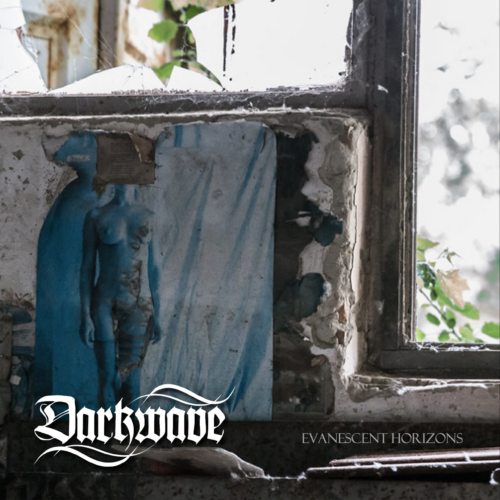
The cover artwork of Evanescent Horizons may seem somewhat unusual at first glance, but it reflects many of the album’s central themes. The photograph itself – as with all visuals accompanying Evanescent Horizons – was taken by my talented friend, photographer Dávid Ujhelyi. His remarkable eye for atmosphere and detail helped bring the album’s visual world to life.

The decaying industrial setting serves as a reminder of transience, deterioration, and the inevitable passing of all things. In many ways, it represents the point from which the album begins: the confrontation with loss, impermanence, and the realization that what we love cannot always be preserved.

At the center stands a blue female figure whose presence intentionally echoes the cover of Horror Sacri. There, a similarly colored figure represented the Virgin Mary and reflected that album’s focus on the sacred and the transcendent. Here, however, the figure is simply an ordinary human being. She is naked, vulnerable, and her face is deliberately concealed. By removing her individual identity, the image suggests that the story told on Evanescent Horizons is not about one specific person, but about something universal. The woman becomes a symbol rather than a portrait.

The title itself points in two directions. The horizons are behind us as much as they are ahead. The blue figure establishes a visual connection to the previous album, looking back toward themes and questions that have accompanied Darkwave for years. At the same time, the image opens a path toward something new. Perhaps the most important element of the cover is the window. It stands between the decaying interior and the bright world beyond. In many ways, it represents a threshold: the place where loss, memory, and mortality encounter hope. Beyond the rusted frame there is only light. We cannot see what lies within it, nor does the image attempt to provide certainty. The horizon remains hidden. Yet its presence is unmistakable. For me, that light symbolizes hope: not as a guarantee, but as a possibility. Not as an answer, but as a direction.

The album ultimately arrives at a similar place. It does not eliminate loss, nor does it deny decay. It does not claim to possess final answers. Instead, it asks whether something meaningful can endure despite them. The bright horizon beyond the broken window remains unseen, but it is there nonetheless. In that sense, the cover artwork mirrors the album’s final realization: we may never fully see what lies beyond the horizon, yet we can still choose to walk toward the light.

You can also listen to the album here: 🔗 https://darkwave-metal.bandcamp.com/album/evanescent-horizons

Evanescent Horizons is now available for pre-order on Bandcamp

I have spent months living with these songs. Writing them. Rewriting them. Recording them. Questioning them. Trying to make them say exactly what I wanted them to say.

On the surface, this album tells the story of loss. At a deeper level, it asks a question that refused to leave me alone: “Are there things whose value remains intact even when they seem to achieve nothing?” That question became the heart of Evanescent Horizons.

The album will be released on July 15th, but if you pre-order it now, one track will be instantly available.Thank you for listening and thank you for walking this road with me.

🔗 https://darkwave-metal.bandcamp.com/album/evanescent-horizons

What Remains When Nothing Remains? — A Journey That Became an Album

For the past months, I have lived with an album.

Not merely worked on it – lived with it. What began as a collection of songs gradually became something much more personal: a journey through hope, loss, grief, anger, acceptance, and the search for meaning beyond them all.

I am happy to finally announce that my new Darkwave album, Evanescent Horizons, will be released on July 15th.

Musically, it is a blend of progressive and symphonic metal, enriched by orchestral arrangements, church organ, neoclassical influences, thrash and death metal elements, and a few unexpected detours along the way. At its heart, however, the album asks a simple question: “Are there things whose value remains intact even when they seem to achieve nothing?” That question became the thread connecting all eleven songs.

Evanescent Horizons is, however, not ultimately about loss and grief. It is about refusing to believe that love, kindness, loyalty, and sacrifice are valuable only when they succeed. At its heart lies the conviction that some things possess an intrinsic worth independent of recognition, reward, or outcome. The protagonist loses everything he once believed he needed, yet discovers that love remains meaningful nonetheless. In the end, the album is less a tragedy than a credo: a testament to the belief that some truths—and above all, love itself—endure even when everything else fades away.

Whether many people hear it or only a few, I know that this album represents the most honest expression of what I wanted to say at this point in my life.

I look forward to sharing it with you on July 15th.

More Than an Album

For the past months, I have spent countless hours working on a new Darkwave album. Writing, arranging, recording, re-recording, mixing, doubting, rewriting, and starting over. As I am finally approaching the finish line, I find myself reflecting on what this album truly means to me.

The songs themselves are new, but their roots are much older. Most of the lyrics began their lives as poems, written long before the music existed. They were born from loss, grief, anger, love, memories, and the slow process of learning how to let go. Turning them into songs of a concept album was not simply a matter of fitting words to riffs and melodies. It meant reshaping deeply personal texts so they could live and breathe within the language of metal music without losing their original meaning.

Throughout this process, I gradually realized that this album had become something more than a collection of songs.

It became a personal statement.

A testament to what I believe about the ultimate meaning of love in its broadest sense, loss, memory, and the human capacity to endure and to create meaning that transcends our mortal reality. It tells the story of descending from joy and hope into darkness, confronting pain, rage, despair, and the overwhelming weight of absence. Yet at its core, it is not a story about defeat. It is a story about learning to live with what cannot be changed, carrying memories that never truly fade, and discovering that acceptance does not mean forgetting. Some wounds remain with us forever, but over time they cease to define us. We learn to carry them differently, and in doing so, we find a way forward without betraying what we have lost. Throughout this journey, we gradually discover a deeper meaning that extends beyond our finite lives.

Perhaps the deepest question running through the entire album is whether selfless love (and by “love” I mean the original, broader sense of the word that encompasses all forms of altruism, not merely romantic affection) possesses an intrinsic value independent of its usefulness, recognition, or reception. Whether devotion, loyalty, sacrifice, and compassion carry meaning beyond reward or even acknowledgment. I have come to believe that they do. That genuine love is not validated by acceptance, nor diminished by rejection. Its worth does not depend on whether it is reciprocated, understood, or even remembered.

The story reaches its conclusion not through triumph, but through transcendence. The protagonist ultimately accepts his own mortality, yet the love that shaped his journey does not disappear with him. It endures beyond loss, beyond failure, beyond death itself.

The path toward that conclusion is far from peaceful. There are moments of fury on this album. There are moments of sorrow. There are moments when everything seems broken beyond repair. Yet I never wanted the final message to be one of hopelessness and meaninglessness. If there is a final message hidden within these songs, it is the belief that love possesses an intrinsic value that exists independently of human judgment. It remains real even when unanswered, meaningful even when unseen, and lasting even when everything else fades away.

I do not know how this album will be received. I did not create it to chase trends, algorithms, or commercial success. I created it because I felt compelled to. Because some stories demand to be told, and some emotions refuse to stay silent. Whether many people hear it or only a few, I can honestly say that I gave it everything I had.

This album is not merely music.

It is my personal credo.
Horror Sacri (2025)

The fourth Darkwave album marks a clear departure from its predecessors — and not just musically. For the first time in the project’s history, vocals appear alongside the instrumental compositions. This new element adds an essential dimension of expression, allowing the music’s message to be communicated more directly and fully. No longer confined to titles, cover art, and sonic atmosphere alone, the narrative now unfolds through the human voice as well — direct, unfiltered, and unmistakably personal.

The title, Horror Sacri, is a Latin phrase meaning “sacred dread” or “fear of the sacred” — a complex emotional state blending awe, reverence, and fear in the face of the divine or transcendent. Rather than taking a theological or dogmatic stance, the album approaches this theme from a deeply personal and introspective perspective. While honoring the mystery of the sacred, it also acknowledges the fear, struggle, and rebellion that often accompany the human experience of transcendence — culminating in death, which brings this internal conflict to an end. In this sense, Horror Sacri serves as a natural continuation of Darkwave’s previous instrumental works: Hexapla, Missa Innominata, and Thanatology.

The album also represents a milestone in the Darkwave catalogue by featuring guest artists for the first time. Fredrik Keith Croona, the intense and versatile vocalist of the blackened death metal band Against I, and Fati Urbán, whose ethereal voice adds an otherworldly dimension, both contribute to the record’s emotional and sonic depth.

Blending the familiar with the unfamiliar, the instrumental with the vocal, Horror Sacri opens a new chapter in the evolution of Darkwave — one that invites the listener to confront the unknown with open ears and a receptive mind.

Track listing

The links below will lead you to the respective tracks on my Bandcamp page, where you can stream or download the songs. Alternatively, you can explore Hexapla on various streaming platforms, including Spotify, AppleMusic, SoundCloud, and YouTube.

Total playing time: 44:36

Track by Track – 8. Pacem Meam Do Vobis

“Pacem Meam Do Vobis” closes the album with a paradox: a promise of peace wrapped in the shadow of death. Borrowing its title from the words of Christ in John 14:27 — “Peace I leave with you; my peace I give unto you” — the song meditates on the tension between divine assurance and mortal finality. It’s a farewell not just in scripture, but in sound.

The track begins with apocalyptic brass — evoking the trumpet blasts of Revelation, heralds of both judgment and transcendence. From this dramatic opening, the song unfolds slowly, building with orchestral weight and sacred texts. But just when peace seems within reach, it arrives in the form of a flatline. A heartbeat stops. The listener is left with the chilling realization: in this world, the only peace we can be certain of may come with death.

Yet even here, a deeper meaning flickers beneath the surface. The text drawn from the Secreta for All Saints’ Day reminds us: “The souls of the righteous… seem in the eyes of the foolish to be dead, but they are at peace.” The concluding “Alleluia” — “Praise the Lord” — is not naïve joy, but a stubborn, defiant hope. It echoes the album’s recurring theme, first spoken by Virgin Black: “All is lost but hope.”

“Pacem Meam Do Vobis” is the sound of finality — and what might lie beyond.


You can already pre-order the album by clicking here: https://darkwave-metal.bandcamp.com/album/horror-sacri. By pre-ordering, you get one track now (streaming via the free Bandcamp app and also available as a high-quality download in MP3, FLAC and more), plus the complete album the moment it’s released on the 21th of August.