There is a new interview with me on Pete’s Rock News and Views! You can either check out the original post here, or scroll down and read the entire text below!
Interview with Pete Devine of Pete’s Rock News and Views (http://petesrocknewsandviews.com)
PD: How would you describe yourself or your band as an artist?
D: “It’s these words and music that keeps me living, keeps me breathing” – says one of the best Life of Agony songs; and although right now I don’t use lyrics for my music, I intend to transmit messages not only through sounds, but also through visual and verbal clues using appropriate cover art, as well as song and album titles. But the overall framework of self-expression for me is always the music – a framework that contains pieces from the essence of my life: feelings, thoughts, emotions, affections, memories, beliefs… and in general: everything. The creative process of this “musical storytelling” keeps me living a wholesome life and breathing healthy air – and if things go in the right way, the listeners of my songs will hopefully understand me through my music: not just the easily digestible superficial information, but also those things that I’m unable, afraid, or simply ashamed to tell in words. Music can transmit the essence of the “real me”. In a world where identity gets a rightfully increasing attention, I identify myself a music maniac, who condenses and presents his inner self in this particular type of art.
If I try to identify the source of this drive to express and share myself, I often end up with Jack Kerouac’s immortal words: “I’m writing this book because we’re all going to die“. I’m writing my book of music, because we’re all going to die – I’m going to die. But before I die, I feel the urge to create something that I think is “really me”. It’s not because I consider myself more talented or better trained than anyone else. It’s also not because I think that my thoughts are worthier to share than anyone else’s thoughts: I don’t feel the need to compete with anyone, except with myself. I just learned the hard way that all my efforts to create something meaningful proved to be (at least partially) dead ends – except this one. Music is my chance to be myself. Music is the backbone of everything I do.
PD: Can you tell us briefly about your background – i.e. where you’re from, how you came to make music, etc.
D: I’m from Hungary and work in Budapest as a neuroscientist. It may sound weird for the first time that a neuroscientist plays metal music: people keep asking me, how is it that someone with such a satisfying profession decides to become an independent songwriter and guitar player at a certain point of his life. While there are no short answers to this question, I cannot deny that it may look strange from the viewpoint of those who doesn’t know me in person. As a music enthusiast, I’ve been playing the guitar since my childhood and I even participated in ad hoc formations earlier – however, these efforts never really succeeded, due to lack of motivation, dedication, and time. I always had various other duties, therefore playing the guitar in a band was never a real option for me. Not that I’m antisocial or something like that (I’m an introvert, but I do love the company of like-minded people) – I just never had the chance (or courage…?) to come forth with my own compositions and ended up losing my interest in realizing someone else’s musical ideas. I always wanted to bring forth my own ideas, work on them and show them to others, but I had so many doubts, insecurities, and fears. The world is full of excellent artists who compose excellent music and play the guitar in a virtuoso way – and in this context it really needs some explanation, why I finally came to the decision to start composing and recording music. The question is always somewhere around one’s identity. Oscar Wilde once wrote: “Be yourself; everyone else is already taken” – and I think, this is the basis on which I built my musical project. I slowly became aware of the fact that I don’t need to compete with anyone: it’s impossible and I also don’t want to do so. I just need to be myself: I want my music to genuinely reflect the person who I am. And I hope that there is still a place for genuine music and honest musicians in the music market, no matter what genre or subgenre they belong to.
PD: Who and what inspires you to make music, both in terms of musical and other influences? What do you like to write about in your songs?
D: My main inspirations are first and foremost those visionary musicians who substantially formed the world of rock music. First of all, the late Jon Lord – founder, keyboard player, composer and music mastermind of the hard rock pioneer Deep Purple – has always been my main source of inspiration. He was a real musical visionary with the primary aim to build bridges between “old” and “new”, traditional, and modern. If you give a quick listen to one of his earliest classical compositions incorporated in the song “Anthem” (1968), you may catch a glimpse from his early genius that peaked in Purple’s giant collaboration with the Royal Philharmonic Orchestra in 1969 (Concerto For Group And Orchestra). At that time, it was considered an artistic abomination or even blasphemy to marry the “sacred” classical instrumentation with the “immature” and “impure” rock music. The example of Jon Lord taught me to avoid any sharp distinctions between “classical” and “modern” music: there are no unbreakable walls between them, as he demonstrated in so many magnificent ways. This kind of synthesis is exactly what I would like to achieve in my own songs. Also, I find Tony Iommi’s down-tuned, slow, and thundering riffs amazing and inspiring. When I first heard the brutal, depressive, and unique sound of the opening riff of Black Sabbath’s Electric Funeral, it was like a revelation to me. It was… let’s say, different: melancholic and sad, and at the same time, brutal and heavy. It made me think – which is a quality I value the most in any piece of art. I also find the harmony world and complex dual riffs of the Sherman-Denner duo of Mercyful Fate fascinating. Their songs like “The Oath”, “Nightmare” or “Satan’s Fall” were not only complex with their 7 to 10 minutes of playing times, but the perfect cooperation between the two guitarists is also clearly impressive, especially that they always brought up constant and unexpected harmonies that simply blow the listeners’ minds.
Besides music, I also find inspiration in literature. I have always been a bookworm and all the books, poems, and novels (or even song lyrics…) that I’ve ever read have clearly put their marks on my way of looking at things. Books with a touch of sadness or tragedy were always the ones that inspired me the most. Although it’s extremely hard to pick only a few from such a wide spectrum, my favorite authors include novelist and writer giants like Erich Maria Remarque (Three Comrades; Arch of Triumph) or Antoine de Saint-Exupéry (Night Flight; Wind, Sand and Stars), but also less known and painfully underrated writers like Marguerite Radclyffe Hall (The Well of Loneliness). My affection towards all things melancholic can also be caught in my enthusiasm for early horror pioneers like Bram Stoker (Dracula), Mary Shelley (Frankenstein) or Edgar Allan Poe (The Fall of the House Usher; The Cask of Amontillado). Apart from them, Gilbert Keith Chesterton (Heretics) always impressed me with his clear reasoning and brilliant paradoxes, Jorge Luis Borges (The Aleph; Tlön, Uqbar, Orbis Tertius) and Gustav Meyrink (Golem, The Angel of the West Window) enchant me with their unique and sometimes haunting dreams, John Ronald Reuel Tolkien (The Lord of the Rings) helps me to imagine a better world, and Jack Kerouac (On the Road) takes me to a never-ending journey to see hidden places and meet extraordinary people.
PD: What are your aspirations as an artist?
D: It’s an extremely good question, because it helps me reflecting on how I envision myself and my future in the world of music. First and foremost, I value the fact that I am an independent musician: it’s a great privilege and a responsibility at the same time. The downside of being independent is that I don’t have the whole day (or at least most of my time) to compose music, practice guitar skills, or promote my albums. However, there is also an unlimited freedom to operate in being an independent musician: I can always create whatever I feel like good, interesting, or inspiring. I will keep on walking this path: I will follow my instincts towards a continuously evolving realization of my musical ideas. The possibilities are endless: I’m thinking about incorporating vocals in my future albums, and I will definitely continue my experimentations with orchestration.
PD: What is the proudest moment in your music career so far?
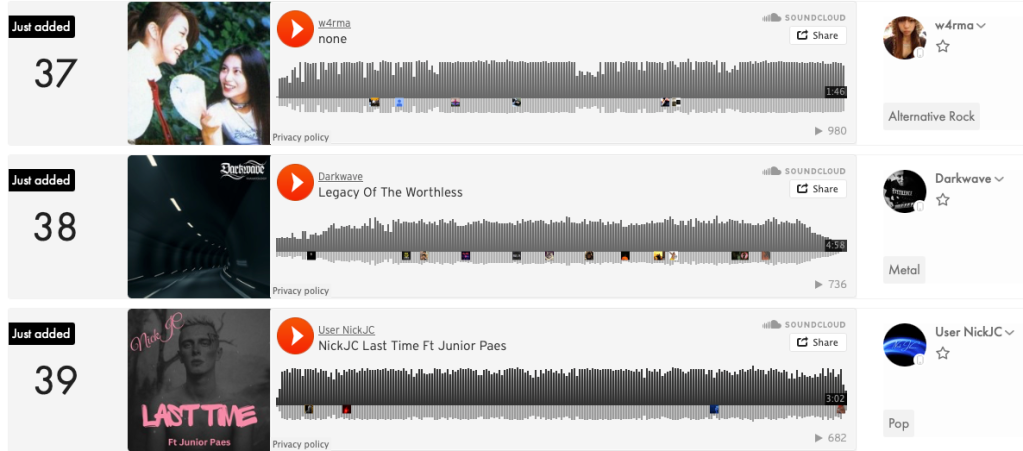
D: I am extremely proud of my albums: I put so much effort in them like nothing else in my entire life. I still remember the feeling when Hexapla, my first release came out two years ago: it was an indescribable feeling of joy, relief and pride. Also, it makes me proud that my albums were well received: they appeared on SoundCloud’s RepostExchange charts and one of them was even featured in the “New and Notable” section of Bandcamp’s homepage. But the most heartwarming thing for me is that my music made me friends with people whom I otherwise would have never met.
PD: Promoting one’s music is such a challenge these days, especially with so many new artists emerging from bedrooms in the day of the home studio. How is that going?
D: To be honest, I’m one of those musicians who put a lot of energy and money to build up a small but functional home studio. I always wanted to have this freedom to record my own stuff, because I find it way easier to work alone, without time and budget limitations. Having such a facility in the reach of my arm is an enormous help for me. However, promoting myself is a strikingly different issue. While I’m perfectly aware that self-promotion is a prerequisite of becoming a successful independent artist, it’s a well-defined profession which I’m not familiar with. It’s extremely hard – if not practically impossible – for an independent artist to break through this so-called “glass ceiling” and reach potential listeners without professional help – and it has serious consequences. The lack of effective routes for artists to reach their potential audience results in a distorted situation, where both artists and fans exist in isolated bubbles, and the odds of finding each other are very low. I try to get every chance to promote my albums on social media and streaming platforms – I even have a website that serves as a hub that connects these fragmented pieces of information. But I’m sure that there are lots of potential fans out there whom I will never be able to reach – exactly because of these technical limitations. It’s almost impossible to find each other in the overall noise – and that’s why I consider each and every person who listens to my music a miracle. I’m extremely grateful for their presence in my life.
PD: And how do you book and promote your live shows and tours? Any performances coming up?
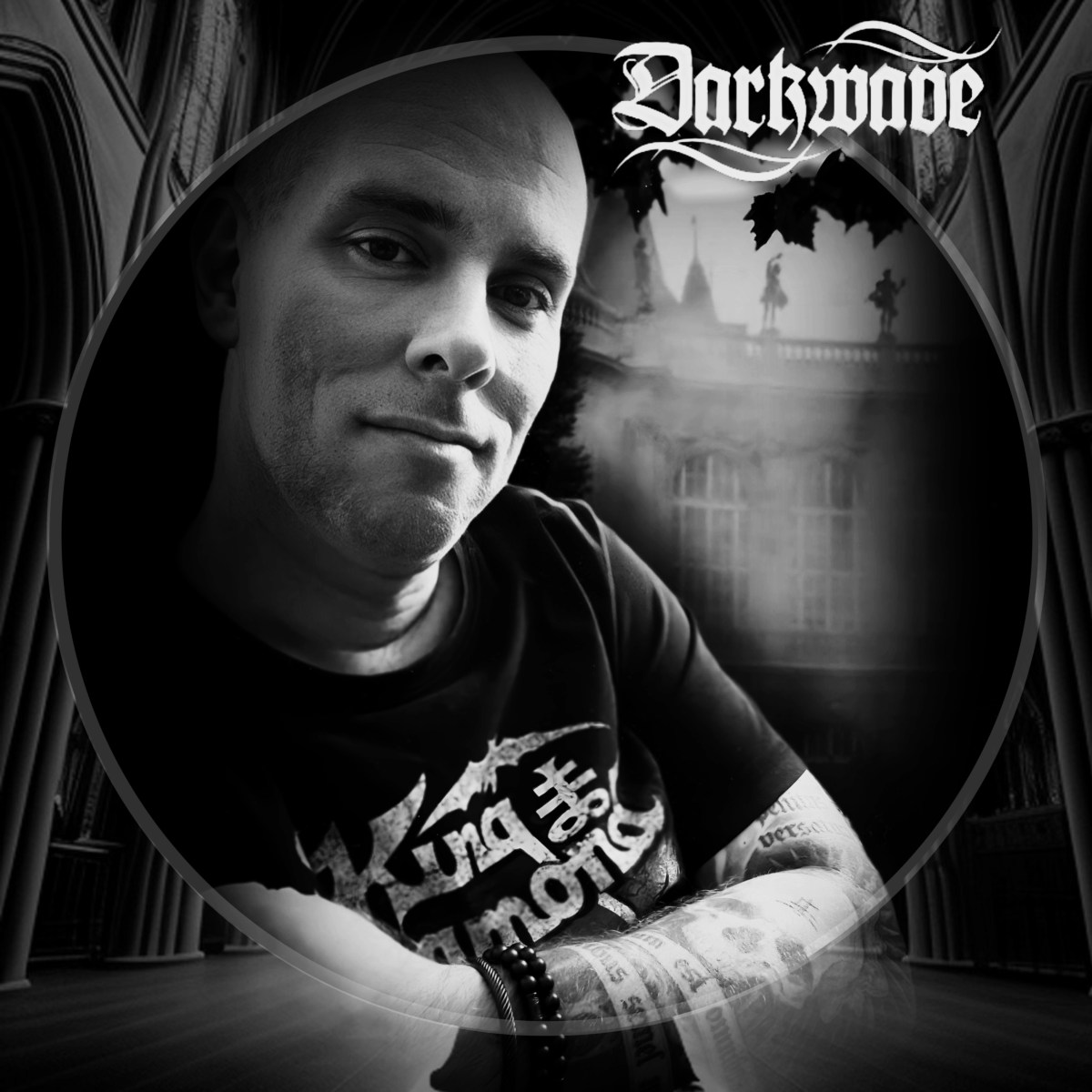
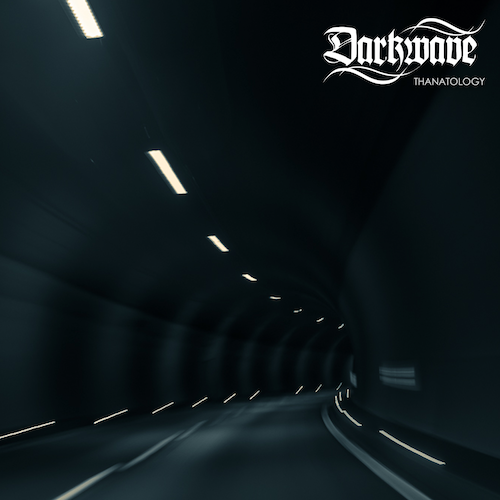
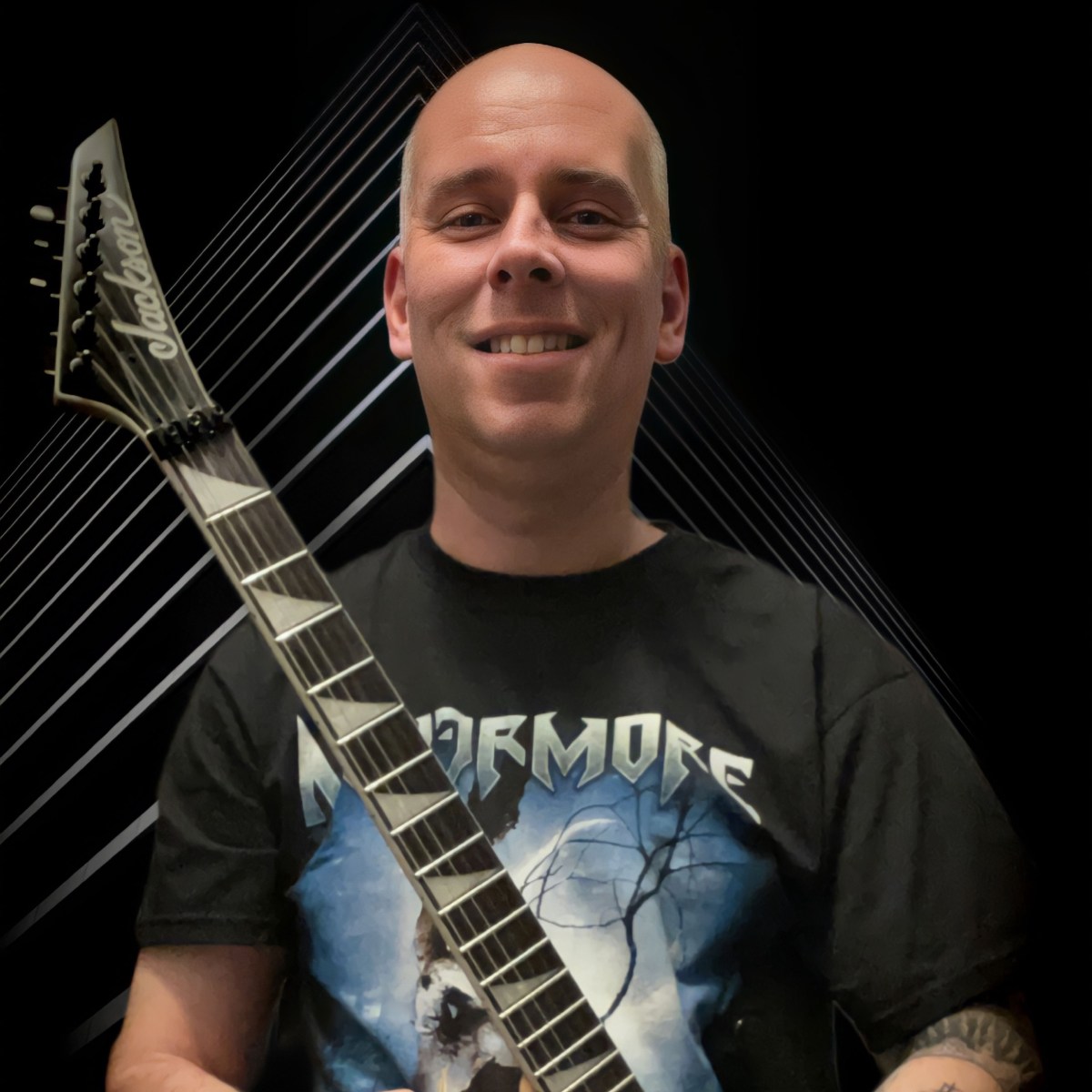
D: Darkwave is a one-piece musical project, meaning that all the duties from songwriting through playing the guitar and bass to programming, recording, mixing, and mastering lay on my shoulders (Zsolt Némethy). Being a solitary musician with no companions or bandmates, right now it’s impossible for me to play live. Of course, I want to find a solution to this issue in the near future: music is some kind of a form of interpersonal relationships, and I do want to share it with everyone, who’s interested in it.
PD: What do you think about downloading music online? What about streaming sites like Spotify?
D: While I’m grateful for each and every download, I also feel that an mp3 file on someone’s hard drive or cell phone has nothing to do with the holistic feeling of discovering the cover art and booklet of a CD or a vinyl. I can’t deny that streaming sites are gold mines, but I still collect CDs: partly to support the artists and partly to have that special feeling of holding a complete artwork in my own hands.
PD: What song do you wish you’d written and why?
D: Firstly, I wish I’d written Lacuna Coil’s Veneficium. According to Cristina Scabbia, Veneficium is “the painful and fierce scream that rises from the darkness” – and this is something that resonates within my soul. It touched me so deeply that I even let the ancient Latin words of this song inked on my left arm. Also, I wish I’d written Cynic’s Box Up My Bones, more or less out of the same motivation. But I could mention a couple of other songs from Nevermore, Mekong Delta or Voivod, too.
PD: Is there anything you don’t like about the music industry, which you would change if you could?
D: Right now, I live in a pretty much isolated bubble, where I don’t have much interference as a musician with the so-called music industry: I compose, record, mix, and master my albums by myself, alone in my little world. But from a very different angle I have at least a limited overview on the whole business, being a team member of a Hungarian metal webzine where we do interviews, write concert reviews and album critics. From this point of view, I see the enormous machinery of the music industry, of which bands are just small parts. Being a professional musician looks extremely demanding these days: touring is exhausting, royalties are limited, so bands must rely on selling merch. I wish bands could have more financial independence in order to have a chance to dedicate themselves exclusively to songwriting, recording and performing.
PD: So, what are you working on at the moment?
D: At the moment I’m taking a very short break. It’s not easy to compose, record, mix, master and promote an album alone – especially when you have a regular 9-5 job. Despite all these hardships, I find it an extremely rewarding activity. Still, sometimes it’s useful to distance yourself from these things in order not to let them become monotonous. But I have great plans for the future. Firstly, I want to release all my three albums in hard copy CD format. For this, I first want to remix them in order to achieve a better, thicker and more mature sound. Secondly, I already have ideas for my next release, and this time I don’t exclude the possibility of incorporating vocals and lyrics in it. Nothing is certain at the moment, but I feel like working with vocals would add something valuable to my future songs.
PD: Where can we learn more about you and buy your music/merch online?
D: I have a website (https://darkwavemetal.com) that’s updated frequently. The visitors can find everything there, including the links to my social media, streaming services and Bandcamp. I try to keep my listeners as informed as I can: the website contains background materials, stories and in general, everything. If someone wants to buy my albums, then the easiest way is to visit my Bandcamp page (https://darkwave-metal.bandcamp.com/), where all my releases are available.