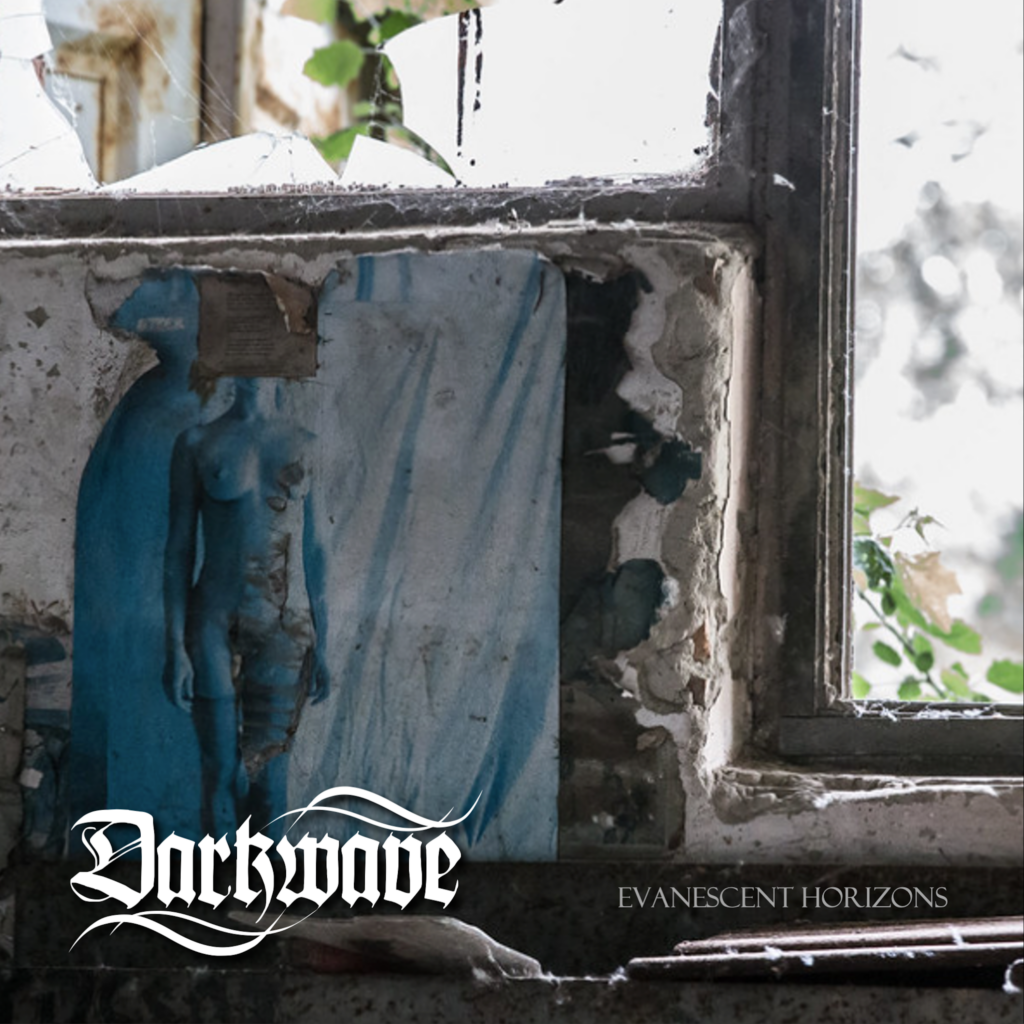
The cover artwork of Evanescent Horizons may seem somewhat unusual at first glance, but it reflects many of the album’s central themes. The photograph itself – as with all visuals accompanying Evanescent Horizons – was taken by my talented friend, photographer Dávid Ujhelyi. His remarkable eye for atmosphere and detail helped bring the album’s visual world to life.
The decaying industrial setting serves as a reminder of transience, deterioration, and the inevitable passing of all things. In many ways, it represents the point from which the album begins: the confrontation with loss, impermanence, and the realization that what we love cannot always be preserved.
At the center stands a blue female figure whose presence intentionally echoes the cover of Horror Sacri. There, a similarly colored figure represented the Virgin Mary and reflected that album’s focus on the sacred and the transcendent. Here, however, the figure is simply an ordinary human being. She is naked, vulnerable, and her face is deliberately concealed. By removing her individual identity, the image suggests that the story told on Evanescent Horizons is not about one specific person, but about something universal. The woman becomes a symbol rather than a portrait.
The title itself points in two directions. The horizons are behind us as much as they are ahead. The blue figure establishes a visual connection to the previous album, looking back toward themes and questions that have accompanied Darkwave for years. At the same time, the image opens a path toward something new. Perhaps the most important element of the cover is the window. It stands between the decaying interior and the bright world beyond. In many ways, it represents a threshold: the place where loss, memory, and mortality encounter hope. Beyond the rusted frame there is only light. We cannot see what lies within it, nor does the image attempt to provide certainty. The horizon remains hidden. Yet its presence is unmistakable. For me, that light symbolizes hope: not as a guarantee, but as a possibility. Not as an answer, but as a direction.
The album ultimately arrives at a similar place. It does not eliminate loss, nor does it deny decay. It does not claim to possess final answers. Instead, it asks whether something meaningful can endure despite them. The bright horizon beyond the broken window remains unseen, but it is there nonetheless. In that sense, the cover artwork mirrors the album’s final realization: we may never fully see what lies beyond the horizon, yet we can still choose to walk toward the light.
You can also listen to the album here: 🔗 https://darkwave-metal.bandcamp.com/album/evanescent-horizons