Every world has its symbols

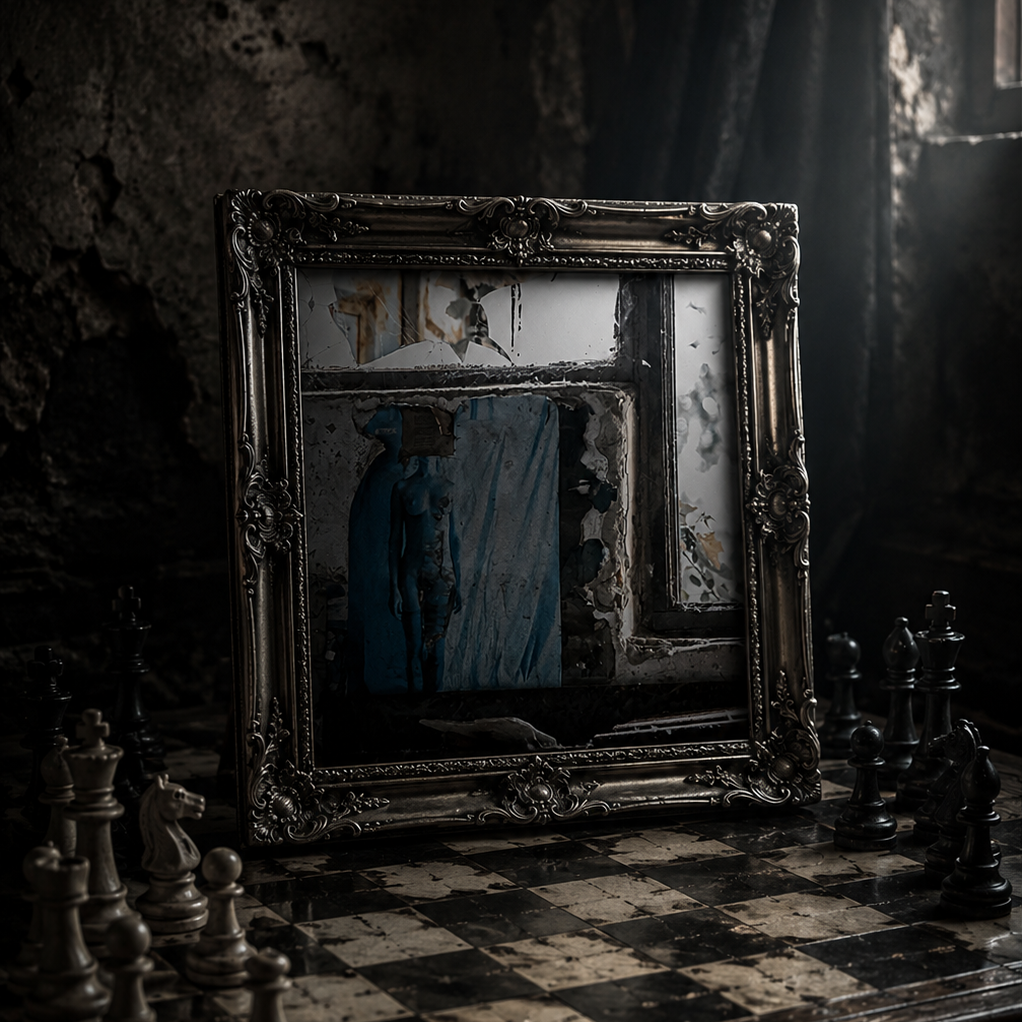
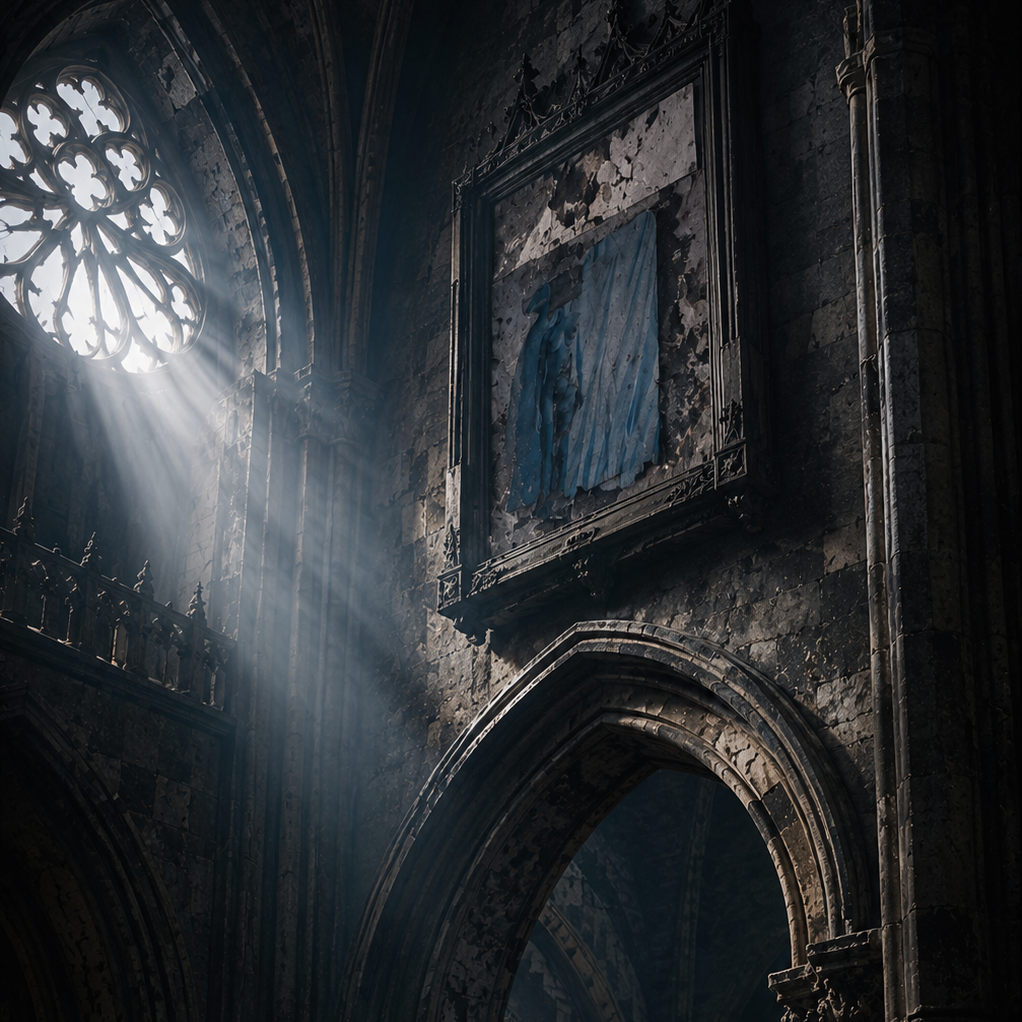
Every world eventually develops its own symbolic language. Certain images begin to appear again and again—not because they are decorative, but because they express ideas that ordinary language cannot fully contain.

Evanescent Horizons is woven through with such symbols. Some come from astronomy: the North Star, TrES-2b. Others from Christian tradition: the Angel of Sardis, the liturgy, Compline. Others belong to the quiet language of nature: gardens, silence, light and darkness.

None of them exists simply for atmosphere. Each one carries part of the album’s emotional and philosophical landscape. Over the coming days, as we walk through the songs together, these symbols will gradually reveal why they belong exactly where they are.

Every Journey Has Its Shape

People sometimes ask why Evanescent Horizons consists of eleven tracks. The answer has very little to do with numbers. It has everything to do with shape.

The album was never conceived as a collection of songs. From the beginning, it existed in my mind as a single emotional arc.

The first five tracks descend steadily into loss, disillusionment and collapse. Each one strips away another certainty until nothing remains. The sixth track stands exactly at the centre. It contains no lyrics because, at that point, language itself has failed. Until then, the protagonist searches through words: pleading, questioning, accusing, mourning. But there comes a moment when suffering exceeds explanation. Nothing meaningful can still be said. Only music remains. From there, the second half begins—not as a return to happiness, but as a slow and uncertain movement toward acceptance. The final track ends with death, yet also with the realization that love itself was never meaningless.

That is why there are eleven tracks.

The shape came first.

The number simply followed.

Every World Has Its Own Language

When people encounter biblical quotations, liturgical references or fragments of Latin in my music, they often assume they point toward a religious message. For me, it has never been that simple.

These elements are not there to preach, persuade or declare certainty. They belong to the symbolic language in which I first learned to think about the questions that still shape my music: love and guilt, hope and loss, mortality and transcendence. Long before I asked philosophical questions, I already knew the rhythm of the liturgy. Long before I understood theology, I had heard biblical stories, prayers and ancient words repeated through ritual. They did not remain outside me. They became part of the inner vocabulary through which I tried to understand the world.

Over the years, many of my convictions have changed. Some I left behind; others I came to understand differently. Yet this symbolic language remained with me. So did my sensitivity to mystery. And so did the quiet restlessness that keeps searching for permanence in a world defined by change, while knowing that the world itself can never fully provide it.

That is why Evanescent Horizons is woven through with biblical imagery, liturgical echoes and occasional passages of Latin. Not because they offer answers. But because there are still questions I cannot imagine asking in any other language.

The Church Organ — Giving Voice to Space

Some instruments create melodies. Others create space. Not physical space, but the invisible space in which music can breathe, where emotions can expand beyond words.

For me, that space has always resembled the night sky. On some evenings, the stars feel comforting, almost protective. On others, the same sky becomes overwhelming, confronting us with a universe so immense that it quietly dissolves every illusion of our own importance. I have always searched for an instrument capable of giving that experience a voice.

For me, that instrument has always been the church organ. Its sound carries something I have never found anywhere else. It is monumental without becoming aggressive, intimate without becoming fragile. It can lift us toward something greater while quietly reminding us how small we truly are. Whenever I hear a great organ, I think of Gothic cathedrals. Not only because of their architecture, but because they evoke exactly the same emotional paradox: they are places of extraordinary beauty, yet they also carry an almost unbearable weight. One enters them feeling invited… and at the same time humbled.

That paradox lies at the heart of Evanescent Horizons.

The album is, in many ways, a story about losing everything that once seemed certain. Love, hope, identity, even the meaning of suffering itself are gradually stripped away. Yet through that loss, another perspective slowly begins to emerge: one that reaches beyond what can be measured or possessed.

The church organ became the musical thread connecting those ideas. It appears throughout the album not because I wanted to create a “church-like” atmosphere, but because no other instrument speaks so naturally about transcendence. It gives voice to a world that exists beyond the visible. A world that is beautiful and terrifying in equal measure. A world vast enough to make us feel insignificant, yet meaningful enough to make every act of love matter.

Perhaps that is why the organ has always felt at home in my music. Not because it sounds ancient. But because it reminds us that some questions have always been larger than ourselves.

Entering Evanescent Horizons

There was a time when listening to an album meant more than pressing play. Many of us remember sitting with a CD booklet in our hands, reading the lyrics while the music unfolded, discovering references, symbols, and hidden connections that revealed themselves only after repeated listens. An album was not simply consumed; it was explored.

This guide was born from that same spirit. It is not a booklet, nor is it an attempt to explain the songs. The lyrics of Evanescent Horizons were written to stand on their own. Their story is intentionally understated, and many of the ideas that connect the eleven songs remain beneath the surface. I wanted it that way. My goal was never simply to tell a story, but to use that story as a way of exploring questions that have accompanied me for years: questions about love, loss, meaning, hope, mortality, and what (if anything) endures when everything else seems to disappear.

Think of this guide as a companion to the album rather than a commentary on it. It offers the context in which the songs were written, the ideas that shaped them, and the musical choices that helped bring them to life. It is an invitation to look beneath the surface and discover another layer of the journey.

Ultimately, however, this guide is about something more personal. Every album inevitably becomes a portrait of the person who created it. Whether we intend it or not, our experiences, convictions, doubts, and hopes find their way into the music. Evanescent Horizons is no exception. Through a fictional narrative, I found a way to speak honestly about my own worldview, my own questions, and the things I have come to believe. In the end, I realized that this was the only thing I could truly offer. Because as musicians, we can imitate styles, admire influences, and learn techniques. But sooner or later, every meaningful work begins with the same decision: to give something of ourselves.

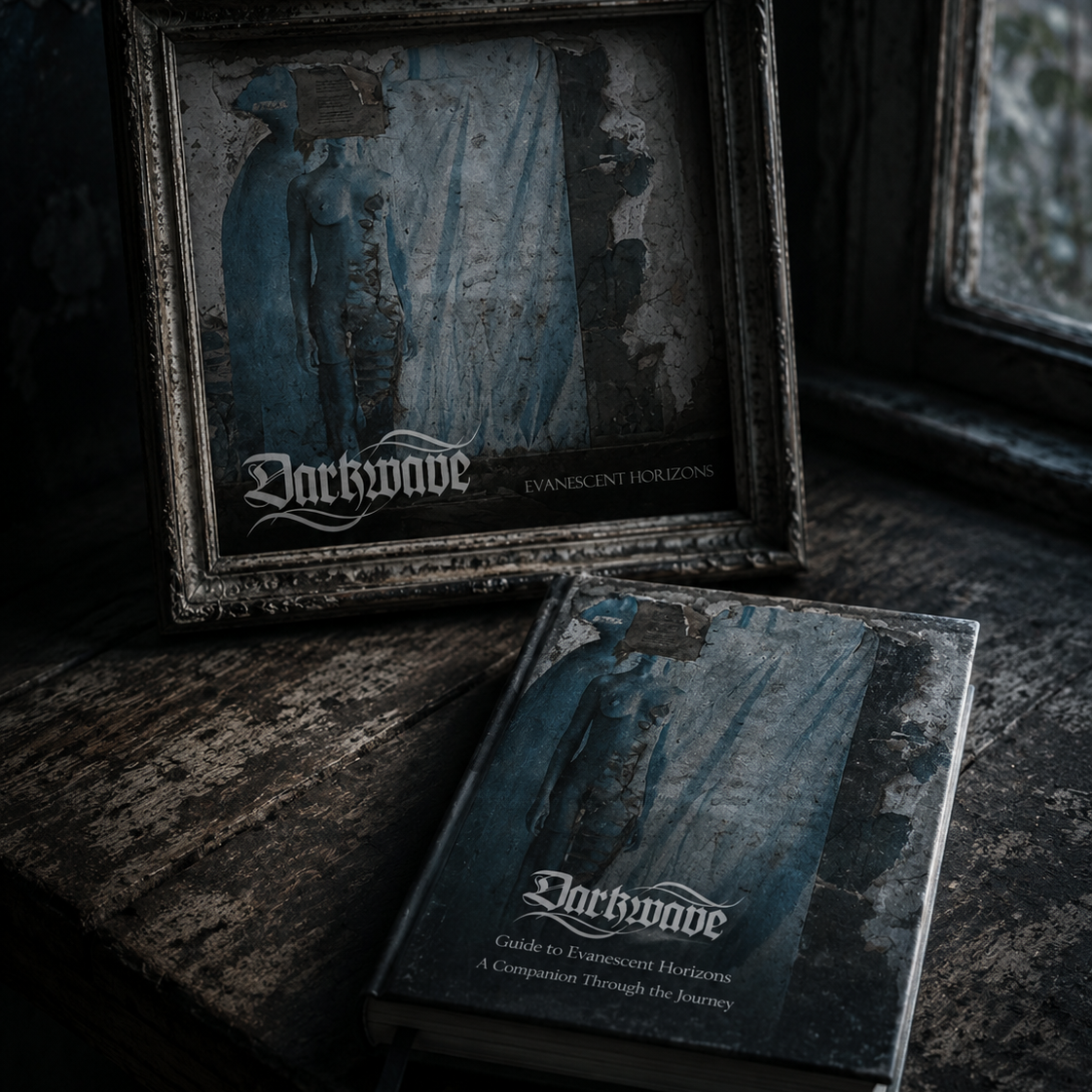
I hope this guide enriches your journey through Evanescent Horizons.Thank you for taking it. If you’d like to spend a little more time in the world of Evanescent Horizons, I’d be honored to have you read its Companion Book. You can download it below.

🔗 A Companion to Evanescent Horizons

The Day Has Come

The silence has ended.
Everything that followed was written for this moment.

Evanescent Horizons is out now.

This album is the result of years of writing, questioning, beginning again, and refusing to let go until every note and every word felt true. It tells the story of loss—but even more, of what remains after loss. It is my most personal work to date, and I gave it everything I had. If these songs accompany even one person through their own darkness, they have already fulfilled the purpose for which they were written.

Thank you for walking this journey with me.

Begin this new chapter of the journey here:

Spotify: https://open.spotify.com/album/7LujOfz96JfmxcSCBiipIi…

Bandcamp: https://darkwave-metal.bandcamp.com/…/evanescent-horizons

Evanescent Horizons (2026)

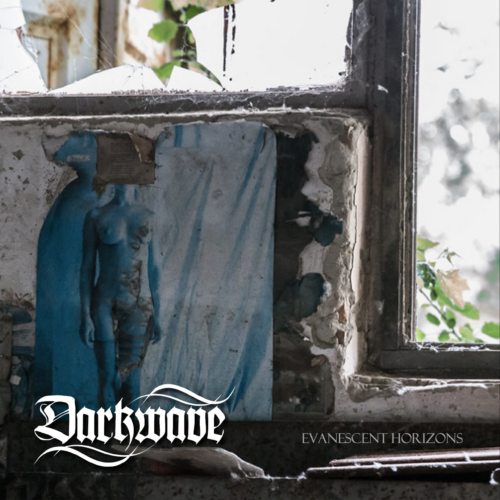
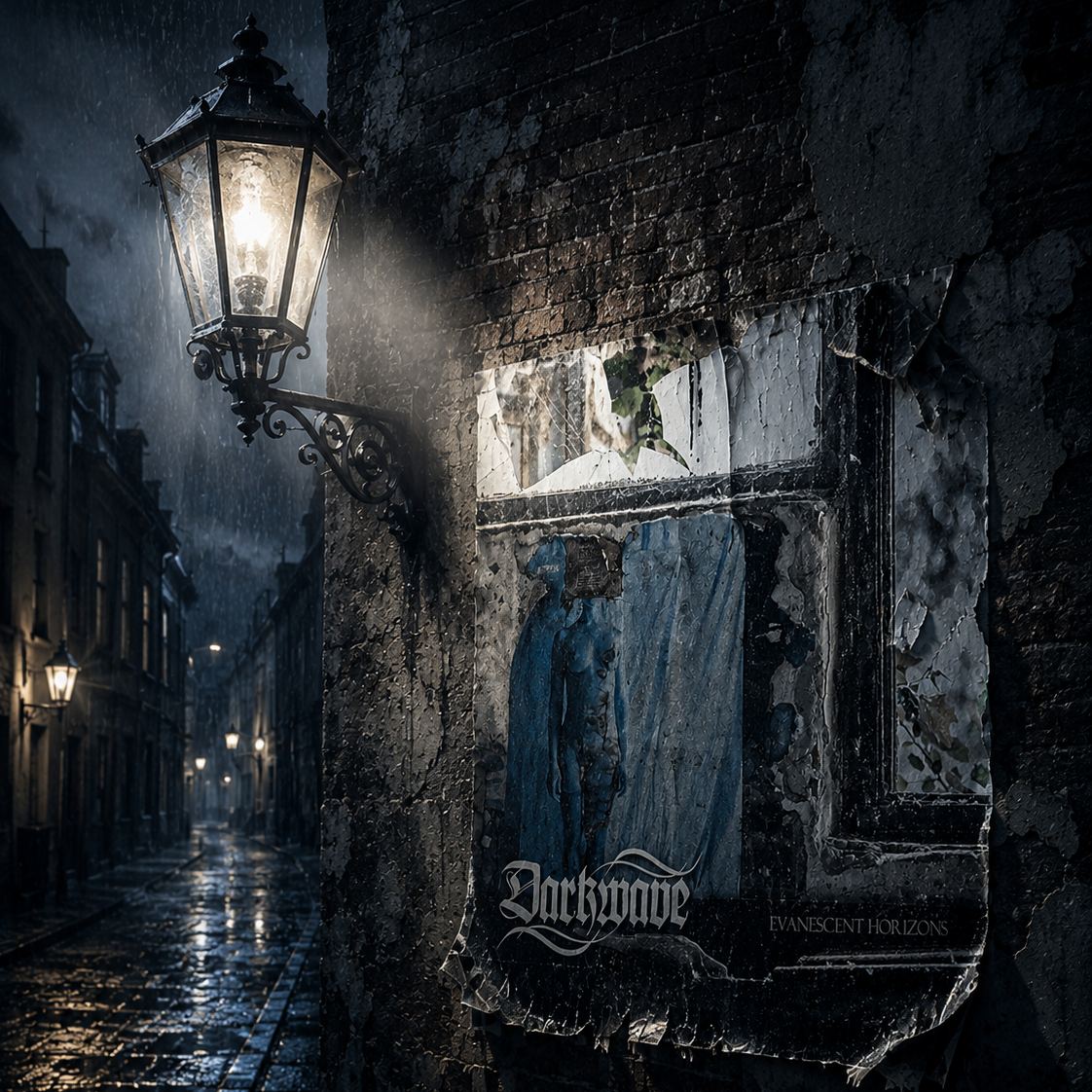
Released on 15 July, 2026, Evanescent Horizons is Darkwave’s fifth full-length album and its most ambitious artistic statement to date. Conceived as an eleven-chapter concept album, it follows the emotional journey of a soul confronted with unrequited love, loss, anger, acceptance and, ultimately, the fragile possibility of hope. Rather than telling a simple story, the album explores a universal question: can love retain its meaning even when it is never returned?

At its heart, Evanescent Horizons is not an album about heartbreak alone. It is about confronting the moments that redefine us—when certainty collapses, when grief reshapes our identity, and when we are forced to decide whether hope is still worth holding onto. It does not seek easy answers or comforting illusions. Instead, it invites the listener to walk through uncertainty and discover that even the deepest wounds can reveal unexpected beauty, compassion and meaning.

Musically, Evanescent Horizons expands Darkwave’s progressive symphonic death metal into its broadest and most cinematic form yet. Crushing riffs intertwine with sweeping orchestral arrangements, neoclassical passages and atmospheric soundscapes, allowing brutality and vulnerability to exist side by side. Every composition serves the emotional arc of the narrative, making the album a unified experience rather than a collection of individual songs. Recurring musical themes evolve alongside the protagonist, gradually transforming as the story unfolds and giving the album a strong sense of continuity from beginning to end.

As with every Darkwave release, the entire album was written, arranged, performed, produced, mixed and mastered by Zsolt Némethy. Every musical decision—from the orchestration to the smallest production detail—was guided by a single purpose: not to offer an escape from darkness, but to offer companionship while walking through it.

In an age increasingly defined by distraction, uncertainty and isolation, Evanescent Horizons is an invitation to slow down, to listen, and to reflect. It is a journey through darkness, but not one that surrenders to despair. Beneath its weight lies a quiet conviction: that love possesses an intrinsic value independent of whether it is returned, and that hope, however fragile, may still endure when everything else seems to fade.

Track listing

The links below will lead you to the respective tracks on my Bandcamp page, where you can stream or download the songs. Alternatively, you can explore Evanescent Horizons on various streaming platforms, including Spotify, AppleMusic, SoundCloud, and YouTube.

  1. Gaslight Elegy (5:50) – [song lyrics]
  2. Blood-Sealed Solitude (4:49) – [song lyrics]
  3. The Parchment Night (5:26) – [song lyrics]
  4. Transitio Mundi (6:11) – [song lyrics]
  5. The Godhook Silence (5:32) – [song lyrics]
  6. TrES-2b (1:49) – [instrumental]
  7. Farewell to the Angel of Sardis (7:19) – [song lyrics]
  8. The Good Friday Exsultet (5:46) – [song lyrics]
  9. On the Turning of the Years (5:53) – [song lyrics]
  10. The Last Dance of the Unchosen (6:09) – [song lyrics]
  11. Compline Over the World (3:10) – [song lyrics]

Total playing time: 57:48

11. Compline Over the World

The cantor folds the psalter’s sacred page,
The acolyte clears the dust from empty stage. 
I too must go, prepared, without a word, 
A stranger stepping past this darkened world. 

And shaking off the dust of mortal clay, 
I journey through the stars, and drift away.

My love resounds through stars, shall not decay. 

10. The Last Dance of the Unchosen

After sunset, the burden gathers weight,
as crows descend through corridors of twilight.
Claw or hand pries open the Moon’s gate—
for you, my friend, I’ve turned to ghostlight.
I fell in silence from the phosphor-lit sky;
when you leaned closer, nothing did I say:
“Do you still keep a dream of me on high…?
Is there a breath that has not slipped away?”
And on the third night, if candles scorch my sight,
is it the rising or the road of lament?
For I am but a tool, a broken mirror of light,
serving — ut omnes per illum crederent.

If I must fall, then let it be with grace,
to sign my name within the Book of the Dead.
I sought for God in every glass’s trace,
to sip the silence, taste the hush it shed.
In living tears, beneath my fleeting breath,
my scattered hopes lie broken, crushed and small.
Silence descends; my body leans to death,
a vast sign rises on the midnight wall.
No zodiac shines there; half-dead we remain,
and even at matins we watch no more.
Our souls burn down, then gutter and wane,
blessed into silence with each glass I pour.

And those whom fate has summoned to depart
present to me the last waltz of the ball.
Spirits keep turning with moonlight in their heart:
so life grows colder — each generation’s fall.
The gleam of my signet-ring flickers, then fades;
the warders within me sink into rest.
The last of the line, among funereal shades—
“et lux in tenebris,” so often confessed.
They say that a star lights the brow of our dust,
the flash of our consciousness shall never cease;
yet all that is falls, and all that was, dust—
bodies fall earthward, their throats given no release.

One final dance I ask, within this stillness,
one final glass of wine I’ll share with you.
So, when I leave, they may say I was smiling,
my lover was summer, and winter I knew.
And all whom I wronged forgave me in kindness,
with falling leaves my body takes flight —
I turn back again and toast to the heavens,
a farewell blessing beneath the sun’s light.

9. On the Turning of the Years

The café holds its silence, teacups in the twilight’s glow,
lengthy shadows gather as the sinking daylight goes.
The evening melts like newsprint, blurred and bleeding in the rain,
as I call you closer, life congeals in a fragile frame.

I hear your heartbeat pulsing through the bitter-bellied night,
silence coils like acid, void of surrender or light.
Above, the teacups rattle, spoons like tongues of bells that toll,
tablecloths lie frozen, canvas of the parting soul.

I knew if you drew nearer, blades would cut from throat to chin,
your jawline carved against me, silence searing deep within.
Our house becomes a photo—void of present, void of dawn,
no future inked inside it, nor today to lean upon.
Just a canvas made of flesh, stripped of breath and any sign,
beloved, wordless silence curdling into slow decline—
a painting made of flesh in well-loved solemn silence shone
the death-cry of the seeds that strike the stone, unlived, unsown

Weeping as he empties the chalice of his solitude,
the strayer blindly gallops through the twilight as it broods.
He casts a mask on jawbones, visage grim and starkly bare,
he learns from plaster, flesh, and dust the truths that linger there.
Through sugar-brown horizons, his hand splits evening’s brittle seam,
he barters fractured hours for the ash of broken gleam.
He buries heaven in soil, the Moon inside the setting Sun—
resurrection into ruin, damnation slowly comes undone.

And should they persuade him, “There lie horizons yet to be,”
silently he answers, “I wait—yet nothing comes to me.
For she burned all bridges, left their ashes to the air,
laying every living hope beneath horizons bare.

If brighter days still dawn, I turn away from light,
for I was always last—the shadow out of sight.
And so the end has come, the place I called my own:
the path I walked alone, the grave that I have sown.”