
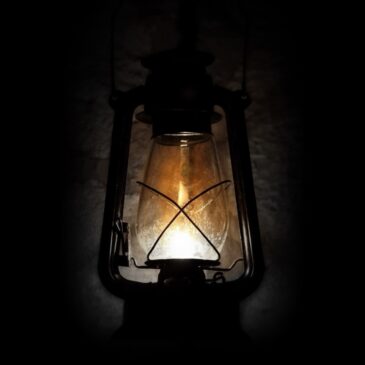
The Parchment Night is the song of bitterness. It is driven by the fear of vanity, futility, and meaninglessness. The lyrics begin with an accusation born from the realization that the bond in which the protagonist invested so much hope may have been temporary from the very beginning. He recognizes a familiar pattern that has haunted his life for years: hope, devotion, dedication – followed by dismissal, disappointment, and ultimately rejection. As a result, the song is saturated with resentment and disillusionment, to the point where it even begins to question the reality of the “shared solitude” described in the previous track. What once seemed like a genuine connection now appears fragile, uncertain, and perhaps even illusory. The recurring chorus – “Vanitas vanitatum, dixit Ecclesiastes; vanitas vanitatum, et omnia vanitas” (Ecclesiastes 1:2) – serves as a haunting reminder of the protagonist’s deepest fear: that everything may ultimately be in vain. Not merely the relationship, but human existence itself. The fear that nothing is permanent, nothing is stable, and nothing truly lasts.
This is the point where the album begins to transcend the boundaries of a personal story and enters philosophical territory. The loss is still deeply personal, yet the questions it raises become universal. What is the meaning of our suffering, devotion, sacrifice, and love when no one benefits from them? What remains of our efforts when there is no one left to receive them? Religious and biblical imagery further expand the song’s scope beyond the personal. The protagonist’s grief becomes intertwined with a search for transcendence. Is there anything within human existence that possesses a meaning capable of surviving beyond the fragile bonds of mortal life? Although the song depicts a man still trapped in anger and grief, it also subtly points toward the album’s future direction. Hidden beneath the bitterness lies the first glimpse of a possibility: that understanding may ultimately come not through possession, but through letting go.Musically, the song begins with church organ, a recurring motif throughout the album. Its progressive and symphonic introduction soon gives way to a pulsating, almost thrash metal-inspired section, accompanied by melodic polyphonic choruses whose repeated appearance becomes intentionally unsettling. The middle section breaks away from the song’s initial structure through a progressive symphonic passage built around unconventional time signatures before returning to the main lead motif, verses, and choruses. The final minutes are dominated by growing tension. Repetitive acoustic patterns gradually evolve into increasingly aggressive guitar arrangements, culminating in an almost thrash-metal-like symphonic climax. The resulting sense of unease serves as a bridge toward the next chapter of the story and prepares the listener for the depressive, doom-laden atmosphere of the following track.
Listen
🎵 Spotify
🎵 Bandcamp
Lyrics
Like all the rest, you too will learn to forget,
when spring sets in with hail and thawing wet.
You’ll trickle from my face, from parchment night,
while all the world laughs green and bursts with light.
Vanitas vanitatum dixit Ecclesiastes,
Vanitas vanitatum et omnia vanitas.
You won’t recall the solitude we shared,
how heaven’s buttressed ramparts split and bared;
we were the breadth of splintering creation,
we were awareness and a burning oblation.
Upon God’s altar lay the fractured host,
one substance in two bodies, darkening to ghost;
with fingers interlaced we burned, hand into hand,
I scarred myself to you—we two were one, one brand.
A masquerade within the halls of God;
snow drifts on us, our buckling shoulders nod.
Winter again; the stroke of midnight’s dread—
upon this earth, the ghosts go forth and tread.