The Lyrics Are Now Live!

I’m happy to share a small but meaningful update: my artist profile on Musixmatch has now been verified, and I’ve uploaded the lyrics to my songs. This means that, from now on, you can follow the lyrics in real time while listening to my music on streaming platforms like Spotify.

For me, this is more than just a convenient feature. The conceptual side of Darkwave has always been important to me. During the first three albums, however, these ideas could only be expressed through the music itself and, to some extent, through the titles of the songs and albums. Horror Sacri marked a turning point, as vocals entered the world of Darkwave for the first time, giving me a new way to articulate the thoughts, questions and stories that had always been at the heart of the music.

Since then, lyrics have become an integral part of how I express these ideas — not simply as words accompanying the music, but as another layer through which the underlying concepts and narratives can unfold. With Evanescent Horizons especially, the lyrics are an integral part of the album’s concept. The record follows a personal and existential journey through love, loss, disappointment, anger, grief, and finally acceptance. Each song is part of a larger narrative, and many of the images and metaphors are deliberately open to interpretation.

So if you’ve ever found yourself wondering what a particular line means, or wanted to explore the ideas behind a song a little more deeply, the lyrics are now much easier to follow. You can simply listen to the songs while streaming the music and let the lyrics unfold alongside the music.

And perhaps, somewhere between the words and the music, you’ll find something of your own in them.

When Our Souls Met

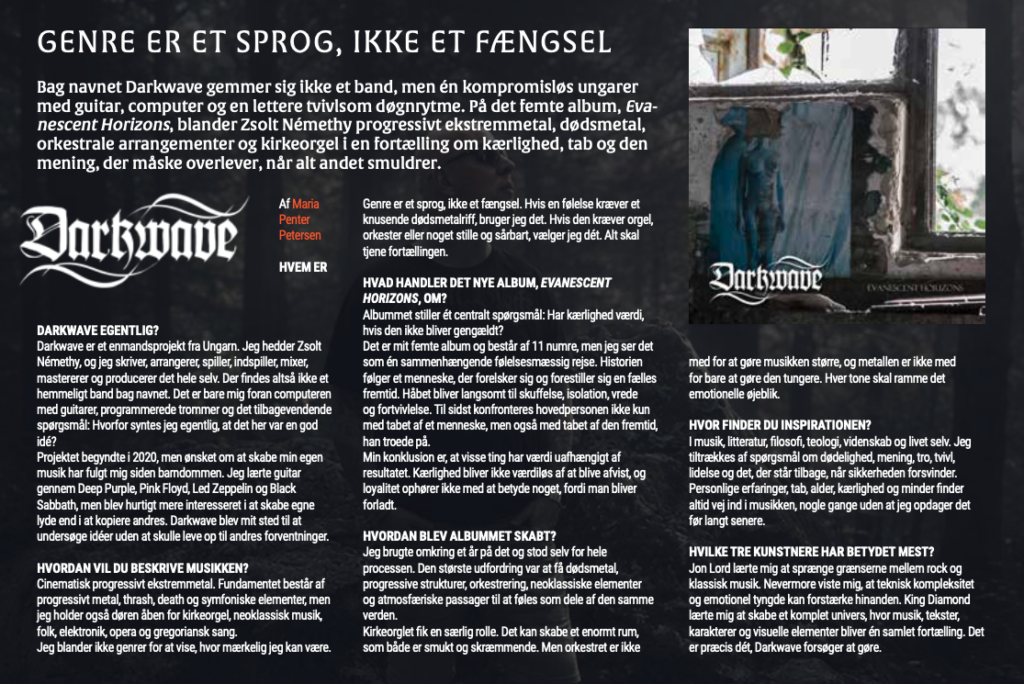
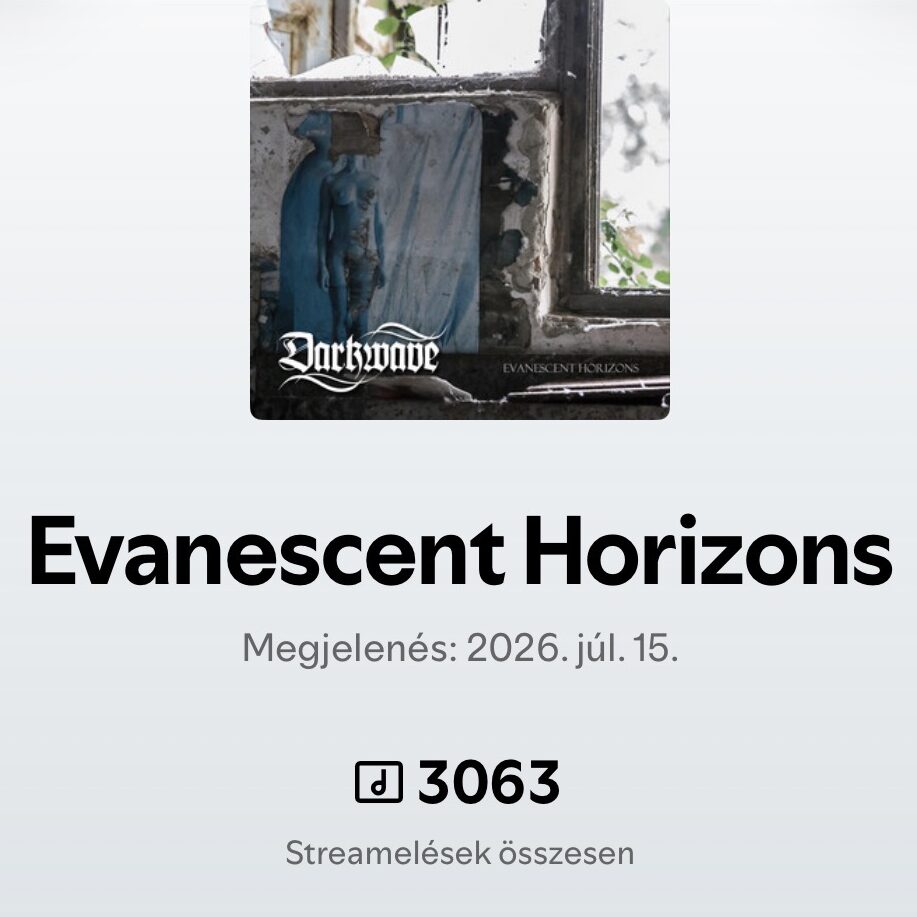
I think I’ve reached a point I once thought impossible. More than 3,000 streams for Evanescent Horizons, over 1,300 listeners, and almost 270 saves.

For a moment, I honestly don’t know what to say. It’s not about the numbers. It’s about knowing that something I poured so much of myself into has resonated with so many people.

I’m genuinely grateful.

Thank you, friends. I don’t know who you are or where you are, but please know this: for a brief moment in time, our souls found each other. ❤️


If you haven’t discovered Evanescent Horizons yet, perhaps now is a good time to step into its world.

Give it a listen — and maybe let it find you, too.

When a Review Becomes a Conversation

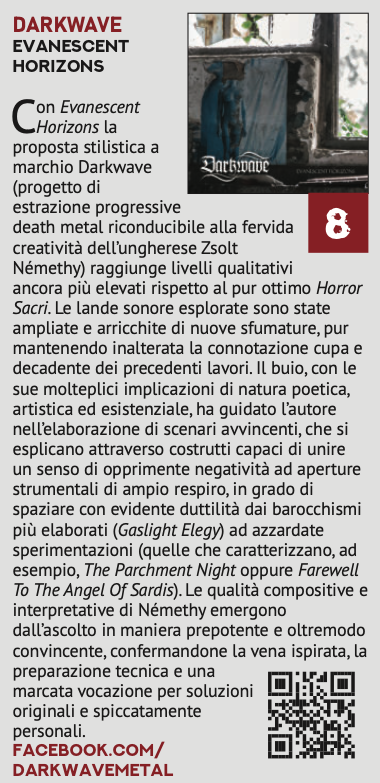
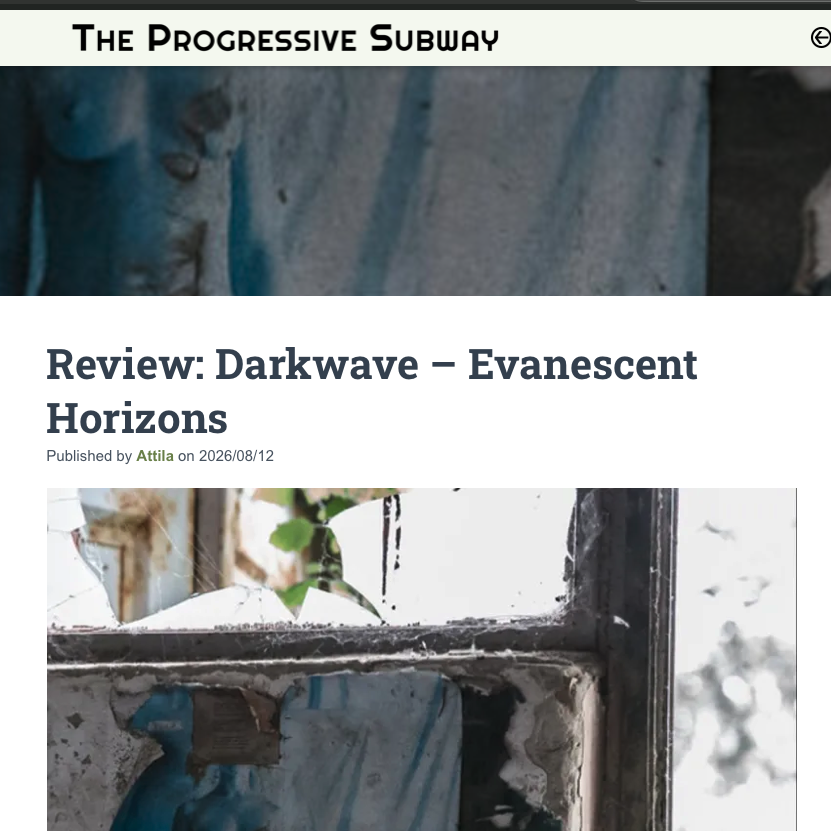
A new review of Evanescent Horizons has just appeared at The Progressive Subway, receiving a rating of 6/10.

Ratings are always a rather imperfect way of describing music, so I was more interested in what the reviewer actually had to say about the album. And there is quite a lot there to appreciate.

The reviewer understood the central idea of Evanescent Horizons: the question of whether love can have value even when it is unrequited, unrecognized, or ultimately lost. He simply doesn’t agree with my answer. And that’s perfectly fair.

There are criticisms of the music itself, too — the vocals, some of the songwriting, the classical arrangements, and the production. Some of these observations I find useful, some I don’t entirely agree with, and some are simply matters of taste. That’s what a review is supposed to do: engage with the work rather than simply approve or reject it.

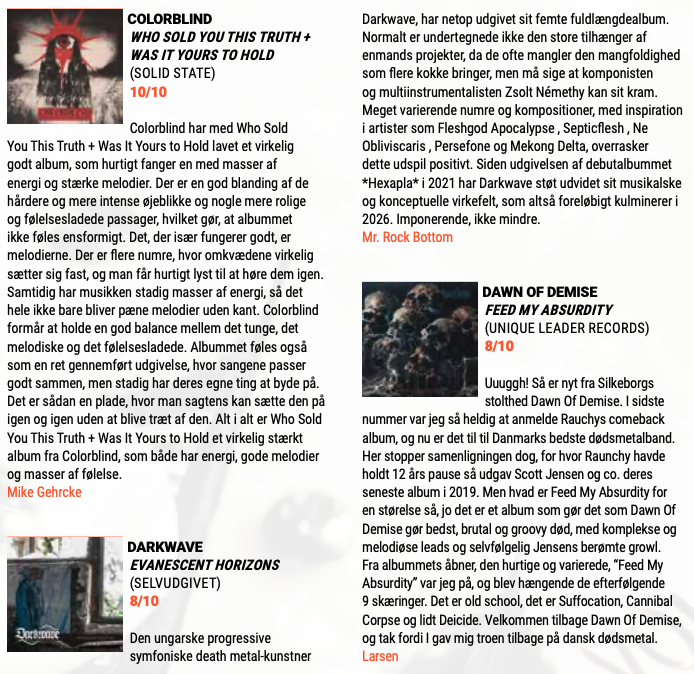
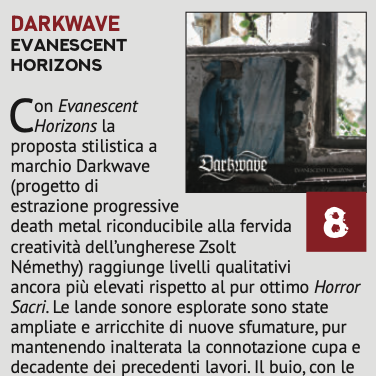
What matters more to me is what the reviewer clearly found in the album. He describes it as a “wild ride worth experiencing”, praises the guitar work and the cinematic atmosphere of Transitio Mundi, and acknowledges the scale of creating a record like this as a solo project. Most importantly, he ultimately describes Evanescent Horizons as a piece of art with “surprising depth” and says it is worthy of the listener’s time. That means far more to me than the number at the bottom of the page.

I didn’t make Evanescent Horizons to be universally liked. I made it because I had something I needed to say — something I wasn’t even entirely sure I believed myself when I began writing it. A review doesn’t have to agree with the album to be meaningful. Sometimes the most interesting reviews are the ones that engage with the ideas behind the music, find something to challenge, and start a conversation.

Thank you to The Progressive Subway for listening, engaging with the record, and taking the time to write about it.

Read the full review:
The Progressive Subway — Review: Darkwave – Evanescent Horizons

Listen to the album:
Spotify / Bandcamp

From Threads to Metal: Reimagining AiramFM’s The Impostor

Sometimes the most unexpected collaborations begin in the most unexpected places.

A few months ago, while scrolling through Threads, I came across AiramFM‘s song The Impostor. It immediately caught my attention. Although it comes from a musical world very different from my own, there was something in its atmosphere that stayed with me long after the first listen. I reached out to AiramFM to ask whether the song could be reimagined from a different perspective. To my surprise (and gratitude) she not only shared the original stems with me, but also gave me complete creative freedom to reshape the song in any direction I felt appropriate.

That level of trust is something I deeply appreciate.

From the very beginning, my intention was never to overwrite or disguise the original. Quite the opposite. I wanted to approach it with respect, preserving its emotional core while exploring how some of its melodies, harmonies and atmosphere might unfold within a progressive metal setting. The result is not a replacement for the original recording, but my own interpretation of it.

Throughout the process I regularly shared work-in-progress versions with AiramFM. Her encouragement and enthusiasm accompanied the project from the first ideas to the final master, making this collaboration a genuinely enjoyable creative journey.

Today I’m very happy to finally share my metal interpretation of The Impostor.

I hope it doesn’t diminish what made the original special, but instead offers another perspective on an already beautiful piece of music. A collaboration isn’t about changing someone else’s work. It’s about discovering another story that was quietly waiting inside it.


Listen

The track is now available on major streaming platforms as well as on Bandcamp.

Streaming: (SpotifyApple MusicYouTube MusicAmazon MusicDeezerTidal)

Bandcamp: (link)

If you enjoy hearing familiar music through a different lens, I hope you’ll give it a listen.

Chapter III – The Parchment Night

The Parchment Night is the song of bitterness. It is driven by the fear of vanity, futility, and meaninglessness. The lyrics begin with an accusation born from the realization that the bond in which the protagonist invested so much hope may have been temporary from the very beginning. He recognizes a familiar pattern that has haunted his life for years: hope, devotion, dedication – followed by dismissal, disappointment, and ultimately rejection. As a result, the song is saturated with resentment and disillusionment, to the point where it even begins to question the reality of the “shared solitude” described in the previous track. What once seemed like a genuine connection now appears fragile, uncertain, and perhaps even illusory. The recurring chorus – “Vanitas vanitatum, dixit Ecclesiastes; vanitas vanitatum, et omnia vanitas” (Ecclesiastes 1:2) – serves as a haunting reminder of the protagonist’s deepest fear: that everything may ultimately be in vain. Not merely the relationship, but human existence itself. The fear that nothing is permanent, nothing is stable, and nothing truly lasts. 

This is the point where the album begins to transcend the boundaries of a personal story and enters philosophical territory. The loss is still deeply personal, yet the questions it raises become universal. What is the meaning of our suffering, devotion, sacrifice, and love when no one benefits from them? What remains of our efforts when there is no one left to receive them? Religious and biblical imagery further expand the song’s scope beyond the personal. The protagonist’s grief becomes intertwined with a search for transcendence. Is there anything within human existence that possesses a meaning capable of surviving beyond the fragile bonds of mortal life? Although the song depicts a man still trapped in anger and grief, it also subtly points toward the album’s future direction. Hidden beneath the bitterness lies the first glimpse of a possibility: that understanding may ultimately come not through possession, but through letting go.Musically, the song begins with church organ, a recurring motif throughout the album. Its progressive and symphonic introduction soon gives way to a pulsating, almost thrash metal-inspired section, accompanied by melodic polyphonic choruses whose repeated appearance becomes intentionally unsettling. The middle section breaks away from the song’s initial structure through a progressive symphonic passage built around unconventional time signatures before returning to the main lead motif, verses, and choruses. The final minutes are dominated by growing tension. Repetitive acoustic patterns gradually evolve into increasingly aggressive guitar arrangements, culminating in an almost thrash-metal-like symphonic climax. The resulting sense of unease serves as a bridge toward the next chapter of the story and prepares the listener for the depressive, doom-laden atmosphere of the following track.


Listen

🎵 Spotify

🎵 Bandcamp


Lyrics

Like all the rest, you too will learn to forget,
when spring sets in with hail and thawing wet.
You’ll trickle from my face, from parchment night,
while all the world laughs green and bursts with light.

Vanitas vanitatum dixit Ecclesiastes,
Vanitas vanitatum et omnia vanitas.

You won’t recall the solitude we shared,
how heaven’s buttressed ramparts split and bared;
we were the breadth of splintering creation,
we were awareness and a burning oblation.

Upon God’s altar lay the fractured host,
one substance in two bodies, darkening to ghost;
with fingers interlaced we burned, hand into hand,
I scarred myself to you—we two were one, one brand.

A masquerade within the halls of God;
snow drifts on us, our buckling shoulders nod.
Winter again; the stroke of midnight’s dread—
upon this earth, the ghosts go forth and tread.

Build Your Own Evanescent Horizons CD

Physical media has always meant a great deal to me. I grew up in a time when opening a CD, reading the booklet, and listening to an album from beginning to end were all part of the experience.

I still believe they are.

Although I plan to offer professionally manufactured CDs in the future, I also wanted to do something for those who simply enjoy creating things with their own hands. So I’ve decided to make the complete Evanescent Horizons CD artwork available as a free download. If you have access to a printer, some heavyweight paper, an empty jewel case, and a blank CD-R, you’re welcome to assemble your own copy.

Music has always been something we share. If creating your own physical copy helps this album become part of your world, then I’m genuinely happy.

Thank you for giving Evanescent Horizons a physical home.


Downloads

Printing notes

Print at 100% (Actual Size). Do not use “Fit to Page” or automatic scaling.

For the best results, use heavyweight matte paper (160–250 g/m²). Cut along the outer edge, fold the booklet, and assemble everything in a standard jewel case.

Fifteen Days Later

It’s hard to believe that Evanescent Horizons has only been out for fifteen days.

Like every independent musician, I occasionally look at the numbers — not because they define the music, but because they tell a story.

The first thing I noticed was how differently Spotify and Bandcamp behave.

  • Bandcamp gave the album a wonderful initial wave of attention, then quietly settled down again. That feels natural. People come there to discover music, to support artists, and to own the albums they love.
  • Spotify tells a different story. After the initial release spike, the listening didn’t disappear. It found a new baseline. People are still discovering the album. More importantly, some are coming back.

To me, that’s far more meaningful than a single big peak.

Concept albums aren’t meant to be consumed in one sitting and forgotten the next day. They’re built to reveal themselves gradually, chapter after chapter, with every return. That’s why I don’t pay too much attention to the highest point on the graph. I’m much more interested in what happens after it. Because numbers tell you how many people arrived.

Returning listeners tell you how many decided to stay.

Thank you to everyone who has spent time with Evanescent Horizons so far.

We’re only at Chapter II.

The story is still unfolding.
The journey continues.


If you’d like to become part of that story, you can begin listening here:

🔗 Spotify

🔗 Bandcamp

Chapter II – Blood-Sealed Solitude

The second song of the album is already filled with tension. It captures the realization that initial enthusiasm often gives way to disappointment and bitterness, even when the intentions of both parties are sincere. To “see the stigma on the foreheads of the dead” means that the protagonist begins to recognize that both individuals are burdened by their past and marked by their own forms of brokenness. Yet despite these differences, hope for a genuine connection still remains. Exile – understood here as exclusion from mainstream society, as the condition of being outsiders – appears capable of binding two lost souls together. A sense of worthlessness permeates the song, echoing Legacy of the Worthless from Thanatology. The stigma of being different becomes both a burden and a defining characteristic. There is also a subtle reference to the central ideas of Horror Sacri: the “holy-painted fields” could easily belong to the symbolic landscape of the previous album and its exploration of sacred dread. The song ultimately arrives at a bittersweet conclusion. The two characters “seal their interlude with blood, within each other’s solitude.” It marks the first visible crack in the relationship: the gradual acceptance that something is fundamentally flawed, yet perhaps still manageable precisely because both individuals carry their own wounds.

Musically, the song opens with an orchestral introduction built around unsettling church organ, strings, and brass, establishing a sense of tension that culminates in a tapping-based guitar lead. The verses feature raw, bitter vocals, contrasted by a brighter polyphonic chorus that recalls the playful atmosphere heard at the end of the previous track. A brief vocal section built around an epic guitar motif and acoustic accompaniment leads into one of the album’s most unusual passages: an orchestral section in an unconventional time signature. Here the music deliberately moves away from the familiar foundations of Baroque- and Viennese-inspired symphonic metal and ventures into more uncharted territory, reminiscent of bands such as Mekong Delta. Following another chorus, the song enters a Balkan folk-inspired section that builds toward its emotional climax: the declaration of sealing the interlude with blood within each other’s solitude. The playful chorus then returns twice despite the underlying tension, suggesting that hope, however fragile and diminished, still survives beneath the growing disillusionment. 


Listen

🎵 Spotify

🎵 Bandcamp


Lyrics

In the blackened silence do I learn to see,
The stigma marked on sleepless foreheads deep,
A brimming cup of life pours down on me,
We drift through velvet in the night’s dark sweep.

Betrayed at dawn by weeping, golden light,
In holy-painted fields we lost our way,
And angels tread the frost on plains of white,
Where fate’s dim shimmer rises into day.

Exile entwines us, binding chain to chain,
In strangers’ temples we are the cornerstone,
Unworthy still of mercy for our pain—
Tears are the gift of pure and brave alone.

At last, within each other’s solitude,
At last, with blood, we seal our interlude.

Echoes Beyond the Studio – Spinlog

Every song begins as a private conversation. Sometimes it finds another voice.

Once music leaves the studio, it no longer belongs entirely to the person who created it. It begins a dialogue with those who listen.

I’m deeply grateful to Spinlog for their thoughtful review of Farewell to the Angel of Sardis and for becoming part of that conversation.

Thank you for listening with such care and for sharing your perspective.

If you’d like to read the review:
🔗 https://www.spinlog.de/post/darkwave-farewell-to-the-angel-of-sardis


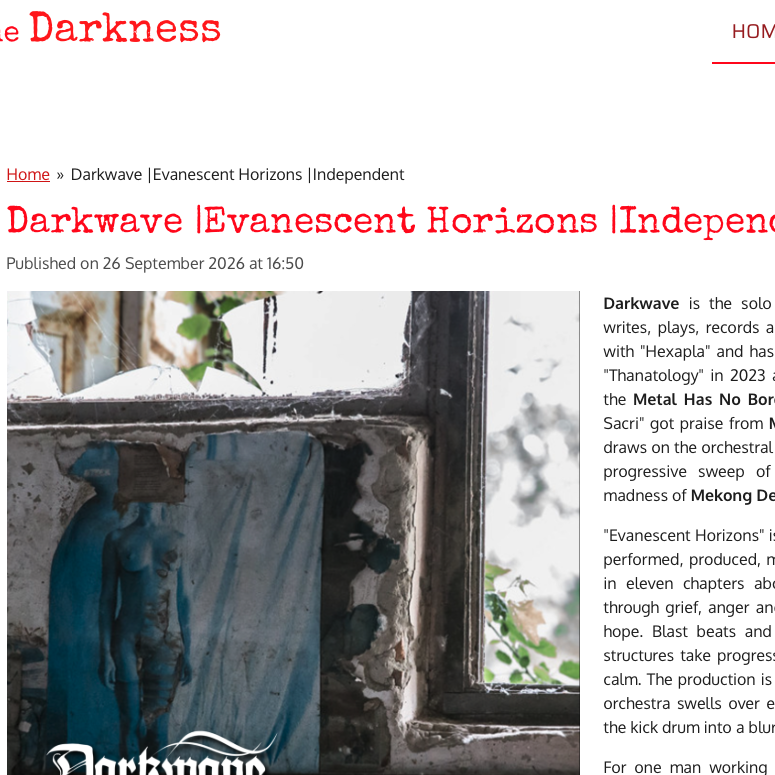
Darkwave Returns with the Apocalyptic ‘Farewell to the Angel of Sardis’

Hungarian multi-instrumentalist Zsolt Némethy delivers a heavy, orchestral exploration of loss, faith, and unrequited love.

Symphonic Death Metal with Purpose

When a single musician handles every part of a project, the result is usually hit or miss. With Darkwave, the solo project of Hungarian composer Zsolt Némethy, it works because every decision serves a clear idea. ‘Farewell to the Angel of Sardis’, a key track from his 2026 concept album Evanescent Horizons, shows just how far the project has come.

Drawing inspiration from Fleshgod Apocalypse, Septicflesh, and Ne Obliviscaris, the song pairs brutal riffs with dark orchestral elements without feeling cluttered.

The Path to Evanescent Horizons

Némethy launched Darkwave back in 2021 with Hexapla, combining heavy riffs and progressive arrangements. Each release since has pushed into new territory: Missa Innominata brought in liturgical influences, Thanatology tackled mortality, and Horror Sacri introduced vocals to explore doubt and belief. Evanescent Horizons ties those threads together, asking a straightforward question: does love lose its value when it goes unreturned?

Narrative Depth and Production

‘Farewell to the Angel of Sardis’ leans into vivid, dark imagery. Lines like ‘I smiled inside your fire, loved you like the lone survivor’ frame love as an enduring force, even when everything around it falls apart.

Recorded, mixed, and mastered in Némethy’s home studio with Steinberg Cubase, the track blends six- and seven-string guitars with layered MIDI strings, choir, and church organ. The heavy instrumentation and orchestral passages balance each other naturally, creating a dynamic, cinematic movement from start to finish.

For anyone following modern symphonic metal, Darkwave’s latest work is well worth a listen.

Chapter I — Gaslight Elegy

Every journey begins somewhere.

This song establishes the album’s initial setting. A lonely and lost man wandering through an alien yet terrifyingly beautiful world suddenly encounters someone who seems to recognize his true self – not merely the mask he presents to others, but the deepest and most carefully concealed layers of his personality. At first, the recognition seems to be mutual. It feels like a sudden revelation, as if both individuals are finally able to see beyond appearances and perceive each other exactly as they are. For a brief moment, genuine connection appears possible. As a result, the song is filled with energy, optimism, and hope.

Musically, Gaslight Elegy introduces many of the elements that define the album as a whole. It opens with a guitar melody later enriched by orchestral harmonies, church organ, and strings. The verse transitions into a metalcore-inspired section featuring a lead guitar line influenced by Baroque music, gradually intensifying through increasingly aggressive drumming that eventually reaches blast-beat territory. The chorus is built around a simple baritone vocal polyphony, providing a memorable melodic anchor amid the growing intensity. A blast-beat-driven bridge supported by orchestration leads into a temporarily calmer instrumental passage that culminates in a guitar solo. The chorus then returns before giving way to a piano interlude and a second solo, ultimately dissolving into an unsettling, dissonant piano coda. Finally, the main motif reappears, this time accompanied by harpsichord, lending it a surprisingly playful character – just before the final calamity brings the song to its dramatic conclusion.


Listen

🎵 Spotify

🎵 Bandcamp


Lyrics

The streets lie somber, silence softly spreads,
between the houses drift the shadowed dead.
Their spectral bodies on the firewalls sprawl,
beneath the gaslight’s dim, funereal pall.

The shadows sweep in long nocturnal rows,
this papier-mâché town in stillness grows.
House silhouettes — a temple’s rigid frame,
burn vaulted scars into the eyes again.

A memory-book, its stanzas etched in glass,
where tear-streaked lives across the pavements pass.
In one brief glance I’m seized and drawn inside,
entombed in grief where fleeting phantoms hide.

For I could vanish, having now believed,
that life still blooms where archways half-conceived.
Beneath the paint, her melting face unveiled —
it finds me, takes me, buries me, ensnared.