9. On the Turning of the Years

The café holds its silence, teacups in the twilight’s glow,
lengthy shadows gather as the sinking daylight goes.
The evening melts like newsprint, blurred and bleeding in the rain,
as I call you closer, life congeals in a fragile frame.

I hear your heartbeat pulsing through the bitter-bellied night,
silence coils like acid, void of surrender or light.
Above, the teacups rattle, spoons like tongues of bells that toll,
tablecloths lie frozen, canvas of the parting soul.

I knew if you drew nearer, blades would cut from throat to chin,
your jawline carved against me, silence searing deep within.
Our house becomes a photo—void of present, void of dawn,
no future inked inside it, nor today to lean upon.
Just a canvas made of flesh, stripped of breath and any sign,
beloved, wordless silence curdling into slow decline—
a painting made of flesh in well-loved solemn silence shone
the death-cry of the seeds that strike the stone, unlived, unsown

Weeping as he empties the chalice of his solitude,
the strayer blindly gallops through the twilight as it broods.
He casts a mask on jawbones, visage grim and starkly bare,
he learns from plaster, flesh, and dust the truths that linger there.
Through sugar-brown horizons, his hand splits evening’s brittle seam,
he barters fractured hours for the ash of broken gleam.
He buries heaven in soil, the Moon inside the setting Sun—
resurrection into ruin, damnation slowly comes undone.

And should they persuade him, “There lie horizons yet to be,”
silently he answers, “I wait—yet nothing comes to me.
For she burned all bridges, left their ashes to the air,
laying every living hope beneath horizons bare.

If brighter days still dawn, I turn away from light,
for I was always last—the shadow out of sight.
And so the end has come, the place I called my own:
the path I walked alone, the grave that I have sown.”

8. The Good Friday Exsultet

You never beheld the thing I became,
that night you withdrew to your curtained domain.
Only the cracks in the ceiling that bled,
only the chalice that shattered instead,
the wine like a river, a crimson rain,
the end of the night in silence and pain—
only the shadows could speak to your ear,
my voice was a whisper you refused to hear.

And you never saw the tears in the night,
the veil of the darkness concealed me from sight.
Alone with myself in a hollow domain,
as the castle of silence fell on my pain.
Its wings of stillness beat heavy, unheard,
like beasts in arenas that tear saints to dirt.
The chandeliers darkened, their brilliance withdrawn,
their crystal light broken, forever gone.

You never beheld the fire I became,
you pinched out that fire — a flickering flame.
You crushed my soul in your soul’s ashtray,
fed me the fate that you tossed away.
The verdict we forged turned rotten on our lips,
your misshapen creation you shattered to bits.
A teacher of ruin, you gnawed at my core,
and still you kept chewing and hungered for more.

You never beheld the thing I became,
the curtains fell shut, and the darkness laid claim.
And quietly, hidden behind their embrace,
you smothered yourself in that silent space.

Martyrs ignite in the closets they keep,
saints are torn apart where monuments weep.

7. Farewell to the Angel of Sardis

The night of teeth is closing, a jaw that swallows whole, 
the ships return beyond the pier, into the speechless shore.
Your body crashes downward, dragged by your soul’s wild flesh,
as God’s stone garden shatters, collapsing into ash.


I waited in the windows, their shutters open wide,
I tore whole lands asunder, from earth and from my side.
I stood with you in silence, when from your cheek you tore
the skin down to the jawbone, God’s image ripped and raw.

And I smiled inside your fire,
loved you like the lone survivor,
one who’s lost all else before,
yet loves even more.

You scratched my wounds wide open, and dragged the Moon to rest,
a trinket on your bosom, a toy upon your chest.
You turned into God’s coroner, dissecting all I hold,
my soul laid out in silence, its secrets growing cold.

And as the midnight severed, and split our bond in two,
you tied the trembling vessels, the lifeblood flowing through.
The gardens died within me, their roots consumed by rust,
the evergreen surrendered and smoldered into dust.

And so, the night of teeth has closed, a silence pounding hollow,
within my chest an ageless drum, too wordless still to follow.
If I am led to vanish now, I go without your flame,
yet carry burning images, forever marked with pain.

I grew into your sharpened nails, our cellar soul enfolding,
became in you what you in me, a shadowed self-beholding.
And as I fall I’ll visit you once more before we part,
to place you in the North Star’s hands, its everlasting heart.

The Northern Star was watching, a beacon by the side,
it marked the lane of dying with its cold and sleepless light.
It came to me at vigil, in whispers sharp and frail:
“What once was bound together shall never be unveiled.”

It promised when I landed the gardens will arise,
for rivers always find each other where their delta lies.
The orphans at the table embrace through tears and song,
and those once lost to death return, where they do belong.

Light a candle in the cathedral green,
for the gargoyle I’ve transformed within—
matter only, bloodless cast,
quia nomen habes quod vivas –
et mortuus est.

5. The Godhook Silence

Should I exalt the ruler-straightened silence,
the cracking fall of temples as they cave?
Praise God who robbed me, beat me into violence,
give thanks for charnel stench, the rot I crave?

Collapse in dust, beneath this crushing lonely,
psalming with screams upon His barbed-hook line,
within a city frozen, lifeless and holy,
where watchful zealots perch on nothing’s spine.

Then only dread the slow decay while breathing,
when votive flames in cathedrals gutter out,
and stained-glass roses bleed their embers, seething—
the saints crawl forth, their scorched limbs twist about.

They twine their fingers tight into my sinew,
the living bells gaze down the drowning ledge,
a step, a slip, and I shall fall within you—
peace or a coffin’s marble past the edge.

For what could wait that’s crueler, more horrendous?
I call your name, but you have gone too far.
“Gloria in excelsis” rings pretentious—
a clapper’s lash, a tongue that splits to scar.

Each nightfall strikes me down in dream’s derision,
half-dead I sprawl across the kneeling floor;
“memento vitae” whisper in collision—
head-first in God’s cold pincers evermore.

4. Transitio mundi

I have come to know the ones who walk away,
I have wept for those whose steps have gone astray.
In the rolling quiet our sentences turn cold,
clothed in pale grief, too fragile to behold.

At those times I longed to be an altar’s sheet,
blood-stained rag that I laid out beneath your feet,
so I could become for you the one I am,
but now all is ended — Good Friday seals my hand.

Crosses in our hands, we drink our grief away,
headlong will we fall into the doomsday fray.
What once was returns, what never was conspires,
a bullet’s burning kiss, the spittle of the fly.

As the final glow fades slowly from our sight,
the crafted temple arch collapses in the night.
You’ll be filled alone, yet I am cast away,
the branches may vanish, the fire’s left to stay.

Cast aside I stand, a jester far too small,
a woeful stain upon the weeping skyey wall.
Skylines in my hand, I release you in pain,
I entomb you still and mourn you once again.

3. The Parchment Night

Like all the rest, you too will learn to forget,
when spring sets in with hail and thawing wet.
You’ll trickle from my face, from parchment night,
while all the world laughs green and bursts with light.

Vanitas vanitatum dixit Ecclesiastes,
Vanitas vanitatum et omnia vanitas.

You won’t recall the solitude we shared,
how heaven’s buttressed ramparts split and bared;
we were the breadth of splintering creation,
we were awareness and a burning oblation.

Upon God’s altar lay the fractured host,
one substance in two bodies, darkening to ghost;
with fingers interlaced we burned, hand into hand,
I scarred myself to you—we two were one, one brand.

A masquerade within the halls of God;
snow drifts on us, our buckling shoulders nod.
Winter again; the stroke of midnight’s dread—
upon this earth, the ghosts go forth and tread.

2. Blood-Sealed Solitude

In the blackened silence do I learn to see,
The stigma marked on sleepless foreheads deep,
A brimming cup of life pours down on me,
We drift through velvet in the night’s dark sweep.


Betrayed at dawn by weeping, golden light,
In holy-painted fields we lost our way,
And angels tread the frost on plains of white,
Where fate’s dim shimmer rises into day.

Exile entwines us, binding chain to chain,
In strangers’ temples we are the cornerstone,
Unworthy still of mercy for our pain—
Tears are the gift of pure and brave alone.

At last, within each other’s solitude,
At last, with blood, we seal our interlude.

1. Gaslight Elegy

The streets lie somber, silence softly spreads,
between the houses drift the shadowed dead.
Their spectral bodies on the firewalls sprawl,
beneath the gaslight’s dim, funereal pall.

The shadows sweep in long nocturnal rows,
this papier-mâché town in stillness grows.
House silhouettes — a temple’s rigid frame,
burn vaulted scars into the eyes again.

A memory-book, its stanzas etched in glass,
where tear-streaked lives across the pavements pass.
In one brief glance I’m seized and drawn inside,
entombed in grief where fleeting phantoms hide.

For I could vanish, having now believed,
that life still blooms where archways half-conceived.
Beneath the paint, her melting face unveiled —
it finds me, takes me, buries me, ensnared.

The Search for What Endures – The Road to a Credo

The philosophical journey of Evanescent Horizons unfolds through a series of increasingly deeper questions.

  1. It begins with a personal one: “What does one do with love when there is nowhere left to direct it?”
  2. As the story progresses, this gives way to a broader question: “Does love retain its value when it is not reciprocated?”
  3. From there, the album expands beyond the realm of relationships altogether: “Are there things whose worth exists independently of recognition, usefulness, success, or reward?”
  4. And finally, it arrives at its deepest question: “Is there any value that is eternal?”

The album does not attempt to prove its answer philosophically. Instead, it tells the story of a man who gradually comes to live as though the answer is yes.

He loses what he loves. He loses the future he imagined. He never receives the fulfillment he hoped for. Yet he ultimately discovers that genuine love is not validated by acceptance, nor diminished by rejection. Its worth does not depend on what it achieves.

By the end of the album, this realization becomes a conviction. The protagonist chooses to believe that love possesses an intrinsic value that transcends success and failure, life and death. The final answer of Evanescent Horizons is therefore not a logical conclusion, but a credo:

“If there is anything eternal in human existence, it is love itself.”

A Window Between Loss and Hope – The Cover Art of Evanescent Horizons

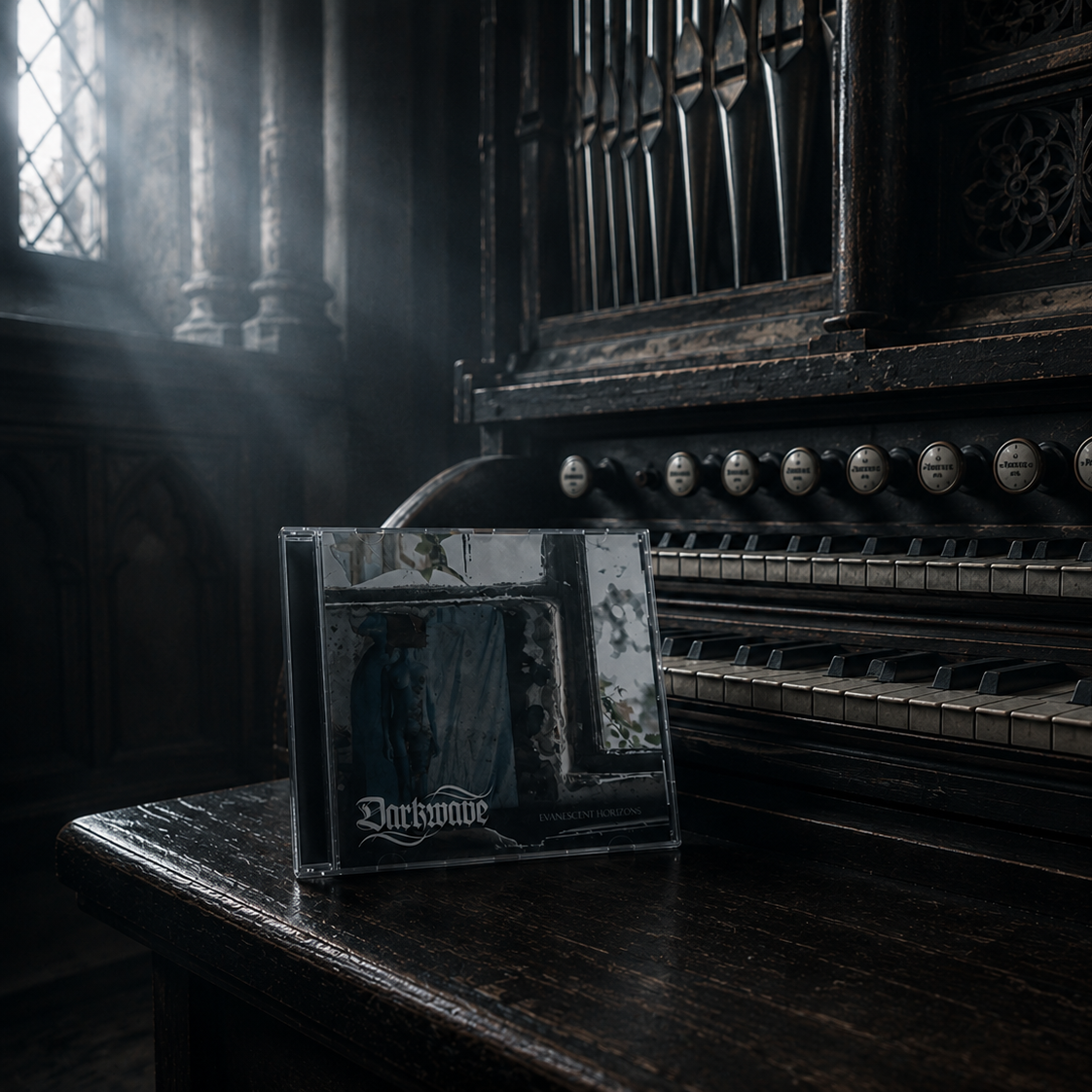
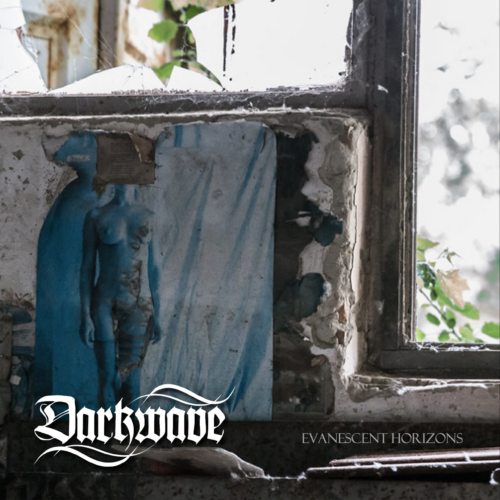
The cover artwork of Evanescent Horizons may seem somewhat unusual at first glance, but it reflects many of the album’s central themes. The photograph itself – as with all visuals accompanying Evanescent Horizons – was taken by my talented friend, photographer Dávid Ujhelyi. His remarkable eye for atmosphere and detail helped bring the album’s visual world to life.

The decaying industrial setting serves as a reminder of transience, deterioration, and the inevitable passing of all things. In many ways, it represents the point from which the album begins: the confrontation with loss, impermanence, and the realization that what we love cannot always be preserved.

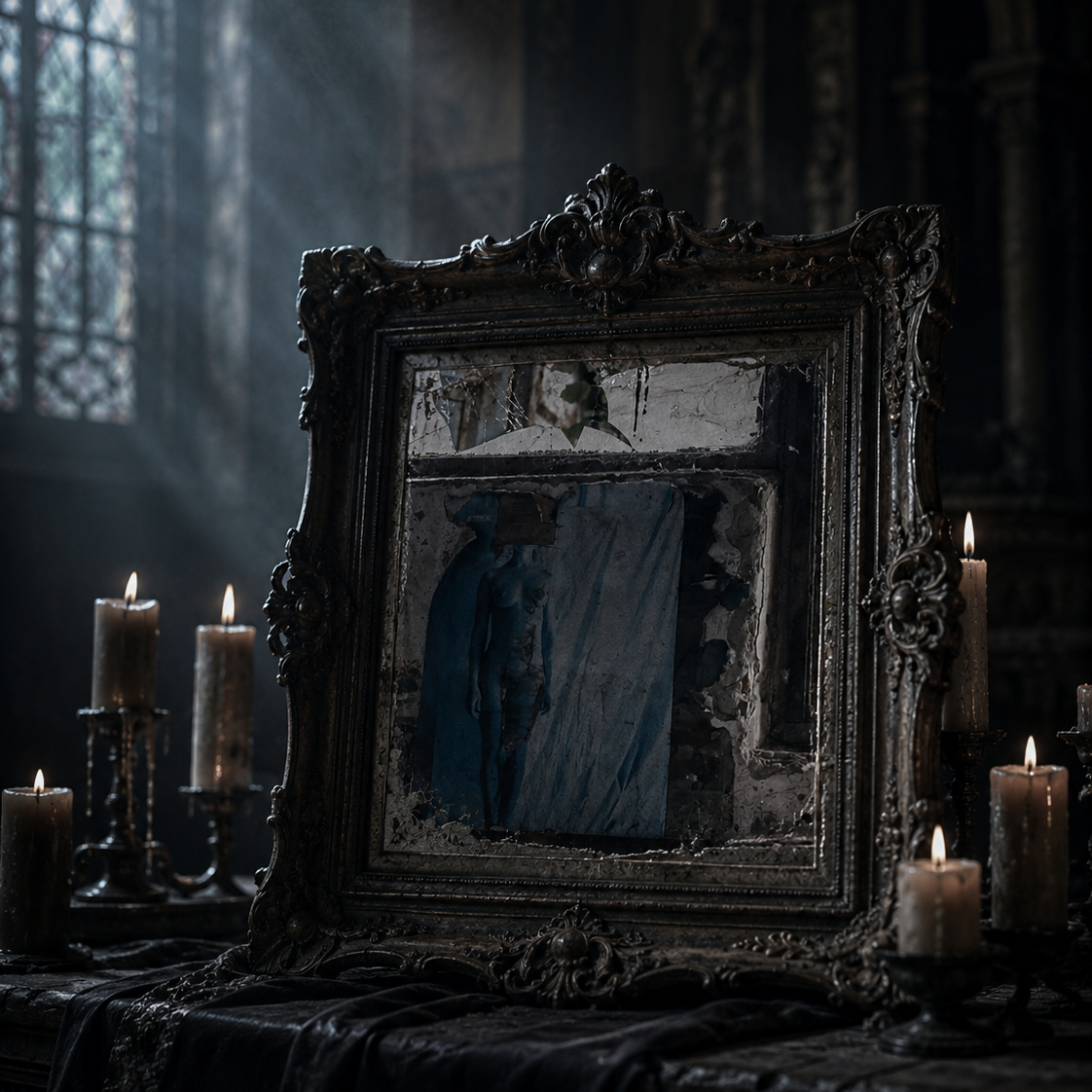
At the center stands a blue female figure whose presence intentionally echoes the cover of Horror Sacri. There, a similarly colored figure represented the Virgin Mary and reflected that album’s focus on the sacred and the transcendent. Here, however, the figure is simply an ordinary human being. She is naked, vulnerable, and her face is deliberately concealed. By removing her individual identity, the image suggests that the story told on Evanescent Horizons is not about one specific person, but about something universal. The woman becomes a symbol rather than a portrait.

The title itself points in two directions. The horizons are behind us as much as they are ahead. The blue figure establishes a visual connection to the previous album, looking back toward themes and questions that have accompanied Darkwave for years. At the same time, the image opens a path toward something new. Perhaps the most important element of the cover is the window. It stands between the decaying interior and the bright world beyond. In many ways, it represents a threshold: the place where loss, memory, and mortality encounter hope. Beyond the rusted frame there is only light. We cannot see what lies within it, nor does the image attempt to provide certainty. The horizon remains hidden. Yet its presence is unmistakable. For me, that light symbolizes hope: not as a guarantee, but as a possibility. Not as an answer, but as a direction.

The album ultimately arrives at a similar place. It does not eliminate loss, nor does it deny decay. It does not claim to possess final answers. Instead, it asks whether something meaningful can endure despite them. The bright horizon beyond the broken window remains unseen, but it is there nonetheless. In that sense, the cover artwork mirrors the album’s final realization: we may never fully see what lies beyond the horizon, yet we can still choose to walk toward the light.

You can also listen to the album here: 🔗 https://darkwave-metal.bandcamp.com/album/evanescent-horizons