Of song lyrics and instrumental music

Why I ended up playing instrumental music? This is another good question that I used to get quite often from my friends – and at the same time this is a tricky one that’s pretty hard to answer. The music I make is just a snapshot of a quite long “evolutionary process” – so I think it’s better to go into details, if I want to formulate a reasonable response.

In the beginning – similarly to most of the musicians in the rock/metal scene – I wanted to write and play traditional songs with vocals. However, I’ve never been sure about the exact nature of the vocals that I wanted to incorporate. At the beginning I felt like slightly harsh but still melodic (let’s say, “Nevermore-style”) vocals would fit well to my music. Then I started to experiment with classical harmonies and fell in love with polyphonic choirs and female vocals. Still, somehow I always felt that writing melodies for vocals is not my business: it never went so smoothly than working with guitars. I think this kind of hesitation was the first momentum that suggested me to express my thoughts with sounds rather than with words.

I wrote numerous song lyrics, nonetheless. However, neither the rhytmicity nor the topics of my texts fitted well to the medium/fast tempo and the impetus of my thrash metal-based musical creations: they resembled more to poems than to song lyrics and fitted better to the textual world of gothic or doom metal songs. Therefore, as time passed by, I became increasingly uneasy with the idea of incoprorating my texts into songs. It also felt somewhat unnatural for me to synchronize the tight and fast thrash tempos with the unique accentuation of the Hungarian language. When it comes to songwriting, I basically think in guitar harmonics and melodies, rather than the characteristic sound of the human voice – therefore I felt like I can express myself better via the possibilities of instrumental music than through some enforced marriage of poem-like, gloomy Hungarian texts with my thrash metal-based rhytmical constructions.

This is basically the reason, why I ended up writing and playing instrumental music.
Long post about personal stuff

People keep asking me, how is it that a neuroscientist with a satisfying 9-5 job unexpectedly decides to become an independent/self promoted guitar player and composer at a certain point of his life. Well, there are no short answers to this question, but I cannot deny that it may look strange from the viewpoint of someone who doesn’t know me in person since my childhood.

The main point is that it wasn’t unexpected at all. As a music enthusiast, I’ve been playing the guitar since my childhood and I even participated in ad hoc formations earlier – but to be honest, these efforts never succeeded, due to the lack of motivation, dedication and time. I always had various other duties and playing the guitar in a regular metal band was never a real option for me. Not that I’m antisocial or something like that (I’m an introvert, but I do love the company of like-minded people…) – it’s just I never had the chance (or courage…?) to come forth with my own compositions, and ended up losing my interest in the process of realization of someone else’s musical ideas. Anyway, it was hard for me to believe in my own musical imagination so much as to push my ideas through those brick walls that probably I myself had built around me. Also – stepping out from the personal side towards the technical aspects – playing in a band on a regular basis would have put such a burden on me that I simply wasn’t prepared for. Working on my own professional career rendered my “hobbies” like music or rock climbing as second priority.

It was actually intentional that I put the word “hobbies” between apostrophes. All my life I’ve been primarily and above all a music maniac: I listen to music six-eight hours a day and play the guitar also on a regular basis, following a quite strict schedule. Whatever I became later was (and is) of course also an integral part of my personality: my job is great, satisfying and full of intellectual challenges – still, music has always been there in my life behind everything I did and became the backbone of my identity. It’s definitely not “just a hobby” for me. For those who know me it’s not a surprise that I’m a dedicated metalhead, but besides being a music fan I’m also someone who’s always been full of musical ideas. On one hand, I’ve always wanted to bring them forth, work them out and show them to others, but at the same time I’ve – of course – always been full of doubts, insecurities and fears, too. It’s amazing and terrifying at the same time that the world is full of excellent artists who compose excellent music and play the guitar in a virtuoso way – and in this context it needs some explanation, why I finally came to the decision to start composing and recording music.

The question is always somewhere around one’s identity. Oscar Wilde once wrote: “Be yourself; everyone else is already taken” – and I think, this is the basis that I built this little musical experiment on. I slowly realized that I don’t need to compose songs that are more complex than everyone else’s – I am simply unable to do so, and I don’t even want it either. Also I don’t have to play faster than the iconic guitar heros in the vast rock/metal scene – it’s also impossible and I also don’t intend to. I just want to be myself, and I want my music to reflect the person who I am. During the lockdown I had plenty of time to think about these questions, and I came to the conclusion that there will always remain a place for genuine music and genuine musicians in the music market. I simply don’t want to put my decade-long need for self-expression aside: in a world full of insecurities the best thing that one can do is to avoid any further delays.

To cut a long story short, this is the reason, why I started to realize this project.

Album release countdown starts!

Missa Innominata will be available in one week (from 01.06.2022) on both Bandcamp and the main music sharing platforms like Spotify, Apple Music, Deezer or Amazon Music.

When two or three years ago I first thought of recording and releasing my musical ideas, I had no idea on how long and how much effort will it take to put an album together. I definitely didn’t think of creating two full-length records (and also remixing one of them). Still – despite all the “logical considerations” – here I am now: my second album is coming out next week, and I’m already working on the third one. It’s been a long journey, full of challenges, efforts, learning and fun. Some say that the basis of every creative processes is self-motivation, but I only partly believe it’s true. I agree that there is no creative process without a motivated creator, but at the same time, there is no motivation without inspiration.

Thank you so much for your inspiring presence in my life. Thank you for traveling with me on this never-ending journey: without support, feedback and encouragement I’d definitely be less motivated to come out with something meaningful. It’s an awesome feeling to create songs and play the guitar, but it would be devastating to know that there was nobody on the other end of the line. Thank you for listening to my songs and giving me constant inspiration and support.

The countdown starts – see you on the 1st of June!

Album release in 10 days!

I created a short video with excerpts from each songs of the new album, just to give you guys a quick overview on what to expect from Missa Innominata.

I hope you’ll enjoy this small compilation! Please don’t forget: album release is on 01.06.2022!

Rhytm guitars for a new song

Here’s a short excerpt from the first track (Introitus) of the new album – just to give you guys an overview on how playing the rhytm guitar for this song looks like. Introitus is one of the fast songs of Missa Innominata, and I always find it fun to fool around these quick staccatos.

Also, please don’t forget: Missa Innominata will come out on the 1st of June! I’m very excited to hear your feedback, so please stay tuned and get back here often, as I’ll post further parts from the new stuff.

Thank you for supporting me and staying by my side on this fascinating journey!

Album release in one month!

Just a friendly reminder: my second album, Missa Innominata will be released in one month, on the 1st of June, 2022!

As a small teaser, I included all my previously recorded videos in one big file, just to give you guys an impression of how the solos and riffs evolved, and what to expect from the upcoming release. Of course, these videos were recorded simply as parts of the songwriting/practicing process, but I hope you will like them, despite the obvious weaknesses!

Theodotion is on the ReEx charts!

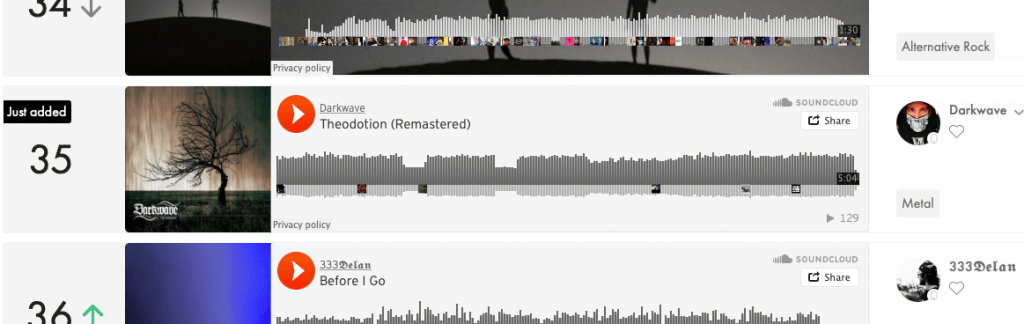
Theodotion, the sixth track of Hexapla – The Remasters appeared on one of RepostExchange’s charts, Pop/Rock Top40. It’s starting on the 35th place! Being so highly appreciated is something that always makes me feel extremely grateful and pleasantly surprised. Click here to check it!

Thank you everyone for being with me, and supporting my work!

(Update: on 25.04 it’s on the 32nd place!)

Release date!

Missa Innominata, my second album will be released on 1. June, 2022!

This is another great milestone for me. I never thought that one day I’ll compose, record, release and promote my own music – and now it’s already the second time! To be honest, I am full of anxiety and anticipation. As one of my favorite authors, J. R. R. Tolkien wrote: “I am dreading the publication, for it will be impossible not to mind what is said. I have exposed my heart to be shot at”.

Thank you again for your continuous support!

New album – another short update

As recently I’ve been quite busy with remixing Hexapla, I couldn’t give you frequent updates on the progress with the new material. Well, my second album is practically fully recorded and mixed – I’m currently busy with fine-tuning and polishing it. In the next couple of days I’ll try to finish the mastering process and upload the whole bunch of songs on Spotify and all the major streaming platforms, too (it takes weeks, though, until the album gets published…).

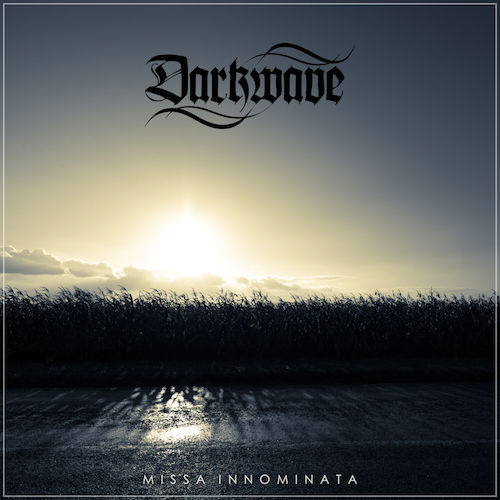
The name of the album will be “Missa Innominata” (“Unnamed Mass“). You may ask, why I ended up with such a subject that’s so uncommon in the metal scene…? My definitive answer is that I wanted to try, whether I could add personal shades to something that is otherwise very traditional and monolithic. The indeterminacy and obscurity of the title, therefore, intentionally form a clear contrast with the track listing that follows the well-defined and solid structure of the traditional Roman Catholic mass. So – at least according to my understaning – it is my personal interpretation of something ancient and enigmatical, but at the same time deeply spiritual, inherently beautiful and excitingly multi-layered. As it is an instrumental album, I had no other choice but to portray these emotional and spiritual aspects of the diverse liturgical elements (for example the solemnial character of Kyrie or Agnus Dei as well as the ecstatic vibes in Gloria) exlusively by the help of metal music, which is otherwise considered to be profane or even unholy. The cover art (created as always by my talented friend, Dávid Ujhelyi) is intended to support this approach by emphasizing the dichotomy of darkness and light, with an outlook on the rising sun, the symbol of hope.

I hope you’ll enjoy the final result, which will come in the next couple of weeks. I’ll let you know the exact release date once I’ll be aware of it!

Track listing:

  1. Introitus (8:28)
  2. Kyrie (9:28)
  3. Gloria (9:17)
  4. Sanctus (7:16)
  5. Agnus Dei (10:40)
  6. Postcommunio (7:19)

Lost in the Noise: The Struggle of Independent Musicians

This post isn’t about me, my albums, or my songs. It’s about something much bigger.

I’m lucky – I make music purely out of passion, with no need to monetize my compositions. My tools, my ability to connect with listeners, and the freedom to create exactly what I want…? That’s more than enough for me. Honestly, I’d play the same music even if no one else ever heard it – just me, alone in a dark room. So the fact that there are people out there who connect with my songs…? That’s a privilege, and I’m profoundly grateful for it.

I don’t feel the pressure to “build a fan base” (which, as a terrible introvert, I wouldn’t even know how to do). Instead, I can focus on improving as a musician, refining my songwriting, and maintaining genuine, personal connections with those who care about my work.

But not everyone is this fortunate.

For most musicians, reaching an audience isn’t just a hope – it’s a necessity. And for us, the listeners, discovering great music should be easy. Yet, in a world where around 100,000 songs are uploaded to Spotify every single day, how does anything stand out?

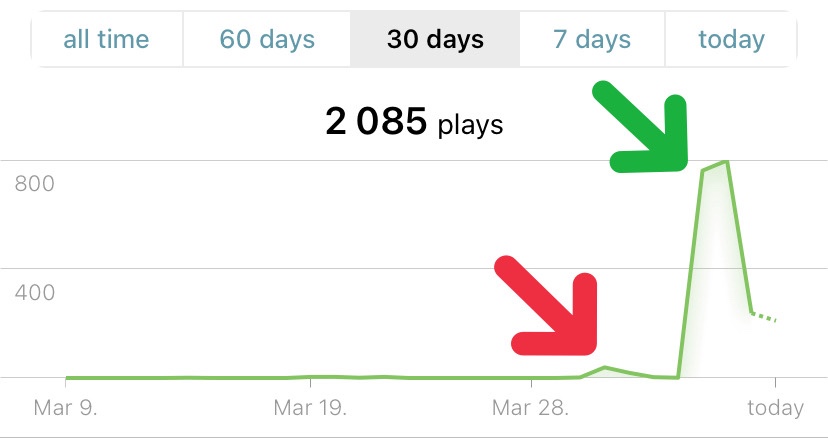
Take a look at the graph below – it’s from my BandCamp account. The green arrow marks the self-promoted release of the remastered Hexapla, (it was available for a while, before I remixed and remastered the original album), while the red arrow shows what happened when that release got featured on BandCamp’s main page. The difference is staggering. Self-promotion brought in some traffic, but a single professional boost caused a massive, yet temporary, surge in listens. The takeaway? Breaking through the “glass ceiling” as an independent artist is brutally hard – if not outright impossible – without professional help.

What does this mean?

For hobby musicians like me, numbers aren’t the ultimate goal. We don’t live off royalties or answer to labels. True support doesn’t come from faceless masses – it comes from individuals. And I cherish that. Personal feedback, even if it’s just a message or a face-to-face conversation, means infinitely more than analytics, streams, or follower counts.

But as a fan – as someone who loves music across countless rock and metal subgenres – the situation is different. The lack of clear, effective ways for independent artists to reach their audience creates a distorted reality. Musicians and their potential fans exist in separate bubbles, controlled by algorithms and the commercial interests of major labels. Think about it: how many incredible, innovative artists are out there right now that you’ve never even heard of?

Sure, Facebook ads, BandCamp features, YouTube channels, and Spotify playlists can help, but how often do you actually click on an ad for an unknown artist? The visibility problem is real. And it’s hard not to feel nostalgic for a time when discovering new music didn’t rely on algorithmic luck.

So, what’s the lesson here?

I don’t have a grand conclusion – just a realization. The impact of professional promotion on an artist’s visibility is enormous. It’s why, beyond listening to my favorite big-name bands, I actively seek out lesser-known, independent artists. Platforms like BandCamp and SoundCloud make discovery easier, but real support goes beyond streaming.

True support isn’t just a click. It’s a long-term, two-way connection between musicians and music lovers.

And that’s something no algorithm can replace.